Activewear Manufacturing MOQ Guide: Quantities, Costs and Low-MOQ Options
- Share
- publisher
- Ohsure
- Issue Time
- Sep 9,2026
Summary
Understand how activewear MOQs are counted, what drives low-MOQ costs, and how startup brands can structure a practical first order with Ohsure.
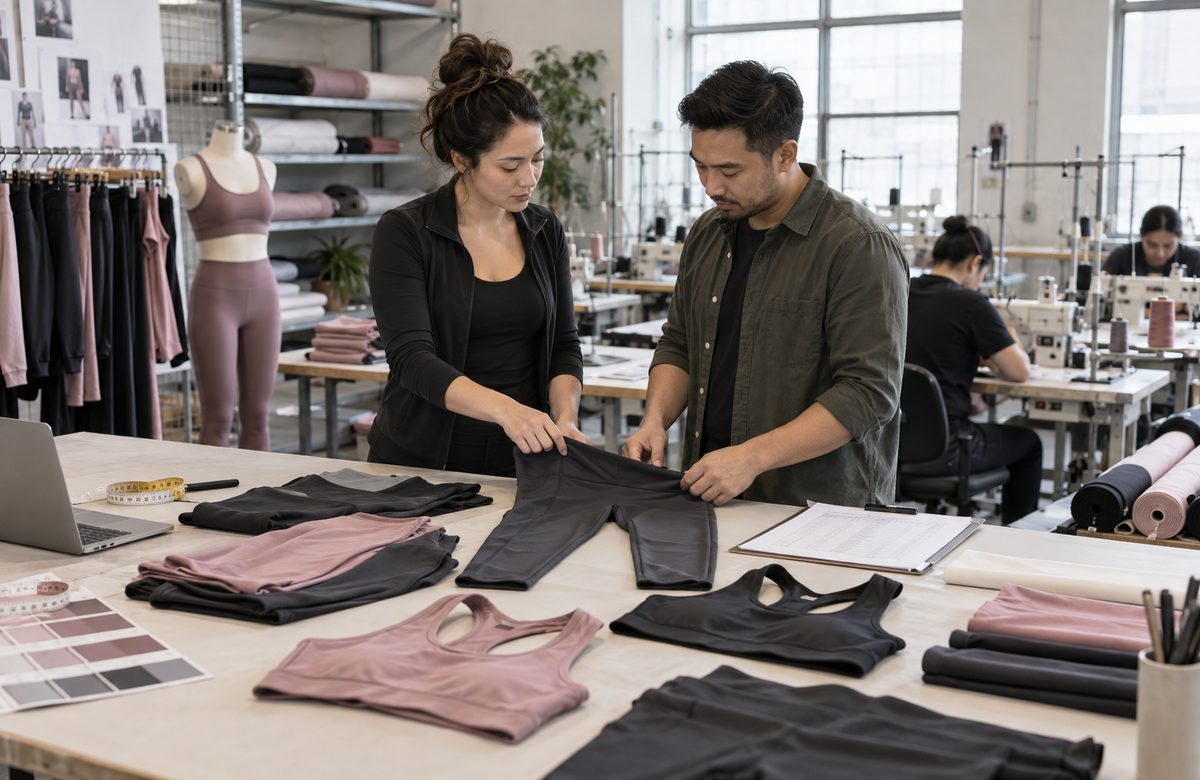
MOQ and low-volume production guide · Evidence checked September 9, 2026
Activewear Manufacturing MOQ Guide: Quantities, Costs and Low-MOQ Options
Direct answer: An activewear manufacturing MOQ is the smallest commercially workable quantity for a defined production combination—not always the whole purchase order. Ohsure currently publishes a bulk starting point of 100 pieces per style and color, with sizes mixed within that combination. The final minimum can still depend on fabric, custom color, construction, logo method, labels, packaging and the production schedule. A startup should therefore compare MOQ, total cash exposure, cost per sellable unit and reorder continuity together before approving a first run.
What Does an Activewear MOQ Actually Count?
MOQ means minimum order quantity, but the counting basis matters more than the headline number. A supplier may set a minimum per order, style, color, fabric, print, logo application or packaging component. A quote that says only “MOQ 100” is incomplete until the unit of calculation is written down.
| MOQ basis | What it means | Buyer question |
|---|---|---|
| Per style and color | Each style-color combination must reach the stated quantity; sizes may sometimes be mixed. | Can all sizes share the minimum, and is there a minimum for any single size? |
| Per fabric or dye lot | The material mill may require more fabric than one garment run consumes. | Who owns and stores leftover fabric, and may it be used for reorders? |
| Per decoration | Printing, embroidery, silicone logos or transfers may carry separate setup and quantity rules. | Does each artwork, color or placement create another minimum? |
| Per component | Labels, elastic, zippers, hangtags and bags may be purchased in larger batches than the garment order. | Are excess components charged, stored, returned or discarded? |
| Per total order | Multiple items can sometimes be combined, but the allowed mix must be explicit. | Which styles, fabrics, colors and processes may share the total? |
Ohsure's current homepage and custom-manufacturer page state a starting point of 100 pieces per style and color and say that sizes may be mixed. Treat that as a published planning reference, not an automatic acceptance of every design. The written quotation should confirm the exact counting rule for the actual style.
Why Low-Volume Activewear Still Has Fixed Costs
A small batch uses less fabric and fewer production hours, but it does not remove the work required to define and start the product. Pattern development, sample sewing, material approval, cutting setup, machine adjustment, artwork preparation, label ordering, inspection and packing all occur before or around the first saleable unit.
Development
Tech-pack clarification, pattern work, prototypes, fit review and sample revisions are usually separate from bulk garment quantity.
Material setup
Stock fabric can reduce minimums. Custom knitting, dyeing, printing or performance finishes may create a larger material threshold.
Production setup
Markers, cutting, machine settings, seam trials, print screens and embroidery files create effort that must be spread across the run.
Order-specific controls
Measurement checks, appearance inspection, testing, packing verification and documentation do not disappear because the order is small.
This is why a lower quantity can produce a higher unit cost without implying poor efficiency. The useful comparison separates fixed, variable and optional costs so the brand can see what changes when quantity changes.
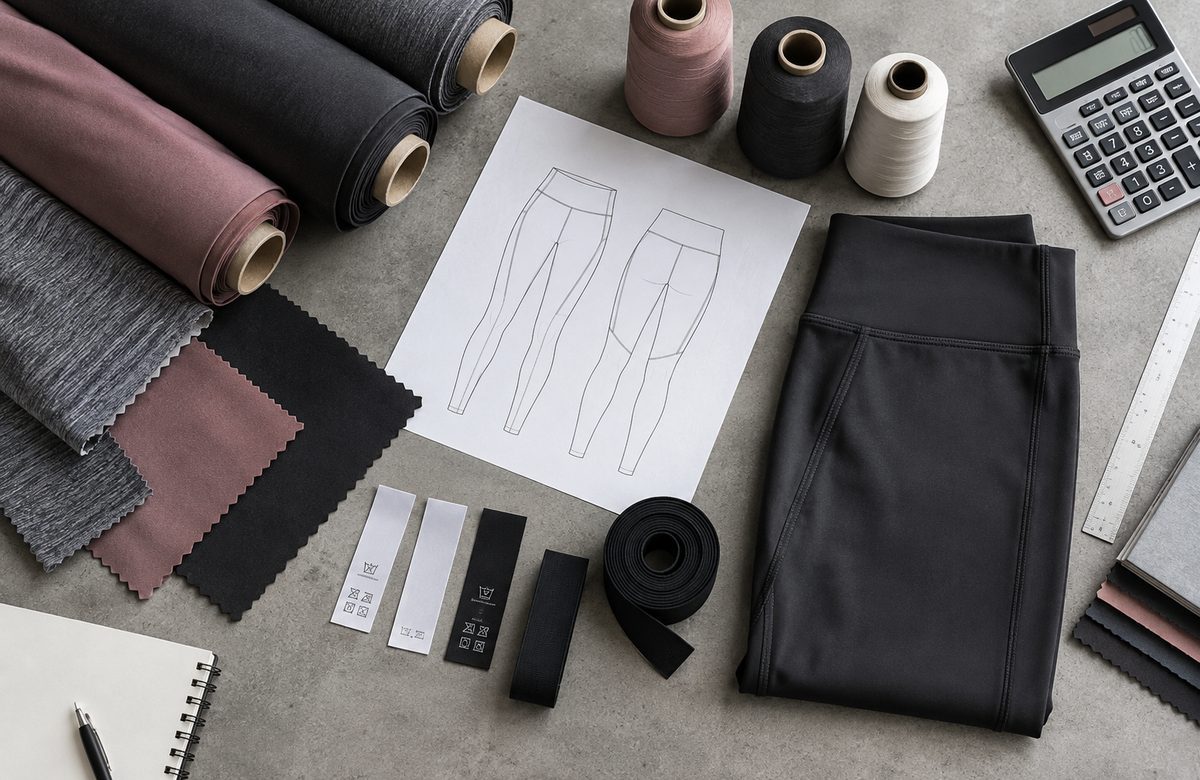
The Low-MOQ Cost Model a Startup Should Use
Do not compare factories using garment unit price alone. Calculate the cash required to receive the order and the cost carried by each sellable unit. Use the same currency, quantity, delivery basis and specification for every supplier.
For illustration, assume a brand expects 500 units at US$9.60 each and US$1,200 of setup, development and order-level cost before freight. Garments plus fixed cost equal US$6,000, or US$12.00 per planned unit. If only 485 units are sellable, the same spend becomes about US$12.37 per sellable unit. These figures are examples only, not an Ohsure quote.
Keep quotation scope comparable
Ask whether the price includes fabric and trims, pattern and sample work, logo setup, labels, packaging, testing, inspection, export cartons and shipping marks. State whether freight, insurance, duty and tax are excluded. An ex-factory price and a delivered price are not comparable until both are converted to the same basis.
How Style, Color and Size Choices Multiply Inventory
A headline MOQ can look small while the assortment creates many stock-keeping units. If the minimum is 100 pieces per style and color, two styles in three colors create six qualifying combinations and a 600-piece order before the size mix is considered.
Fewer variables, clearer fit feedback and easier material control.
More choice, but more cash, approvals and slow-moving SKU risk.
The actual ratio should follow demand evidence, not an even split by default.
Use prior sales by size where available. A new brand can start with comparable-product evidence and a conservative assumption, then record sell-through, returns and fit comments by size. The first run should create usable information for the reorder, not only fill a launch calendar.
Practical Ways to Keep a First Order Workable
| Planning choice | Potential benefit | Trade-off to confirm |
|---|---|---|
| Use an approved stock fabric and available color | May avoid custom knitting or dye-lot minimums | Less exclusivity and possible future discontinuation |
| Launch fewer colors | Concentrates demand and approvals | Narrower assortment at launch |
| Share one suitable fabric across styles | Can consolidate material purchasing | The fabric must perform correctly in every construction |
| Choose a standard logo method | Reduces tooling and process variables | Less unusual visual treatment |
| Keep packaging simple | Avoids excess custom-component inventory | Fewer premium presentation features |
| Separate samples from bulk | Tests fit and construction before inventory commitment | Adds development time and cost |
Low complexity is not low quality. It means the brand chooses where differentiation matters and controls the remaining variables. Ask Ohsure to price the preferred design and one or two defined alternatives instead of requesting an undefined “cheaper version.”

Information Ohsure Needs for a Reliable MOQ and Quote
- Define the product. State category, intended activity, reference images, tech pack status, measurements and construction priorities.
- Break down quantity. List units by style, color and size, separating the first order from possible reorders.
- Describe the material. Include composition, GSM, stretch, hand feel, color route, performance requirements and any required evidence.
- Specify branding. Provide artwork, dimensions, placement, colors, method preferences, labels, hangtags and packaging.
- State the commercial basis. Give delivery country, target arrival window, preferred trade term, currency and target cost basis.
- Identify open decisions. Mark undecided items so Ohsure can distinguish firm requirements from options and recommendations.
A factory can only confirm a meaningful MOQ after it sees the variables that create material and production thresholds. A precise request also makes later quotation revisions traceable.
Low-MOQ Quotation Red Flags
- The minimum is stated without a style, color, size, fabric or decoration basis.
- The price excludes required branding or packaging but does not show those costs separately.
- A stock fabric is offered without a reference code, approval sample or reorder-status explanation.
- Leftover custom fabric, labels or packaging have no ownership and storage rule.
- Bulk production is not linked to an approved sample and controlled specification.
- Substitutions, tolerances, shortages, overages, defects and remedies are not addressed.
- The production clock has no defined start condition or buyer-approval assumptions.
A red flag is a question to close, not automatic proof of a bad supplier. Convert each uncertainty into a quotation line, approval gate or purchase-order term before paying the deposit.
Frequently Asked Questions
Is Ohsure's MOQ 100 pieces for the entire order?
Ohsure's current public wording is from 100 pieces per style and color, with mixed sizes. A multi-style or multi-color order can therefore require multiple qualifying combinations. Confirm the final rule in the written quote.
Can sizes be mixed within the MOQ?
Ohsure publicly says sizes may be mixed. Provide the quantity for each size and ask whether any minimum applies to an individual size or whether grading and component availability affect the range.
Can a startup order fewer than 100 pieces?
Samples are separate from bulk production. Any bulk exception below the published starting point requires project-specific written confirmation; it should not be assumed from general low-MOQ marketing language.
Why can a custom color increase the minimum?
A custom color may require lab-dip approval and a fabric dye lot. The mill's material minimum can be larger than the sewing minimum, so the fabric plan may set the practical garment quantity.
Does ordering more always reduce risk?
No. More units may reduce fixed cost per garment, but they increase inventory, storage, markdown and obsolescence exposure. Compare the saving per unit with a realistic sell-through plan.
What should be confirmed before paying a deposit?
Confirm the quantity basis, approved sample, materials, branding, unit price, extra charges, payment schedule, start condition, inspection plan, packing, delivery basis and remedy for nonconformance.
Bottom Line
Ohsure currently publishes a standard bulk starting point of 100 pieces per style and color with mixed sizes. The best low-MOQ plan does not chase the smallest possible number in isolation. It limits unnecessary assortment, uses a controlled material route, approves samples before bulk, compares complete received cost and states how every minimum is counted.
Review current company context on About Us, browse the product catalog, read related guidance in the industry blog, and use the published contact information for a project-specific quotation.
Editorial note: Ohsure-specific statements were checked September 9, 2026 against the current homepage, custom-manufacturer page and related published guides. Public figures can change. The written quotation and approved production package control the actual MOQ, price, timing and scope.