Best Private Label Sportswear for Your Brand | Complete 2026 Guide
- Share
- Issue Time
- May 6,2025
Summary
A practical 2026 guide to private label private label sportswear, covering supplier evaluation, product specifications, MOQ, sampling, quality control, lead times and sourcing questions for brands.
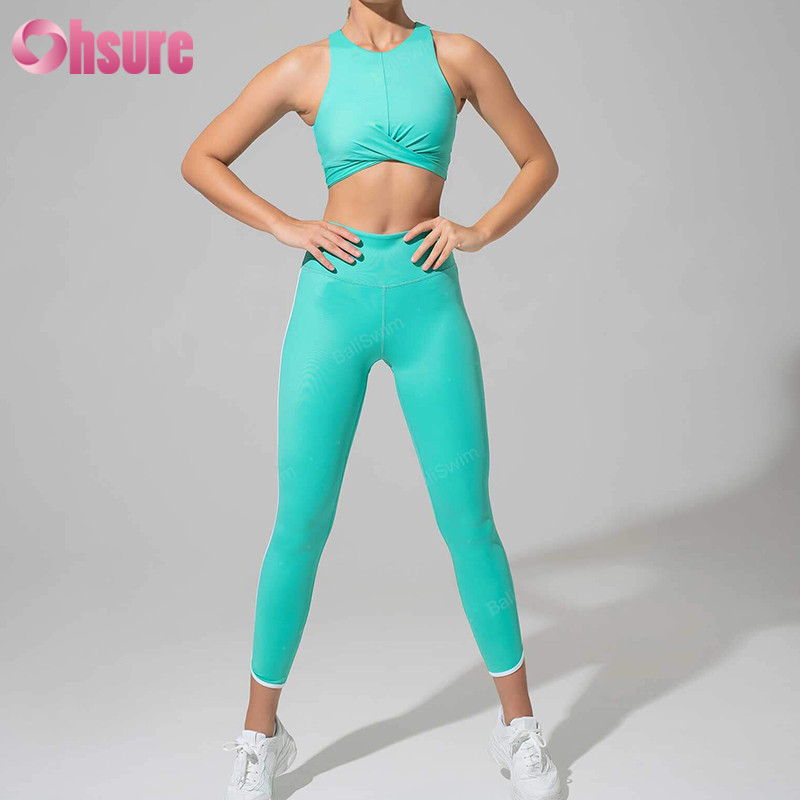
2026 Buyer Guide
Best Private Label Sportswear for Your Brand | Complete 2026 Guide
This updated guide answers the commercial questions behind private label private label sportswear. It keeps the useful core information from the original article while making supplier criteria, product requirements, order planning and quality checks easier to evaluate.
Use the article as a shortlist and decision framework. Verify current factory details, commercial terms, certificates and product capability directly before placing an order.
Direct answer
Choose a supplier whose experience matches the exact product, fabric, size range and order structure you need. Compare written answers for MOQ, sampling, lead time, quality control, customization and change management before comparing price.
Updated core article
Why Private Label Sportswear Matters?
What Is Private Label Sportswear?
The main differences between private label, white label, and OEM are:
| Category | White Label | Private Label | OEM |
| Product Type | Pre-made, ready-to-sell | Semi-customized to match your brand | Fully customized from scratch |
| Branding | Generic branding | Custom logo, label, packaging | Full brand ownership + unique design |
| Flexibility | Low | Medium | High |
Design Involvement | None | Choose existing styles + custom features | Full control over design, materials, functions |
Ideal For | Quick market entry, test new products | Growing brands wanting branding control | Established brands seeking exclusive, tailored products |
Benefits of Choosing Private Label Activewear
How to Find the Best Sportswear Suppliers?
• Product Quality: Request samples to test material, stitching, and comfort.
• Certifications: Look for ISO, BSCI, or OEKO-TEX certifications for ethical and sustainable production.
• Communication: Make sure the manufacturer understands your vision and responds promptly.
Working with Custom Sportswear Manufacturers
| Once you’ve selected a partner, you’ll begin collaborating with custom sportswear manufacturers to bring your vision to life. This process typically includes: | ||
Design Submission | Provide tech packs, sketches, or sample references. | |
Fabric and Material Selection | Choose from moisture-wicking, stretch, or eco-friendly options. | |
MOQ | Understand the manufacturer’s required quantities. | |
Lead Time | Know the production schedule and delivery timeframes. | |
Key Considerations When Building Your Brand’s Activewear Line
• Product Range: Offer a variety of items like leggings, sports bras, tanks, and hoodies.
• Target Market: Are you focusing on women’s fitness, men’s training, maternity activewear, or plus-size?
• Branding Elements: Incorporate labels, logo placements, packaging inserts, and social media handles.
Tips to Succeed in the Private Label Sportswear Market
Offer Functional Features: Seamless stitching, breathable fabrics, and multi-pocket designs attract serious athletes and casual wearers alike.
Conclusion: Start Building Your Sportswear Brand Today
We Can Help You Bring Your Vision to Life
Buyer decision checklist
Product fit
Confirm relevant product examples, pattern capability, size grading, fabric performance and decoration methods.
Order structure
Request MOQ by style, color and fabric, including whether sizes can be mixed.
Sampling
Define sample stages, revision limits, approvals and ownership of updated specifications.
Quality control
Agree on measurement tolerances, workmanship standards, inspections and corrective actions.
MOQ, lead time and quality questions
- What is the minimum per style, color and material?
- Which costs cover pattern development, samples, labels and packaging?
- How long do sampling, material preparation and bulk production take separately?
- Which sample becomes the standard for bulk inspection?
- Which processes are completed in-house and which are outsourced?
- What evidence supports fabric composition, colorfastness and performance claims?
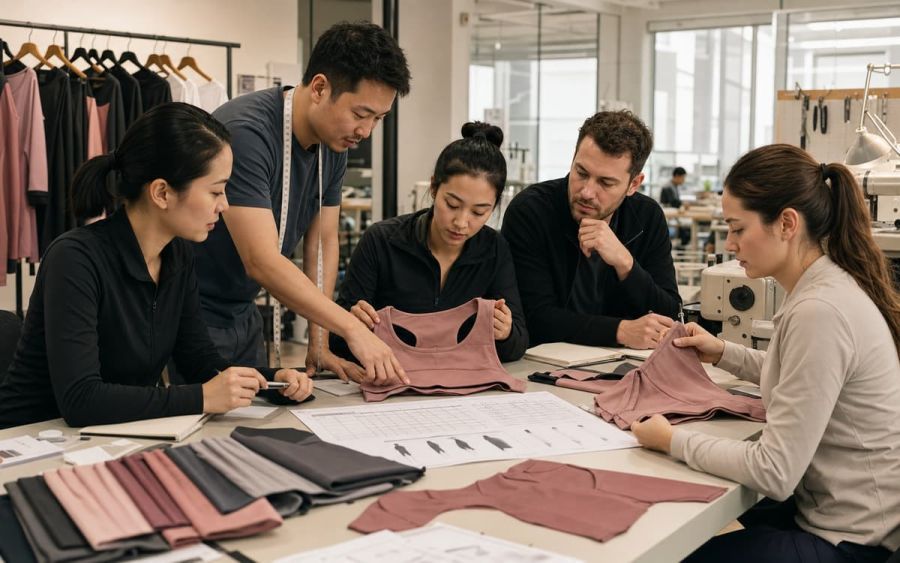
Frequently asked questions
How should a brand compare suppliers?
Send the same specification to every supplier and compare product experience, sample quality, written terms, communication and quality-control evidence.
What should be included in a quotation?
Confirm fabric, construction, logo method, labels, packaging, MOQ, sample charges, bulk price, testing, lead time and shipping terms.
How can a first order reduce risk?
Start with a controlled range, approve measurable specifications, retain a sealed sample and use an agreed inspection plan.
Should the lowest quotation win?
No. A lower price may exclude development, testing, packaging or quality controls. Compare the complete scope and production risk.
Next step
Turn the preferred option into a written product brief and sample checklist. Browse relevant product categories, review the company background, or use the contact information when you are ready to discuss specifications.