Custom Men’s Activewear Manufacturing: Fit, Fabric and Performance
- Share
- Issue Time
- Nov 6,2026
Summary
Learn how to specify men’s activewear fit, fabrics, pockets and performance, with sample checks, MOQ planning, cost factors and a bulk approval checklist.
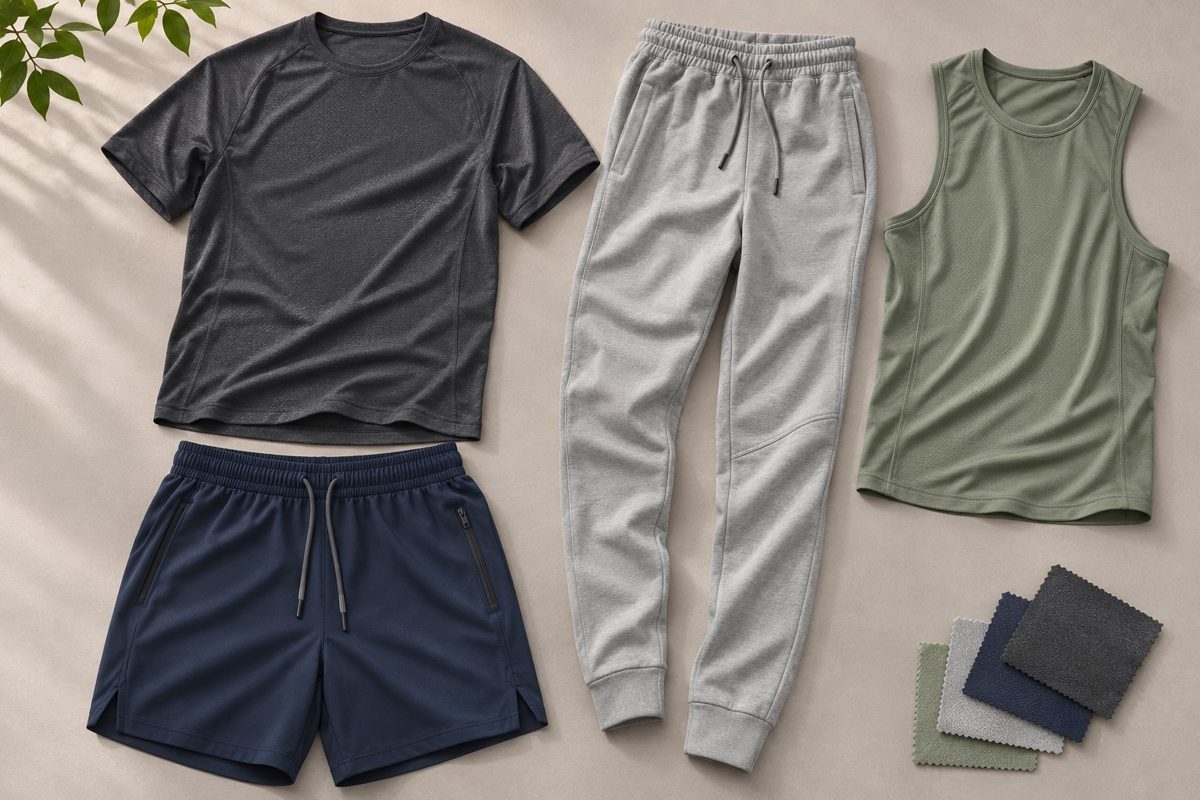
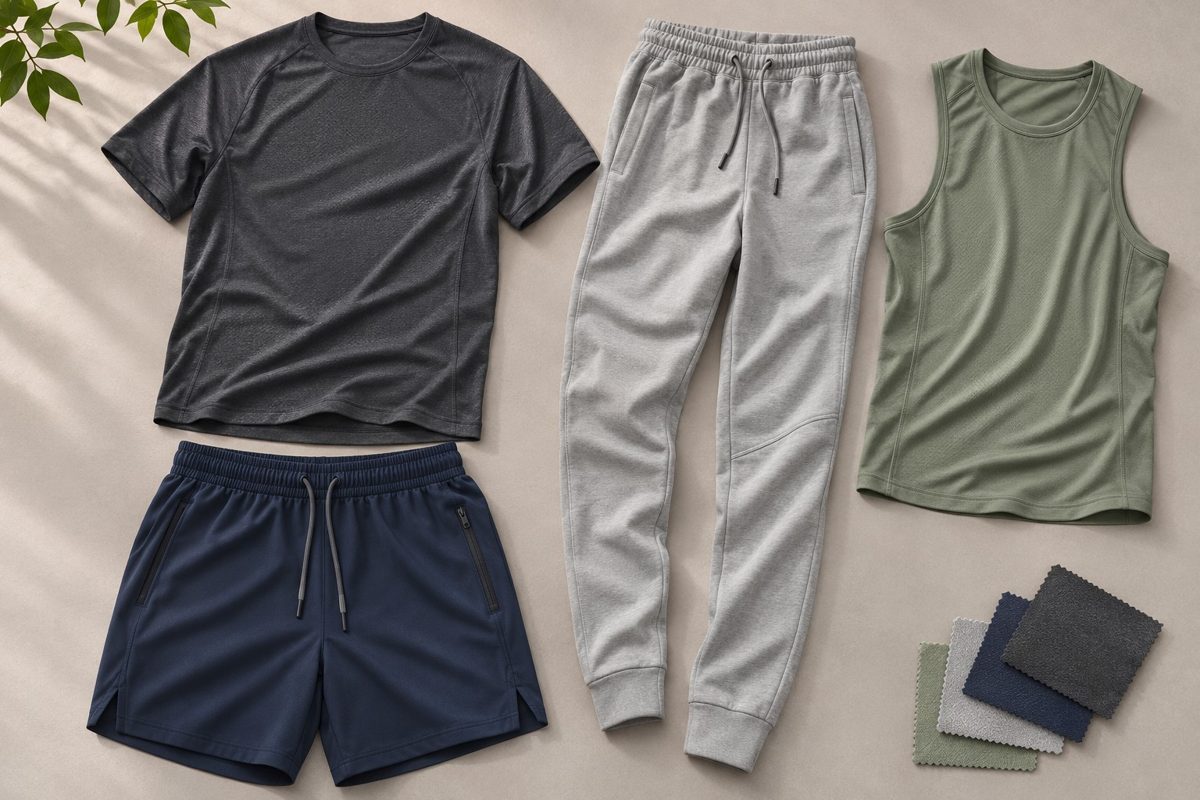
A practical sourcing guide for training T-shirts, tanks, shorts and joggers—from the first fit brief to bulk approval.
What is custom men’s activewear manufacturing?
It is the development and production of sports clothing against a brand’s agreed specification: materials, patterns, measurements, size grading, construction, trims, colors, logos, labels and packing. The brief should explain what the wearer needs to do in the garment. A bodybuilding tank, running short and travel jogger can share a brand identity while requiring different coverage, movement allowance and storage.
In an OEM arrangement, the buyer generally supplies the design and specification. ODM generally starts with a supplier-developed design that the buyer adapts. Private label describes the buyer’s branding and can overlap with either approach. Agree who develops the pattern, who approves grading, what revisions are included and what design files the buyer receives.
Start a shortlist with the custom sports T-shirt collection and custom shorts collection. Treat catalog styles as references, then write a separate specification for each garment.
Compare fit by activity, not by the size label
“Men’s medium” and “athletic fit” do not define a usable pattern. Specify the target body measurements separately from finished-garment measurements. Ease is the difference between garment and body dimensions at a defined point; its suitability depends on fabric behavior, cut and intended movement. A stretch garment may use little or negative ease in selected areas, but this requires validation rather than a blanket rule.
| Route | Typical use | Pattern priorities | Check before approval |
|---|---|---|---|
| Regular training fit | Mixed gym sessions and everyday training | Chest and back ease, sleeve mobility, balanced body length | Overhead reach, forward reach and torso rotation; note hem lift and pulling. |
| Slim athletic fit | Close-to-body training tops and tapered bottoms | Shoulder, chest, thigh and seat distribution; fabric recovery | Check restriction and excess tension across several body shapes. |
| Oversized fit | Warm-up layers and gym lifestyle collections | Drop shoulder, sleeve width, armhole depth and silhouette | Check equipment interference and unwanted exposure during bending. |
| Running-oriented cut | Running tanks and shorts | Stride clearance, hem opening, seam placement and loaded-pocket balance | Jog and stride with intended contents; record bounce and rubbing. |
| Fitted base layer | Layering garments and selected liners | Stretch direction, recovery, gusset and seam extension | Assess coverage, comfort and recovery. Close fit alone does not prove measured compression. |
Translate fit language into measurable instructions
For tops, define half-chest, shoulder width, body length from a named reference point, armhole, sleeve length and sleeve opening. For bottoms, define relaxed and extended waistband measurements, front and back rise, hip, thigh, inseam and leg opening. Include diagrams showing exactly where and how measurements are taken, whether the garment is laid flat and whether elastic is relaxed.
As a teaching example, a 104 cm body chest and a 112 cm finished-garment chest give 8 cm of total chest ease. A flat half-chest measurement would be 56 cm if the measurement method and garment shape support that conversion. These are hypothetical numbers, not an Ohsure size chart or a recommended fit standard. Confirm the pattern on the target wearer and evaluate the larger and smaller size boundaries.
Choose fabrics using the finished garment’s requirements
Specify composition, construction, mass in g/m², usable width, stretch direction, recovery, surface finish, color reference and care conditions. Fiber percentage alone cannot establish breathability, moisture transport, drying speed or resistance to pilling. Compare swatches, then assess the selected production color in a sewn sample.
| Fabric route | Possible application | Development tradeoff | Evidence or sample check |
|---|---|---|---|
| Polyester/spandex knit | Training T-shirts, tanks and selected liners | Stretch and surface feel vary with construction and finish. | Check recovery, damp comfort, snagging and logo behavior. |
| Nylon/spandex knit | Fitted panels and selected base layers | A soft hand does not establish support or drying performance. | Check abrasion, opacity under extension and seam comfort. |
| Cotton or cotton/polyester knit | Oversized gym tees, hoodies and lifestyle layers | Desired hand feel and structure must be weighed against damp wear and drying needs. | Evaluate shrinkage, twisting, pilling and shape after care. |
| Stretch woven candidate | Training shorts and lightweight joggers | Movement depends on both pattern ease and stretch direction. | Check squat and stride clearance, seam puckering and pocket distortion. |
| Mesh or perforated panel candidate | Selected ventilation zones or pocket bags | Open construction can change opacity, snagging and seam durability. | Review coverage, skin contact and seam attachment in the actual position. |
The supplied Ohsure fact library confirms multiple material families, including polyester/spandex, nylon/spandex, cotton and cotton/polyester. The woven and mesh routes above are development candidates to discuss, not confirmation that a particular specification is stocked. Use the Ohsure fabric guide to begin the material discussion.
Separate performance claims from fabric descriptions
If “quick dry” is part of the selling proposition, agree how drying will be measured, the comparison conditions, the wash state and the acceptance criterion. If the claim is moisture management, request evidence for that property. Do not treat a water-drop demonstration as proof of every moisture-related benefit.
For odor-control, UV-protection, recycled-content or certification claims, request documentation covering the actual material and intended claim. For a compression claim, define the required pressure evidence and use conditions separately. A tight garment, a generic certificate or a material name is not enough. These are recommended evidence requests; this guide does not report laboratory results for the concept garments.
Resolve men’s garment details before approving the silhouette
T-shirts and tanks: balance shoulder room and coverage
A training top can fit across the chest and still pull at the upper back during reaching. Review shoulder placement, sleeve angle, armhole depth and underarm seam junctions together. For a tank, inspect side coverage during arm elevation and forward bending. For an oversized tee, check that additional width does not introduce uncomfortable fabric bunching under a layer.
Shorts: evaluate the rise, thigh and liner as one system
Specify outer-short inseam and leg opening separately from liner inseam and opening. Check a deep squat, lunge, seated position and running stride as relevant to the intended activity. Record waistband movement, crotch pulling, liner ride-up and any pressure from drawcord ends or seam junctions. A gusset may change how the garment accommodates movement, but it does not correct every rise or thigh-fit problem.
For a catalog starting point, review Ohsure’s OS0761 men’s zipper-pocket shorts. Confirm the current sample, shell, lining, pocket arrangement and size range in the quotation rather than transferring every catalog statement to a new style.
Pockets and branding: test the exact configuration
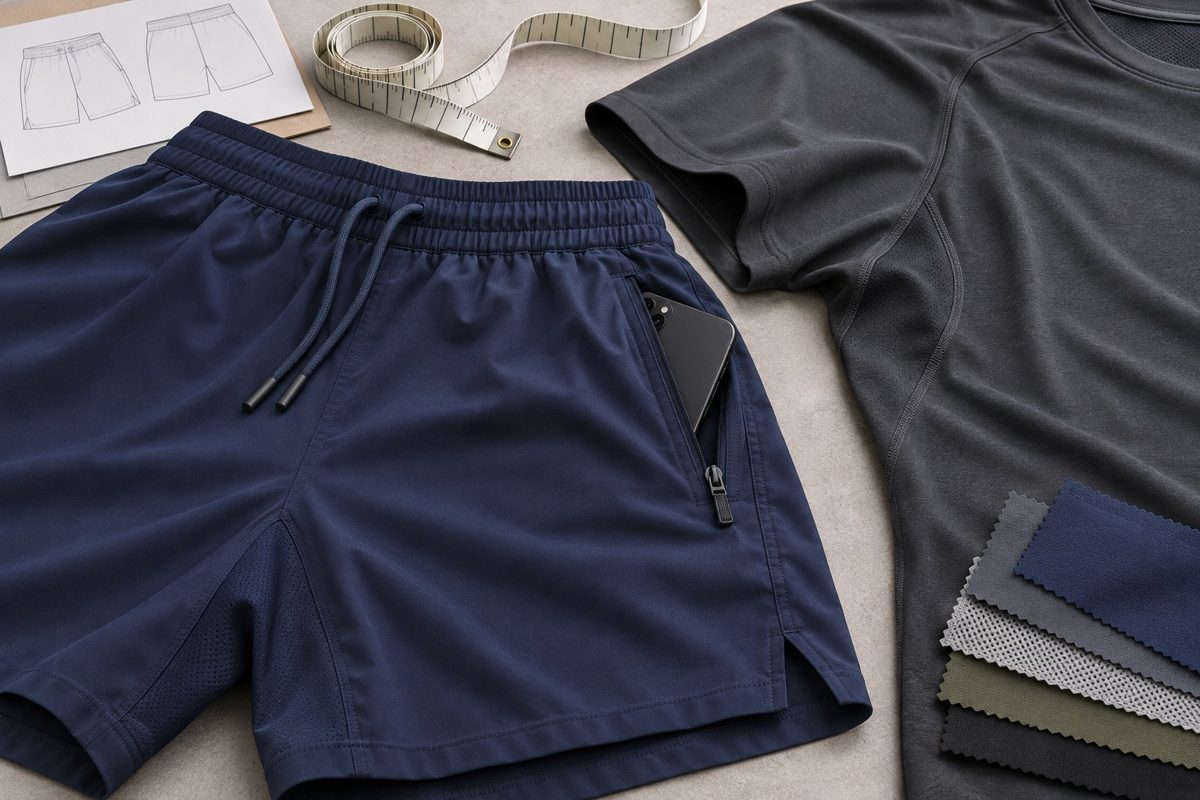
Record the intended phone dimensions and weight, pocket opening, bag dimensions, closure and anchoring points. Walk, jog, squat and sit with the pocket loaded. A zipper may retain an item while the pocket still swings or drags on the garment. Check zipper access with the preferred hand and whether the hardware touches skin.
For branding, define artwork dimensions and placement from fixed garment reference points. Review print stretch and adhesion on the chosen fabric; inspect embroidery backing and skin contact on the actual garment. A decorative logo should not create a stiff patch across a frequently stretched area.
Seven steps from brief to bulk approval
This is a recommended buyer workflow, not a verified description of Ohsure’s internal operating procedure.
- Define the wearer and activity. Identify target body measurements, market, climate, training type, fit direction, layering and launch date. Distinguish a training garment from a lifestyle product.
- Build the technical pack. Add front, back and inside views, measurement diagrams, grading, tolerances, seams, trims, pocket loads, logo files, labels and packing requirements.
- Confirm materials and quotation scope. Resolve fabric and trim availability, color approvals, component minimums, sample fees, revision charges and any required testing.
- Fit the first sample in motion. Record wearer measurements, sample size and activity sequence. Photograph or document specific pulling, ride-up, exposure and pocket movement.
- Check care behavior and revise. Measure before and after the agreed care procedure; inspect shrinkage, twisting, seam appearance, color transfer and branding. Track each revision against a dated sample version.
- Approve the size set and production reference. Review size boundaries, final fabric and color, trims, construction, measurement tolerances and packing. Obtain written approval of the final specification.
- Agree inspection and dispatch conditions. Define inspection scope, acceptance criteria, defect reporting, corrective action and shipment terms before release.
A reusable sample approval record
Use one record per style and revision. Use the sample approval checklist below to capture actual results, approval ownership and closure evidence. Leave results open until the checks have been completed.
| Checkpoint | Record | Approval decision |
|---|---|---|
| Fit and size | Wearer measurements, size, measurement method, sample dimensions and specification revision | Accept or revise against agreed measurements and tolerances. |
| Movement and pockets | Activity sequence, pocket contents, ride-up, pulling and restriction | Close each observed issue with a revised sample or agreed evidence. |
| Care behavior | Care procedure, before/after measurements, appearance and logo condition | Evaluate against the agreed criteria; avoid an undefined “wash passed.” |
| Production readiness | Approved materials, trims, labels, grading, packing and inspection plan | Record approver, date and final sample version before bulk release. |
MOQ, cost and lead time: plan the whole order
Ohsure’s published MOQ starts at 100 pieces per style per color, with mixed sizes available. Final order requirements are subject to project confirmation. Do not interpret this as 100 pieces divided freely among several styles and colors. Fabric, dyeing, trims and packaging may also create separate minimums.
A transparent order-quantity example
Assume a launch includes one training T-shirt in two colors and one short in two colors. At an illustrative application of 100 pieces per style per color, the plan contains four style/color combinations: 2 styles × 2 colors × 100 pieces = 400 garments. This equals 200 T-shirts and 200 shorts, or 200 matched two-piece outfits only if the colors and size allocations align. It is not 400 outfits.
Allocate sizes independently for tops and bottoms using demand evidence; do not assume the same size curve. This example is a planning calculation, not a quotation or confirmation of set-order terms.
What changes the cost?
- Development: pattern work, sample rounds, specialist components and sample delivery.
- Materials: fabric consumption, construction, finish, custom dyeing, color count and component minimums.
- Construction: liners, gussets, panel count, zipper pockets and complex seam operations.
- Branding and packing: artwork setup, decoration, labels, hangtags and individual packaging.
- Verification and delivery: agreed testing, inspection, transport and destination charges under the chosen trade arrangement.
For comparing offers, use the same currency, product specification, quantity and cost boundary. A useful planning equation is: allocated order cost per garment = total agreed order costs ÷ garment quantity. List each included charge once, and show exclusions separately. No dollar price is quoted here because the approved construction and commercial terms determine the result.
What changes the schedule?
Sample timing is confirmed after reviewing the design, materials and customization requirements. Bulk-production timing is confirmed according to the approved specifications, material availability and production schedule. The supplied fact library records differing public timelines, so use a project-specific written schedule rather than a fixed website range.
Plan backwards from the required arrival date through transport, dispatch inspection, production, material approvals, sample revisions and buyer review. Ask whether durations mean working or calendar days, what starts each stage, and how a rejected color or revised pattern changes the completion date. Clarify which activities can overlap instead of simply adding every quoted duration.
Common mistakes and how to prevent them
- Approving only a standing fit photo. Add movement, sitting and loaded-pocket checks appropriate to the activity.
- Using one “men’s athletic” block for every garment. Specify the shoulder, seat and thigh distribution needed for the intended customer.
- Adding stretch to solve every fit issue. Review the pattern, ease and seam extension together.
- Approving one size for the whole range. Review grading and key boundary sizes; proportional scaling alone may not preserve the intended silhouette.
- Testing a fabric swatch but ignoring the garment. Recheck seams, prints, liners, pockets and the selected color after sewing and care.
- Counting sets as individual garments. State piece quantities, style/color combinations and matching size allocations explicitly.
- Freezing marketing copy before evidence exists. Confirm claim-specific reports and scope before using performance or certification language.
Manufacturer perspective: turn feedback into a production instruction
The supplied Ohsure fact library describes a Dongguan-based manufacturer offering OEM, ODM and private-label development. It records sample-room and pattern-development support, branding, labels and packaging. Ohsure’s OEM and ODM service page provides the relevant service overview.
From a development standpoint, “the shorts feel tight” is incomplete feedback. A useful revision note identifies the sample version, wearer measurements, movement, affected area and required change: for example, pulling at the front thigh during a lunge, with waist fit otherwise acceptable. The pattern team can then evaluate rise, thigh ease, panel shape and fabric behavior together. This is a recommended communication method, not a reported customer case or measured factory outcome.
The fact library identifies four QC stages: raw materials, printing, semi-finished sampling and finished garments. It also lists checks such as measurements, stitching, color differences and shrinkage. Review the quality-control page, then agree actual tolerances, sampling rules and test methods for your order. An inspection description does not establish a particular laboratory result, certification or zero-defect guarantee.
Men’s activewear sample approval checklist
For each item, record style, sample version, size, wearer measurements, agreed criterion and method, observed result, required revision, owner, status, approval date and closure evidence. Leave results open until checked.
- Top chest / shoulder / armhole
- Waist / rise / hip / thigh
- Size grading boundaries
- Reach / rotation
- Squat / lunge / stride
- Loaded pocket retention / bounce
- Liner ride-up / seam comfort
- Before and after care dimensions
- Twisting / pilling / color transfer
- Logo adhesion / backing
- Fabric / color / trims
- Labels / packing / inspection plan
Frequently asked questions
What should I send to a men’s activewear manufacturer?
Send the activity brief, design views, target body measurements, finished-garment specifications, size range, fabric preferences, colors, quantities, pocket requirements, artwork and required arrival date. Ask the supplier to identify missing information before sampling.
Which fabric is best for men’s gym clothing?
There is no single best fabric for every garment. Compare candidates against movement, hand feel, coverage, care and claim requirements. Evaluate the actual sewn garment rather than selecting by fiber percentage alone.
How do I define an athletic fit?
Define the target body and specify garment dimensions at named measurement points. Review chest, shoulder, seat and thigh distribution during movement, then validate grading across the intended size range.
Does a fitted garment automatically provide compression?
No. A close fit does not establish a measured compression level. Define the intended pressure claim and supporting evaluation separately from the fit specification.
What is Ohsure’s minimum order quantity?
MOQ starts at 100 pieces per style per color, with mixed sizes available. Final order requirements are subject to project confirmation, including any separate material, trim or packaging minimums.
How long do samples and bulk production take?
Sample timing is confirmed after reviewing design, materials and customization. Bulk timing depends on approved specifications, material availability and the production schedule. Confirm start conditions, revision time and delivery separately in writing.
How should I approve pockets on men’s training shorts?
Specify the intended item’s dimensions and weight, pocket opening, bag size and closure. Check retention, bounce, seam strain, comfort and access during the intended movements with the pocket loaded.
What should be approved before bulk production?
Approve the final sample version, size grading, fabric and colors, trims, construction, artwork, labels, packing, measurement tolerances and inspection criteria. Record approval ownership and date, and close outstanding sample issues.
Prepare a men’s activewear brief for quotation
Send the intended activity, reference images, target body measurements, size range, preferred materials, style/color quantities, pocket requirements, branding and required arrival date. Attach the technical pack and approval checklist if available. Use Ohsure’s sample and quotation inquiry page to confirm development scope, order terms and timing.