Custom Seamless Activewear Manufacturing: Process, MOQ and Limitations
- Share
- Issue Time
- Nov 6,2026
Summary
Compare seamless and cut-and-sew activewear, understand development steps, MOQ drivers, costs and limitations, and use a practical sample approval checklist.
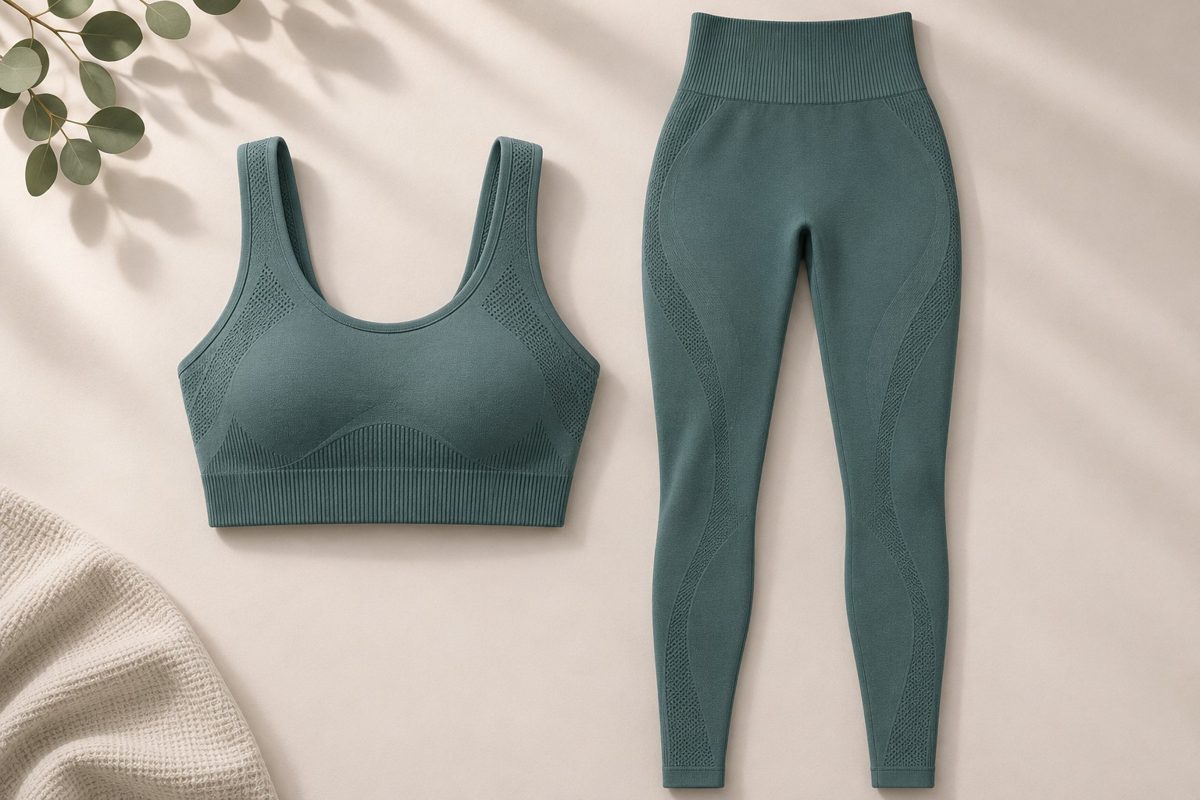
A buyer’s guide to choosing the right construction, defining knit development and approving a seamless collection for production.
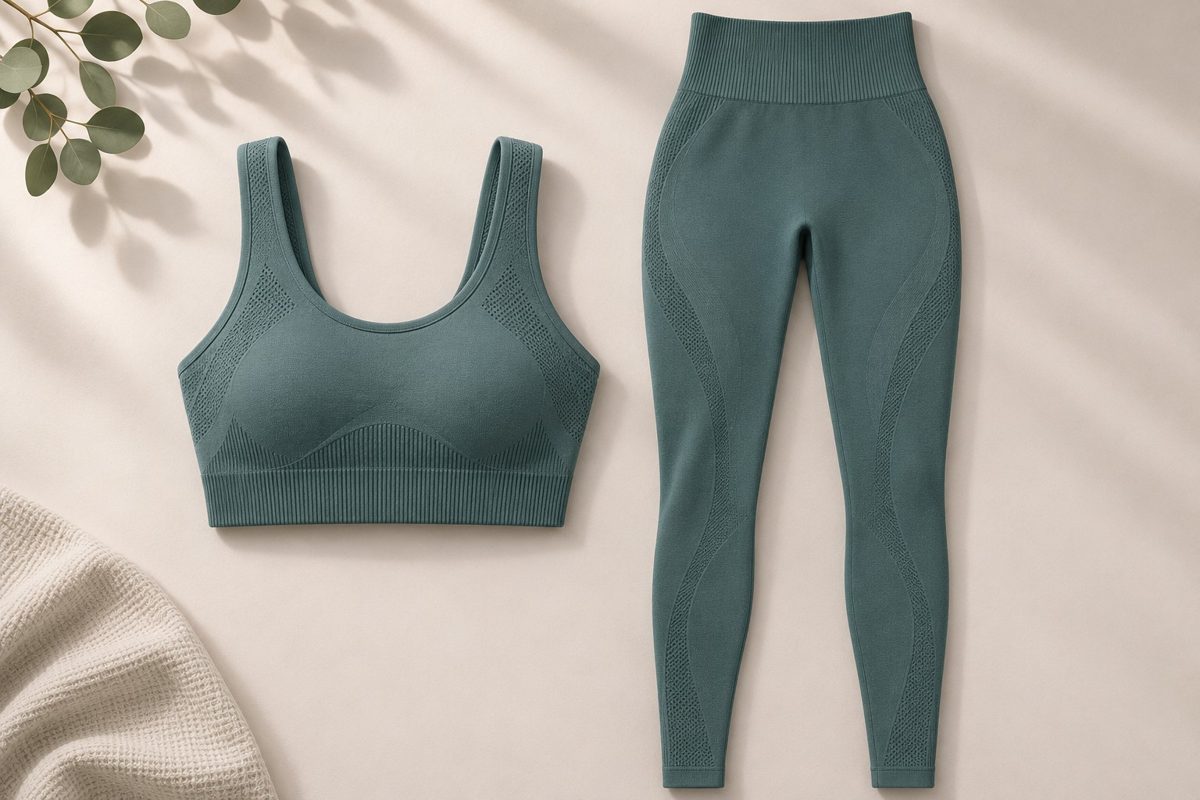
What is seamless activewear manufacturing?
In this guide, seamless activewear means clothing developed using garment-oriented knitting to create tubular forms and integrated texture zones while reducing the number of sewn joins. It often appears in fitted leggings, shorts, bras and tanks. A buyer should define the actual construction instead of treating “seamless” as a complete technical specification.
Equipment maker Santoni lists electronic circular knitting systems for seamless activewear. Its technology overview describes combining jersey, mesh, rib and jacquard structures within a knitted tube. Those references establish a technology category; they do not establish which equipment Ohsure owns or uses for a particular order.
Does seamless mean there is no stitching anywhere?
No. Inspect the proposed garment inside and outside. Depending on its design and production route, it may still need crotch joining, a gusset, strap attachment, edge finishing, cups, labels or other assembly. Ask for a seam map showing every join and finishing operation. A missing front seam on leggings also does not prove garment-oriented seamless knitting: a cut-and-sew pattern can omit that seam.
Keep three ideas separate: seamless knitting describes a manufacturing route; no-front-seam describes one construction detail; and bonded construction describes a joining method. Likewise, flatbed whole-garment knitting is a distinct route and should not be assumed from the word “seamless.” Ask the supplier to identify the route in the quotation.
Compare seamless, cut-and-sew and existing-style customization
The right choice depends on how much development you need. A distinctive knit texture may justify new programming; a simple ribbed look may be achievable with a sewn garment. Compare the finished specification and approval work, rather than assuming one route is always cheaper or better.
| Route | What can change | Main development work | Commercial question | Best starting point |
|---|---|---|---|---|
| Existing seamless style with private label | Approved branding and available options within the existing style | Verify actual construction, fit, colors and decoration compatibility | Which sizes and colors are available, and what minimum applies to each change? | A focused launch that can use the existing fit and knit layout |
| New seamless knit development | Feasible knit zones, textures, dimensions and yarn combinations | Programming, knitting trials, finishing trials and size validation | What are the program, yarn, color and size-run minimums? | A collection requiring a distinct knit architecture |
| Cut-and-sew stretch activewear | Panel shapes, seams, pockets and selected fabric | Pattern development, cutting, sewing and fit approval | What fabric, dyeing and garment minimums apply? | Designs needing specific panel geometry or complex pockets |
| Cut-and-sew ribbed alternative | A similar ribbed aesthetic using selected yardage and sewn construction | Fabric approval, pattern and seam development | Does the lower-quantity option change the construction or appearance? | A ribbed visual direction where seamless knitting is optional |
Ohsure’s OS024 ribbed tank listing provides a useful real distinction: it describes the pictured seamless version as requiring a higher MOQ and offers a rib-fabric alternative for lower quantities, while stating that the alternative is not seamless. It gives no numerical seamless threshold. Confirm the current options and inspect both samples before choosing.
Seven steps in custom seamless activewear development
This is a recommended buyer workflow for discussing a project. It is not a verified Ohsure production-line procedure; the actual operation order, equipment and responsible facilities need confirmation.
- Define the product and customization route. Specify leggings, shorts, bra or tank; intended activity; body measurements; size range; coverage; visual references; and order quantities. State whether an existing knit style is acceptable or a new program is essential.
- Review knitting feasibility. Request a proposed knit-zone map, seam map and explanation of achievable shapes. Ask how the machine configuration, stitch structure, yarn choice and finishing will accommodate each size. Identify restrictions on pocket placement, openings and artwork.
- Approve yarn and color development. Record fiber composition, yarn specification, elastane component and proposed sourcing. Confirm whether color is introduced through yarns, piece or garment dyeing, or another route. Agree the appropriate color approval sample and lot controls for that process.
- Develop the knitting trial and finished prototype. Review texture placement, knitted dimensions and remaining assembly. Define which details are provisional. Evaluate the finished, conditioned sample rather than using an unfinished knitted tube as the fit reference.
- Validate fit and function across sizes. Check bending, squatting, reaching and the intended activity. Record waistband rolling, crotch tension, strap comfort, transparency under extension and recovery. Inspect joining areas as carefully as the knitted body.
- Resolve care behavior, branding and production approvals. Compare measurements before and after the agreed wash and dry procedure. Review color, surface appearance, spirality or distortion, logo adhesion and edge behavior. Approve the final program version, finished size specifications, color standards and packing.
- Confirm bulk controls and delivery. Agree material-lot traceability, inspection scope, tolerances, sampling rules, acceptance criteria, corrective action and shipment terms. Record who can authorize changes to the approved specification.
A useful approval rule is to keep knit architecture, finished fit and color/finish as separate approval items. A satisfactory texture trial does not close the fit review, and an approved fit in one color does not approve the appearance of every color.
What belongs in a seamless activewear specification?
Specify outcomes that the supplier can reproduce and inspect. A reference photo communicates appearance; it cannot define yarns, knit density, finishing, support or size grading.
| Parameter | Record in the brief | Approval evidence |
|---|---|---|
| Construction | Knitting route, knit-zone drawing, all joins and finishing details | Inside/outside sample photographs and agreed construction map |
| Yarn and fabric behavior | Composition, yarn reference, stitch structures, stretch direction and recovery requirements | Material identification and agreed finished-sample evaluation |
| Fit and grading | Target body chart, finished dimensions, measurement method and tolerances by size | Size-set review with recorded wearer measurements and movement results |
| Coverage | Color, size, lighting, extension and movement conditions for opacity checks | Repeatable assessment of the actual garment; define acceptance before checking |
| Surface and color | Color reference, texture placement, shade limits and defect criteria | Approved finished color sample and documented visual review conditions |
| Care and branding | Care procedure, dimensional limits, artwork dimensions and placement | Before/after measurements, appearance record and decoration review |
Test knit zones as part of a garment
Rib, mesh and dense knit areas can behave differently under extension. Check the boundary between structures for uncomfortable tension, distortion or unwanted transparency. For leggings, observe the seat, crotch and waistband during movement. For a bra, review the band, straps, armhole and any cup assembly together. A close fit or dense contour zone does not establish a measured compression level or a high-support classification.
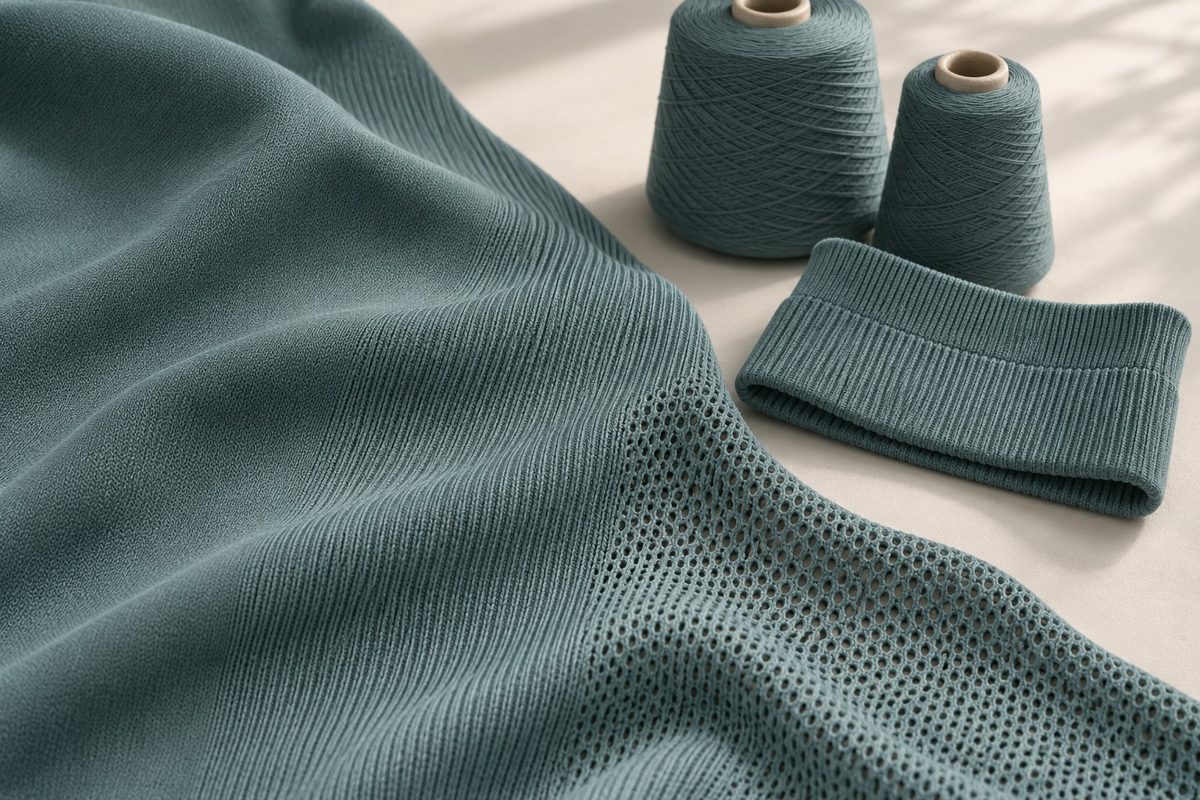
If you plan claims about pressure, drying, odor control, UV protection or recycled content, agree claim-specific documentation and evaluation for the actual product. A generic yarn description or equipment brochure does not substantiate every finished-garment claim.
What MOQ applies to custom seamless activewear?
Ohsure’s published general starting MOQ is 100 pieces per style per color, with mixed sizes available; final order requirements are subject to project confirmation. This wording comes from the supplied fact library and appears in the FAQ on the OS095 seamless-legging product listing. That listing is a reference for discussion, not confirmation that every new knit program can use that minimum.
Request separate minimums for the garment style/color, yarn purchase, custom color batch, knitting setup, size or machine configuration, decoration and packaging. Ask which minimums apply independently and which can be shared across genuinely compatible items. Adding all the quantities together is usually the wrong calculation because a yarn minimum in kilograms and a garment minimum in pieces measure different things.
A quantity example that separates garments from sets
Assume one legging style and one bra style, each in two colors. If the written quotation explicitly accepts 100 garments per style per color, the order contains 2 styles × 2 colors × 100 = 400 garments: 200 leggings and 200 bras. It can form 200 two-piece sets only if the color and size allocations are matched. It is not 400 sets. This is arithmetic for planning, not an Ohsure seamless quotation.
Convert a yarn minimum into garment demand only when the basis is known
For a hypothetical single applicable yarn lot, assume a 60 kg purchase minimum and 0.20 kg net consumption per garment. With an assumed 8% loss measured as a share of yarn input, usable yarn is 60 × 0.92 = 55.2 kg, equivalent to 55.2 ÷ 0.20 = 276 garments. All inputs are teaching assumptions, not factory parameters.
Use this calculation only when that yarn is actually consumed by those garments. Multiple yarn components, different sizes, trial consumption, dyeing requirements and leftover inventory can change the allocation. Ask who owns unused yarn and whether it can support a repeat order. Never convert kilograms to pieces using an undefined “wastage percentage.”
For the broader counting rule, read how activewear MOQ is counted by style, color and size.
Cost and lead time: compare the full development scope
Fewer sewn operations do not automatically mean a lower total order cost. New programming, yarn selection, machine setup, trial garments, finishing and size approval can outweigh assembly savings at a small volume. Ask for a quotation that separates development charges, recurring garment costs and order-level charges.
- Development: program creation or adaptation, sample rounds, finishing trials, artwork and size-set development.
- Production: yarn consumption, knit complexity, machine time, color processing, joining, finishing and agreed quality checks.
- Commercial scope: labels, packaging, testing, sample shipment, bulk freight and destination charges under the selected terms.
- Repeat orders: program reuse terms, yarn and shade continuity, setup charges, material availability and revised minimums.
A useful comparison is allocated unit cost = recurring garment unit cost + (agreed development and order-level charges ÷ garment quantity). Keep currency, quantity, specifications and delivery basis consistent; include each charge only once. No fixed price is given here because the knit design and commercial scope are not yet approved.
Build the schedule around approval gates
The supplied fact library records conflicting public sample and production ranges. Use its qualified wording: sample timing is confirmed after reviewing the design, materials and customization requirements; bulk-production timing is confirmed according to the approved specifications, material availability and production schedule.
Request dates or durations for feasibility review, yarn availability, color approval, first knitting trial, finished sample, buyer review, revisions, size approval, bulk knitting, finishing, inspection and dispatch. Confirm working versus calendar days and the trigger for each stage. A sample made from available yarn does not establish the timing for a custom-colored bulk run. Allow for transport separately and identify activities that can overlap.
Limitations and common mistakes to avoid
- Assuming a photo proves the construction. Obtain the seam map and inside-out sample. A ribbed look or no front seam is insufficient evidence.
- Expecting unlimited shape and size changes. Ask how the proposed equipment, yarn and structure accommodate each size. Validate boundary sizes rather than stretching one sample across the size chart.
- Approving only the darkest color. Review coverage and shade in the actual launch colors, at relevant stretch and movement conditions.
- Calling contour knitting “compression.” Treat the appearance and pressure claim as separate approvals; require appropriate evidence for any measured claim.
- Adding complex pockets or hardware late. Such details may introduce assembly, alter the silhouette and change the quote. Resolve them during feasibility review.
- Reducing seams but ignoring joining quality. Inspect the remaining crotch, gusset, strap and edge construction for extension, rubbing and durability.
- Assuming seamless means zero waste or certified sustainability. Request project-specific evidence for yarn loss, rejects, processing and any certification claim.
- Using the general MOQ as the custom-program minimum. Obtain a written breakdown for yarns, colors, size runs, branding and packing.
Choose cut-and-sew when it better meets the required panel layout, pockets, fit development or available order scope. Choose seamless knitting when its achievable structures and silhouette serve the product brief. Compare physical samples rather than ranking manufacturing routes by their names.
Manufacturer perspective: translate appearance into a repeatable specification
The supplied Ohsure fact library describes a Dongguan-based manufacturer providing OEM, ODM and private-label services, sample development, branding and packaging. Its OEM/ODM service overview is the starting point for development discussions. The reviewed material does not establish a specific seamless machine inventory, machine ownership or which knitting stages are performed in-house. Ask who performs knitting, dyeing, assembly and final inspection for the proposed order.
The OS024 tank listing illustrates a practical sourcing lesson: a supplier may offer a similar visual direction through two different constructions with different quantity requirements. Put the chosen route in writing. “Keep the ribbed look” is less useful than a note specifying the approved knit map, seam positions, finished measurements and reference sample revision. This is editorial guidance based on a published product distinction, not a claimed customer success story.
Ohsure’s fact library describes four QC stages: raw materials, printing, semi-finished sampling and finished garments. Its quality-control page provides the public overview. For a seamless order, request an agreed inspection plan covering the relevant knit defects, joining, dimensions, shade, care behavior and branding. General QC descriptions do not establish your order’s tolerance, acceptance standard or laboratory result.
Keep a development record you can use again
Use the seamless development and approval checklist below for each style and sample revision. Record the criterion, actual result, responsible person and closure evidence. Keep unknown parameters open until confirmed; a checklist records approval work rather than replacing it.
Seamless development and approval checklist
For each item, record the style, sample revision, agreed specification and method, actual result, owner, status, approval date and closure evidence. Leave unknown parameters open until confirmed.
- Existing style or new knit program
- Knitting / dyeing / assembly facilities
- Knit-zone and seam maps
- Yarn reference and composition
- Color process and approved shade
- Yarn / color / setup minimums
- Size range and finished dimensions
- Fit in boundary sizes
- Opacity in launch colors
- Waistband / straps / joining comfort
- Recovery and structure boundaries
- Care dimensions and appearance
- Branding and placement
- Labels and packaging
- Inspection criteria and sampling
- Program version and reuse terms
- Unused yarn ownership
- Production and delivery schedule
Frequently asked questions
Is seamless activewear completely free of seams?
Not necessarily. Depending on the design, joining, gussets, straps, edges, cups or labels may require assembly. Ask for the seam map and inspect the finished garment inside and outside.
Can no-front-seam leggings still be cut-and-sew?
Yes. No-front-seam describes the absence of one seam, not the complete manufacturing route. Confirm whether the garment is knitted to a garment-oriented form or assembled from cut fabric panels.
Can I order custom seamless activewear at 100 pieces?
Ohsure’s general published MOQ starts at 100 pieces per style per color, with mixed sizes available and final terms subject to confirmation. That does not establish the minimum for a new seamless knit program. Confirm yarn, color, setup and size-run requirements separately.
What is the difference between private label and new seamless development?
Private labeling an existing seamless style generally works within its available fit, structure and options. New development may require programming, yarn and finishing trials, revised structures and size validation. Agree the scope and program reuse terms in writing.
Is seamless activewear cheaper than cut-and-sew?
There is no universal cost advantage. Compare development charges, yarns, machine time, finishing, remaining assembly and order quantity against the same finished specification. Fewer seams alone do not determine total cost.
How long does custom seamless development take?
Timing depends on design feasibility, yarn and color availability, knitting trials, sample revisions and size approvals. Obtain a project-specific schedule with approval triggers, working or calendar days, and separate production and delivery milestones.
Does seamless knitting guarantee squat-proof coverage or compression?
No. Evaluate coverage on the actual colors and sizes under agreed extension, lighting and movement conditions. A measured compression claim requires separate supporting evidence; a close fit or contour texture is insufficient.
What should I approve before bulk production?
Approve the construction and knit-zone maps, final sample and program revision, yarns, finished colors, measurements and grading, care behavior, joining, branding, labels, packaging and inspection criteria. Record approval owners and close remaining issues.
Request a seamless activewear feasibility review
Send reference images, the desired knitting route, garment types, knit-zone ideas, body chart, size range, colors, quantities, branding and required arrival date. State whether a cut-and-sew alternative is acceptable. Use Ohsure’s sample and quotation inquiry page to confirm feasibility, minimums, sample scope and the approval schedule before committing to bulk production.