Custom Sports Bra Development: Sampling Checklist | Ohsurewear
- Share
- Issue Time
- Oct 26,2026
Summary
Develop custom sports bras with a clear sampling checklist. Confirm fit, support, fabrics, cups, straps, costs and approval requirements with Ohsurewear.
Ohsurewear · Product Development Guide
Quick answer: Before sampling a custom sports bra, confirm the intended activity, target wearer, support expectations, size chart, fabric specification, cup construction, underband, straps, seams, branding and order quantities. Agree on sample costs, revision scope and evaluation criteria in writing. A useful development brief defines how fit, comfort and movement control will be checked, rather than relying on a reference photo or a support label alone.
For an activewear brand, a sports bra sample is a test of a complete support system. A design can look right in a photograph and still need changes to coverage, strap tension or underband fit. Confirming these details early gives the manufacturer a clearer starting point and makes sample feedback more actionable.
What Is Custom Sports Bra Development?
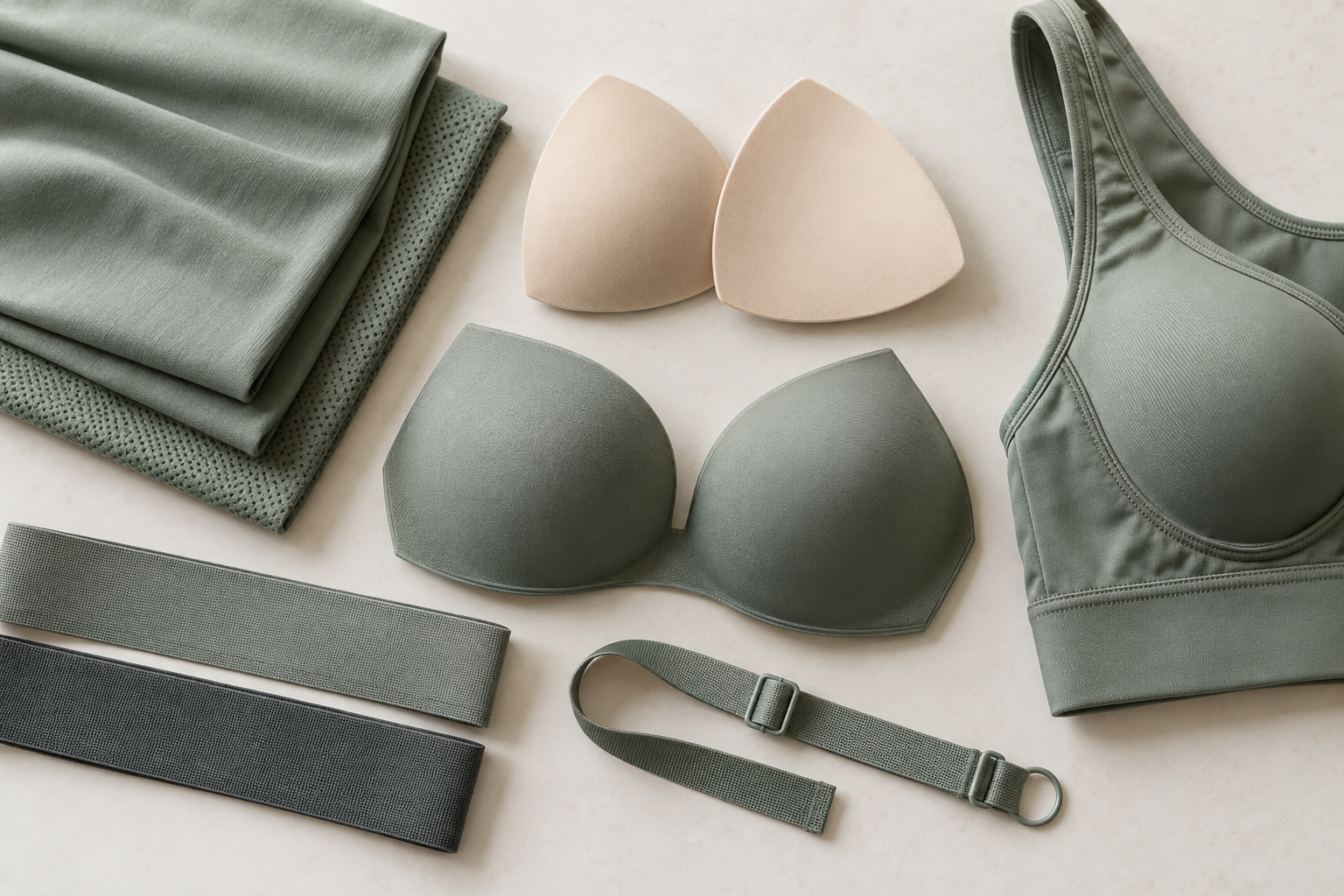
Custom sports bra development turns a product concept into a documented pattern, material selection and physical sample that can be evaluated before bulk production. It includes the outer fabric, lining, cup or pad system, elastic, straps, seams, size grading and branding.
A private-label project may start with an existing style and agreed branding changes. A new OEM design may require more pattern and construction development. In either case, confirm exactly which parts of the starting design will remain and which will change. Explore Ohsurewear’s custom sports bra range for reference directions, then document your own requirements.
What Should You Confirm Before Sampling?
| Decision | What to specify | What to check on the sample |
|---|---|---|
| Wearer and activity | Target market, bust and underbust range, intended activities and benchmark garment. | Coverage, comfort and movement control on representative wearers. |
| Fit and sizing | Body size chart, garment measurement points, base size, grading and tolerances. | Band position, neckline, armholes, cup coverage and fit at size-range extremes. |
| Fabric and lining | Material code, composition, GSM, knit, stretch directions, recovery, color and lining. | Handfeel, opacity when stretched, recovery and behavior after agreed washing. |
| Cup system | Removable inserts, fixed padding or molded cups; dimensions, thickness and attachment. | Coverage, edges, shifting, folding and cup-to-body fit. |
| Underband and straps | Elastic type and width, finished band dimensions, strap geometry and adjusters. | Ride-up, rolling, pressure points, slippage and ease of putting on. |
| Seams and trims | Seam locations, stitch construction, thread, closures and skin-contact surfaces. | Seam stretch, rubbing, bulk and security of attachments. |
| Branding | Artwork, dimensions, placement, application method, labels and packaging. | Placement accuracy, stretch compatibility and durability after agreed care. |
| Commercial scope | Quantity per style/color, size ratio, sample fee, revisions and delivery destination. | Written confirmation of materials used and any deviations from the brief. |
Define support as an evaluation target
“High support” is incomplete as a specification. Tell the manufacturer who will wear the bra, what movement it must accommodate and how you will evaluate it. A running concept and a studio concept can require different coverage, adjustability and construction. A racerback, thicker pad or higher spandex percentage alone does not establish support performance.
Agree on representative wearers and a repeatable movement routine. Record perceived movement control, pressure, rubbing and stability. If you plan to publish a measured performance claim, agree on suitable testing and supporting evidence before making that claim.
Separate body measurements from garment measurements
A body size chart describes the intended wearer. A garment chart describes the finished product. Include diagrams showing how each garment measurement is taken, whether the piece is relaxed or stretched, and whether a value is a flat width or a full circumference. A single bust measurement does not describe the relationship between bust volume and band size.
Start with an agreed base size, then review grading and representative sizes before approving the full range. Straps, cups and elastic may need different adjustments across sizes; do not assume that every component can be enlarged by the same amount.
Specify fabric beyond its composition
Two nylon/spandex fabrics with the same fiber percentages can behave differently because of yarn, knit structure, weight and finishing. Request an identifiable fabric reference and confirm the lining as well as the outer layer. Review the complete fabric-and-construction combination rather than selecting a material from composition alone.
Compare Cup, Strap and Support Construction Options
The following comparison is a development guide. Final suitability depends on the complete garment, intended wearer and sample evaluation.
| Option | Development advantage | What needs confirmation |
|---|---|---|
| Compression construction | Uses the garment’s fit and tension to hold the bust closer to the body. | Pressure distribution, coverage, breathing comfort and movement control. |
| Encapsulation construction | Uses shaped sections or cups to accommodate and support each breast. | Cup volume, shaping, seams and the relationship between cup and band sizing. |
| Removable pads | Allows the wearer to remove inserts for personal preference or care. | Pocket opening, pad dimensions, visibility and movement during wear and washing. |
| Fixed padding | Reduces the need to remove and reposition separate inserts. | Attachment, edge visibility, folding, drying and wash behavior. |
| Molded cups | Provides a defined cup shape. | Available molds, cup grading, compatibility with the pattern and any tooling cost. |
| Adjustable straps | Allows some strap-length adjustment. | Adjustment range, slider security, hardware comfort and strap strength. |
| Fixed straps | Uses a set strap length without adjustment hardware. | Length and angle across target body proportions and the proposed size range. |
A Practical Sampling and Approval Process
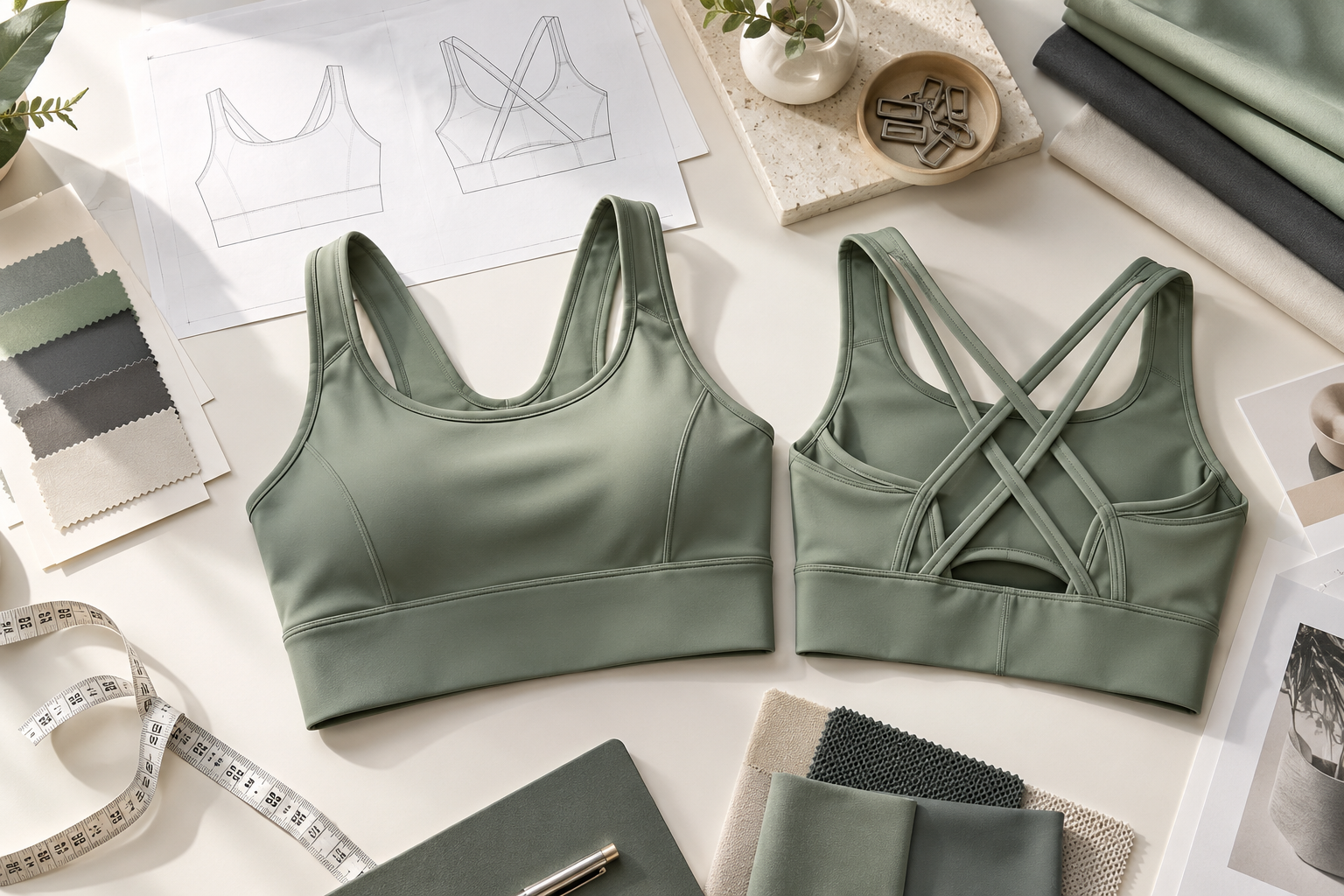
- Submit one controlled brief. Include front and back references, a measurement chart, material requirements, construction details, artwork and planned quantities. Give the document a version number.
- Resolve feasibility before cutting. Ask which fabrics, cups, elastics and hardware are available. Record substitutions, costs and any limitations before authorizing the sample.
- Confirm the sample scope. State the size, color and components to be used. Identify temporary materials so the first prototype is not mistaken for the final production standard.
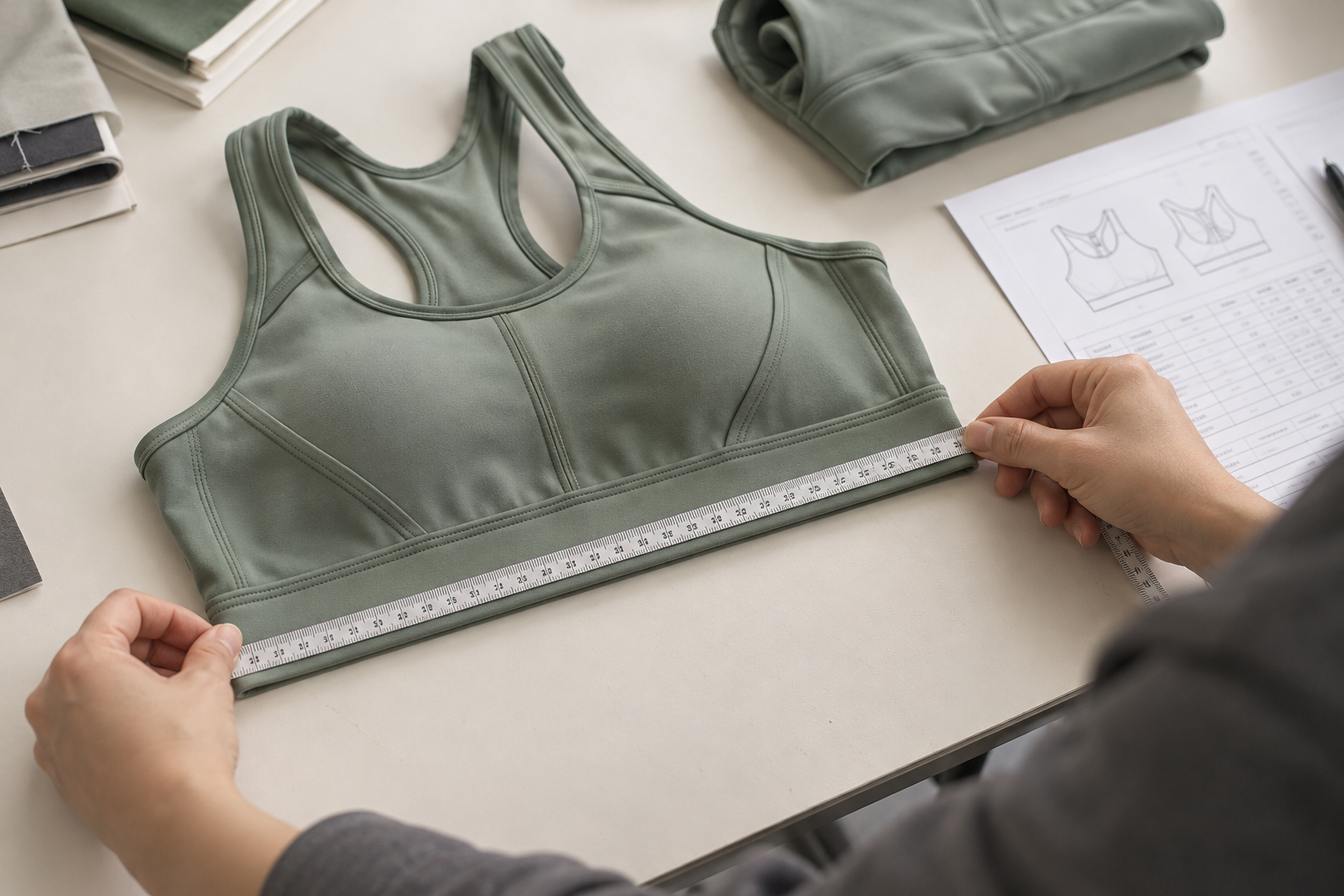
- Measure and fit the sample. Compare actual measurements with the agreed chart. Check coverage, band position, strap tension, armhole comfort and ease of dressing on the intended wearer.
- Run movement and care reviews. Use the intended activity and agreed wash conditions. Check riding up, strap slipping, pad movement, seam discomfort, recovery and changes in appearance or measurements.
- Return consolidated feedback. Use annotated photos and measurable requests, such as “increase finished strap length by the agreed amount,” rather than “make it more comfortable.” Distinguish required corrections from new design changes.
- Approve the production reference. Keep the approved sample, final tech pack, component list, colors, grading, tolerances and inspection criteria aligned. Approve unresolved materials and size-set questions before releasing bulk production.
Approval checkpoint: A prototype made with substitute fabric can help assess design direction, but it cannot fully validate the fit or support of a different bulk fabric. Recheck relevant performance when materials or construction change.
What Affects Sample Cost and Development Time?
The first sample is only one part of the development budget. Ask for a breakdown covering pattern work, materials, cups, trims, branding setup, revisions, testing where required and shipping. Confirm what is included and whether any fee can be credited against a bulk order.
- Existing style versus new pattern: starting from an approved construction may reduce development work, while a new fit or support system requires more review.
- Available versus custom components: custom colors, cup molds, elastic or hardware can add sourcing steps, minimums and setup costs.
- Number of sizes and versions: additional fit sizes, colorways and construction alternatives increase the number of samples to prepare and assess.
- Revision scope: changing fabric, cup shape or support target after the first sample can require further pattern and fit work.
- Approval and transit: distinguish sample-making time from sourcing, shipping, buyer review and subsequent revisions.
For Ohsurewear projects, sample timing is confirmed after reviewing the design, materials and customization requirements. Bulk-production timing is confirmed according to the approved specifications, material availability and production schedule. Request written start conditions and clarify whether quoted days are working or calendar days.
MOQ: Ohsurewear’s published starting point is 100 pieces per style per color, with mixed sizes available. Final order requirements are subject to project confirmation, including fabric, color, branding and packaging minimums.
Common Mistakes That Lead to Avoidable Revisions
- Sending only a reference photo. Add measurements and construction requirements; photos do not reveal fabric recovery, elastic tension or internal layers.
- Treating padding as proof of support. Assess the complete bra. Pads can affect shape and coverage without resolving band or strap problems.
- Approving only the easiest size to fit. Review representative wearers and sizes, including the ends of the intended range.
- Changing several variables without tracking them. Record every material and pattern change so you can explain why the next sample fits differently.
- Reviewing comfort only while standing still. Include the actual activity and care conditions in the sample review.
- Applying logos after fit approval without testing. Check application heat, stretch, placement and skin comfort on the chosen fabric.
- Approving by message without a final specification. Link written approval to the exact sample and document version that production should follow.
A Manufacturer’s Perspective: Make Sample Feedback Traceable
Ohsurewear supports OEM, ODM and private-label activewear development, including sports bras. Its services cover design-reference review, material selection, sampling, branding and packaging. Buyers can review the OEM and ODM service scope before defining their project.
A practical development lesson is to separate a design preference from a fit defect. If the underband rides up, record the wearer’s measurements, sample size, finished band measurement and movement involved. That gives the development team useful evidence for reviewing band tension, pattern balance or strap interaction.
This is development guidance, not a reported customer case. For bulk planning, Ohsurewear describes checks covering raw materials, printing, semi-finished products and finished garments. Agree on sports-bra-specific measurements and acceptance criteria for your order; see the quality-control overview .
A Copyable Brief for Your First Sports Bra Sample
Complete the fields below before requesting a development quote. Mark unresolved items as “please advise” so they can be discussed before sampling.
Brand / target market: [Brand name; country or region]
Target wearer / intended activity: [Body size range; activities; support expectations]
Design reference: [Front/back drawings, photos or physical sample; features to change]
Fit specification: [Body chart; sample size; garment measurements; grading; tolerances]
Fabric and lining: [Material reference; composition; GSM; stretch/recovery; color]
Cups / pads: [Type; dimensions; thickness; attachment or pocket details]
Underband / straps: [Elastic; width; finished dimensions; adjustability; hardware]
Seams / finishing: [Construction; seam placement; closures; skin-contact requirements]
Branding / packaging: [Artwork; dimensions; placement; labels; hangtags; packing]
Planned order: [Pieces per style/color; size breakdown; target budget and quote basis]
Sample evaluation: [Fit wearers; movement routine; care checks; acceptance criteria]
Commercial confirmation: [Fees; included revisions; timing start conditions; destination]
Custom Sports Bra Development FAQ
Can I request a sample without a complete tech pack?
Yes. Ohsurewear accepts design references such as photographs, PDF designs and physical samples for discussion. Confirm the missing measurements, materials, construction and branding details before authorizing development. A reference image alone is not a production specification.
Which fabric is best for a custom sports bra?
There is no single best fabric for every design. Compare the intended activity, fit, handfeel, opacity, stretch and recovery, then evaluate the outer fabric together with the lining, cups and elastic. A fiber percentage alone does not establish performance.
Are removable pads or fixed pads better?
Choose according to the wearer experience you want. Removable pads offer flexibility but need secure pockets and suitable dimensions. Fixed pads reduce repositioning but require evaluation of attachment, edges and care behavior. Neither option alone determines the support level.
Can one approved sample cover every size?
A base-size sample establishes an initial fit reference. It does not prove that all graded sizes will fit correctly. Agree on representative sizes and wearers, and review how cups, straps, coverage and band dimensions change across the range.
How long does sports bra sampling take?
Ohsurewear confirms timing after reviewing the design, materials and customization requirements. Ask whether sourcing, revisions and delivery are included, what starts the schedule and whether the quotation uses working or calendar days.
What is Ohsurewear’s minimum order quantity?
MOQ starts at 100 pieces per style per color, with mixed sizes available. Final order requirements are subject to project confirmation. This does not mean 100 pieces divided freely across multiple designs and colors.
What should be approved before bulk production?
Approve the final sample and document version, fabric and components, colors, measurements, grading, tolerances, branding, packaging and agreed inspection criteria. Close out any temporary materials or sample deviations in writing.
Ready to Develop Your Custom Sports Bra?
Send Ohsurewear your design references, target activity, size range, material preferences and planned quantities. Include the decisions you have confirmed and the areas where you need development input so the team can review feasibility, sample scope and quotation requirements.
Explore custom sports bras , review OEM and ODM services , or check the fabric selection service .
Discuss Your Sports Bra Project