How Ohsure Supports OEM, ODM and Private Label Projects
- Share
- Issue Time
- Sep 7,2026
Summary
See how Ohsure supports OEM, ODM and private-label activewear projects from scope review and sampling through branding, bulk production, quality checks and shipping coordination.

OEM, ODM and private label service guide · Evidence checked September 7, 2026
How Ohsure Supports OEM, ODM and Private Label Projects
Direct answer: Ohsure supports three practical starting points for an activewear project. OEM begins with the brand's design or controlled specification. ODM begins with a commercial concept and uses more supplier development support. Private label begins with an existing or pre-developed garment platform and adds agreed branding or limited changes. Across all three routes, Ohsure's published services cover project review, fabric and trim selection, pattern or sample development where required, branding, bulk production, quality checks, packaging and shipping coordination. The written quotation and approved production package—not the route name—define the exact service scope.
One Factory Relationship, Three Different Starting Points
OEM, ODM and private label are commercial labels rather than universal legal definitions. Different suppliers may use them differently. Ohsure's public service pages describe support for all three, including pattern and sample work, fabric sourcing, logo processes, labels, packaging and bulk manufacturing. Buyers should still require every task, deliverable, revision allowance, charge and ownership term to appear in writing.
| Route | Typical starting point | Ohsure support | Buyer must control | Best planning use |
|---|---|---|---|---|
| OEM | Tech pack, original design or controlled reference with measurable changes | Feasibility review, pattern or counter-sample work as agreed, material sourcing, sampling, production and inspection | Design intent, measurements, performance requirements, approvals and acceptance criteria | Differentiated products where the brand can manage technical decisions |
| ODM | Target customer, product concept, mood board or supplier design direction | Greater design-development input, base-pattern or construction proposals, fabric options, samples and manufacturing | Commercial brief, required versus optional features, rights, final choices and approvals | Brands needing product-development support without starting from a finished tech pack |
| Private label | Existing or pre-developed garment platform | Base-style selection, agreed colors or fabrics, logo application, labels, packaging and production or stock allocation | Exact base-style status, allowed changes, branding files, quantity split and reorder terms | Faster market testing with lower original-development workload |
The route can change during development. A private-label request may become ODM-like when the buyer asks for substantial design adaptation. An ODM project may become OEM-like after the brand takes control of a complete specification. Record the change because it can affect pattern work, samples, minimums, cost, timing and ownership.
What Ohsure Supports Across All Three Routes
Project definition
The team reviews the product category, target user, design references, size range, quantity, destination market, target timing and commercial expectations. A clear brief lets the factory identify missing information before sampling or quotation.
Materials and components
Ohsure's public pages list sourcing or selection routes that include nylon, polyester and elastane blends, cotton, bamboo, rayon, recycled fabrics and other options. Availability, composition, performance, certification and custom-color requirements must be confirmed for the exact order.
Product development
Depending on the route, support can include design clarification, pattern development or adjustment, prototype work, measurement review and sample revisions. The buyer should identify the sample type and the decision expected at each round.
Branding and presentation
Published options include printing, embroidery, heat-applied logos, rubber logos, digital printing, private labels, hangtags and custom packaging. Technique suitability depends on fabric, stretch, artwork, placement, care conditions and order quantity.
Bulk manufacturing
After the final sample and production package are approved, materials are booked and the order is scheduled for cutting, decoration, sewing, finishing and packing. Any material or process substitution should be disclosed and reapproved before use.
Quality and shipment
Ohsure's published quality information describes checks across incoming fabric, cutting or decoration, sewing and finished goods. Buyers should agree inspection evidence, defect rules, tolerances, packing checks, shipment release and the remedy for nonconformance.
How an OEM Project Moves Through Ohsure
An OEM inquiry should arrive with enough technical detail to test feasibility. The brand normally owns the product intent, while the factory converts the approved information into a repeatable manufacturing process. Ohsure can review the construction, propose feasible materials or methods, create or adjust patterns when included, make samples and execute production.
- Review the specification. Reconcile sketches, measurement chart, bill of materials, artwork, labels, packaging and test expectations.
- Close feasibility gaps. Identify conflicting measurements, unavailable components, risky seams, unclear tolerances or performance claims without test methods.
- Develop and revise samples. Record actual measurements, fit observations, movement performance, construction, appearance and open actions by version.
- Freeze the production package. Pair the approved sample with the final specification, material references, artwork, grading, packing and quality plan.
- Produce and verify. Control incoming materials and bulk workmanship against the released references, then close discrepancies before shipment.
OEM gives a brand more specification control, but it also requires faster and more disciplined approvals. The factory can advise on manufacturability; it cannot decide the brand's target fit, customer promise or acceptable trade-offs without authorization.
How an ODM Project Uses More Development Support
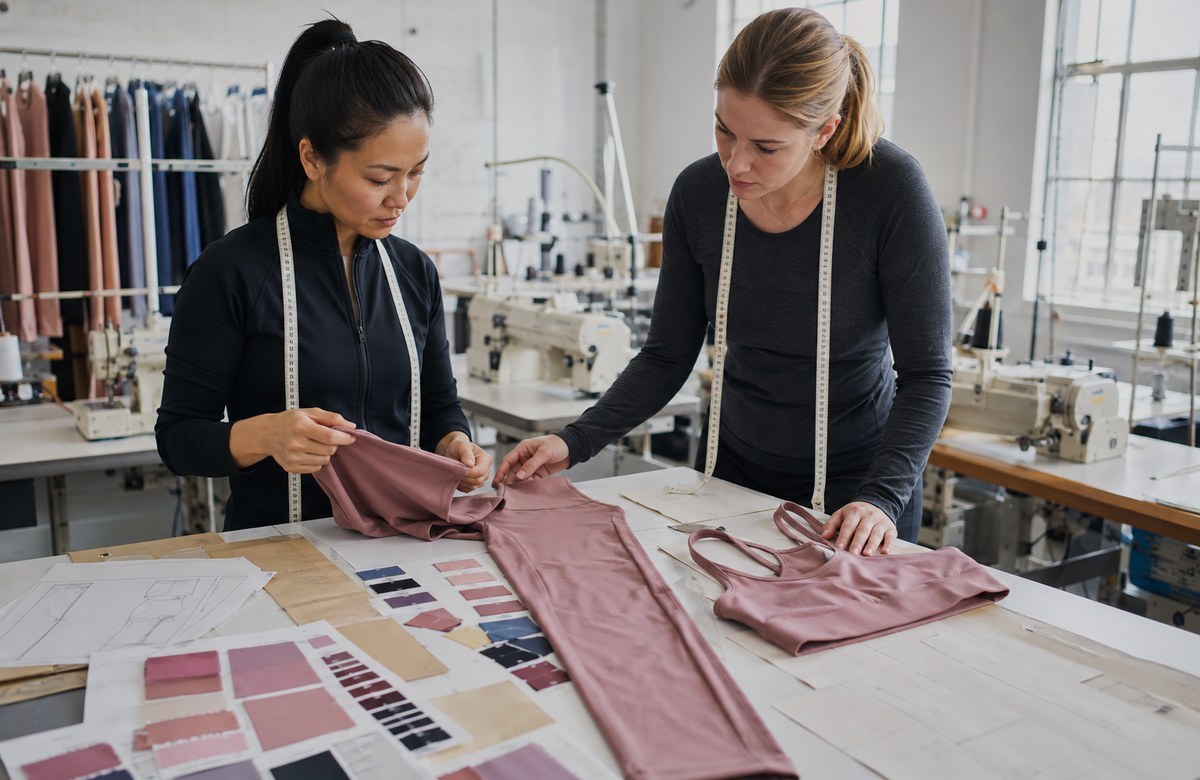
An ODM buyer may know the customer, price position and desired experience without having a production-ready design. Ohsure can contribute more product-development input by presenting relevant style directions, fabric options, construction approaches and sample solutions. That support works best when the brand provides a precise commercial problem rather than a collection of unrelated inspiration images.
A useful ODM brief states the activity, user, silhouette, fit intent, support or coverage need, priority features, fabric hand feel, color direction, size range, target landed-cost basis, quantity, launch window and selling markets. Mark each request as mandatory, preferred or optional. This gives the development team room to solve the right problem without silently changing the commercial target.
Rights must be decided before development expands
Identify which patterns, blocks, drawings and know-how existed before the project; which assets the buyer supplied; which new files will be created; who may reuse them; and whether any exclusivity is included. Paying for development does not by itself prove ownership or exclusivity.
How Private Label Keeps the Starting Point Narrower
Private label normally uses an Ohsure or supplier-developed base garment and adds the buyer's agreed brand identity. The project may involve selecting a base style, available fabric or color, logo method, labels, hangtags and packaging. Some base products may be in stock, while others may be made after order. The quotation should state which model applies.
The buyer should not assume that every visible feature is freely interchangeable. A new fabric, custom dye, altered waistband, pocket, support structure or measurement set can trigger material minimums, pattern work, extra samples and a longer schedule. Ask for a change-impact review before treating the request as a simple private-label option.
- Record the exact base-style code, revision, size sample and material reference.
- Confirm whether the base design may be supplied to other brands.
- List available versus custom colors and the approval standard for each.
- Approve logo artwork, method, dimensions, location and durability reference.
- Define labels, packaging, carton marks and destination-market information.
- Confirm reorder availability, material substitution rules and archived references.
The Ohsure Project Intake Pack
This original intake structure lets a buyer prepare one controlled package while showing which route is most realistic. It is a planning tool, not a supplier acceptance rule.
| Information block | Minimum useful content | OEM | ODM | Private label |
|---|---|---|---|---|
| Commercial brief | Customer, activity, market, retail position, launch date and target cost basis | Required | Required | Required |
| Design starting point | Tech pack or controlled reference; concept brief; or exact supplier base style | Technical | Conceptual | Selected base |
| Product requirements | Fit, size range, fabric performance, construction, color and branding priorities | Detailed | Prioritized | Within options |
| Quantity plan | Units by style, color and size, with test order and reorder assumptions separated | Required | Required | Required |
| Evidence plan | Sample types, measurements, wear or lab tests, artwork proof and inspection criteria | Buyer-led | Jointly defined | Base-style verification |
| Rights and change control | Ownership, reuse, confidentiality, revision authority and written approval owner | Critical | Critical | Base-design terms |
Commercial Numbers Need Project-Level Confirmation
Ohsure's current public custom-manufacturing page lists samples in 3–7 working days, a minimum from 100 pieces per style and color, and bulk production in 20–35 days. Another Ohsure private-label page describes samples within 15 days. These public figures use different contexts, so they should be treated as orientation rather than a universal promise.
The written quotation should state the exact minimum basis, sample scope and clock-start condition. Timing can change with design complexity, revision count, fabric availability, custom dyeing, special trims, tests, holiday capacity, buyer response time and shipping. A bulk lead time should say whether it starts after deposit, final sample approval, artwork approval and material availability.
MOQ: Is the minimum per order, style, color, fabric lot, logo method or packaging component?
Sample time: Does it include pattern work, material search, revisions and courier transit?
Bulk time: Are material booking, testing, inspection and packing included?
Price: Which development, setup, branding, packaging, testing and delivery costs are excluded?
A Shared Approval Chain for OEM, ODM and Private Label
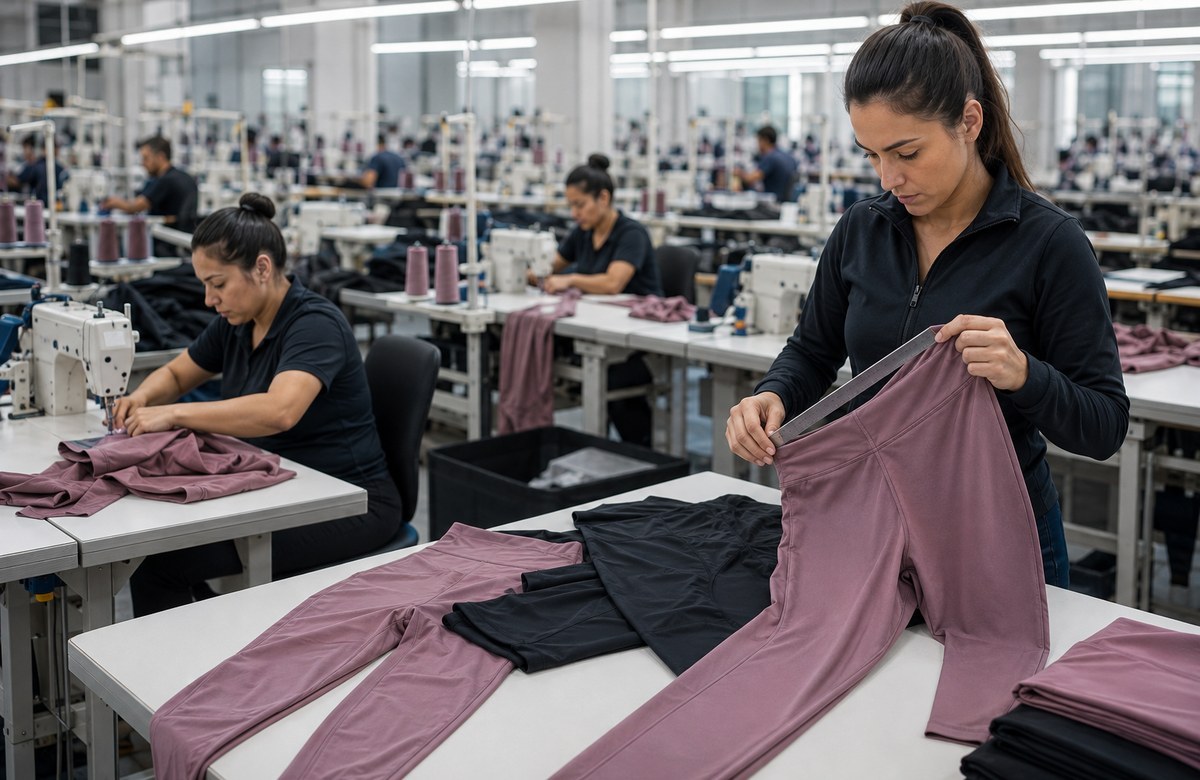
All three routes need the same basic control logic even though their development workload differs. Each stage should end with a named decision, evidence and a clear owner.
Keep one dated revision log. When a fabric, measurement, artwork file or construction detail changes, record the affected cost, timing, tests and documents. Approval by chat message can be ambiguous if the file version is not identified; use a consolidated approval record tied to the exact sample and specification.
Frequently Asked Questions
Can Ohsure start from only a reference photo?
Ohsure's public OEM/ODM information says buyers can send design photos or ideas for counter-sample discussion. A photo alone does not define hidden construction, measurements, fabric performance, ownership or acceptance criteria. Expect clarification and a controlled specification before bulk production.
Does private label mean finished stock is always available?
No. Ohsure says some products may be in stock but that customization is its main business. Confirm whether a selected item is stocked, made to order from an existing platform or modified through new development.
Who chooses the fabric?
The buyer defines the intended feel, performance, composition, price and market requirements. Ohsure can source or recommend options for comparison. The final material should be approved with a code, color reference, relevant test plan and substitution rule.
Can logo, label and packaging be handled in one project?
Ohsure publicly lists multiple logo processes, private labels, hangtags and custom packaging. Confirm artwork format, dimensions, placement, color standard, setup charge, component minimum, sample proof and packing specification for the exact order.
When is bulk production authorized?
After the buyer and factory close open sample issues and release a final package covering the approved garment, measurements, materials, construction, artwork, labels, packaging, quantity and quality criteria. Payment alone should not replace technical approval.
Which route is best for a startup?
Private label may reduce original development work when the main goal is market testing. ODM suits a startup with a validated product problem but incomplete technical design. OEM suits a brand ready to control a differentiated specification. Compare total cash, workload, ownership and risk rather than choosing by acronym.
Service Summary
Ohsure can support a brand from three different starting points: manufacture a buyer-controlled OEM specification, contribute more development work through ODM, or customize a supplier-developed platform through private label. The common service chain covers scope review, material and product development, sampling, branding, bulk execution, quality checks, packaging and shipping coordination. The safest project converts that broad capability into a written, version-controlled scope with measurable approvals.
For current company and service context, review About Ohsure, browse the product catalog, compare related guidance in the industry blog, and use the published contact information when requesting project-specific confirmation.
Editorial note: Public service facts were checked on September 7, 2026 against Ohsure's About, OEM/ODM, private-label, custom-manufacturer and quality-process pages. Minimums, sample timing, production timing, materials and processes depend on the exact style and written quotation. No unverified certification, client result or universal price claim is made in this guide.