How Sample Costs, Fabric Costs and Branding Affect Your Unit Price
- Share
- publisher
- Ohsure
- Issue Time
- Sep 17,2026
Summary
Learn how sample development, fabric consumption, material minimums, logos, labels and packaging change the real per-unit cost of custom activewear.

Activewear cost guide · Evidence checked September 17, 2026
How Sample Costs, Fabric Costs and Branding Affect Your Unit Price
Direct answer: Your quoted garment price is only one part of the real unit cost. Samples and other development charges are normally spread across the number of sellable units, fabric cost changes with consumption and material commitment, while labels, logos and packaging usually add a cost to every piece. Compare suppliers with the same cost boundary and quantity.
Start With the Cost Boundary
A unit price is meaningful only when the quotation states what it includes. One supplier may quote a finished garment at the factory, while another includes custom labels, individual packaging or transport to a port. A lower number can become the more expensive option when excluded charges are added.
Before comparing prices, align the product specification, quantity per style and color, size mix, fabric article, color route, logo method, labels, packaging, inspection level, delivery term and payment assumptions. If any of these differ, the quotes are not directly comparable.
Where Each Cost Enters the Unit Price
| Cost item | Typical charging basis | How it affects unit cost | What to confirm |
|---|---|---|---|
| Pattern and tech review | Per new style or development round | Allocated across expected sellable units | Included files, revisions and ownership |
| Prototype or fit sample | Per sample and revision | High impact on a small launch; declines when spread across more units | Courier, fabric, trims and bulk-order credit |
| Fabric | Per meter or kilogram, plus minimum commitment | Flows through consumption, waste and any unused balance | Article, width, weight, color, lot, usable quantity and testing |
| Cutting and sewing | Per piece, affected by operation time | Usually embedded in the bulk garment quote | Construction, seam type, reinforcement and size range |
| Logo application | Setup plus per placement or per piece | Setup is allocated; application repeats on every garment | Technique, dimensions, colors, placement and approval sample |
| Labels and hangtags | Per piece, often with supplier MOQ | Adds per garment; unused stock can create extra exposure | Artwork, material, language, legal content and ownership of balance |
| Packaging | Per piece or carton | Adds directly or through carton allocation | Bag, sticker, barcode, folding and carton specification |
| Testing and inspection | Per test, report or inspection day | Allocated across the accepted sellable quantity | Standard, scope, laboratory, sampling plan and retest responsibility |
How Sample Costs Change the Real First-Order Cost
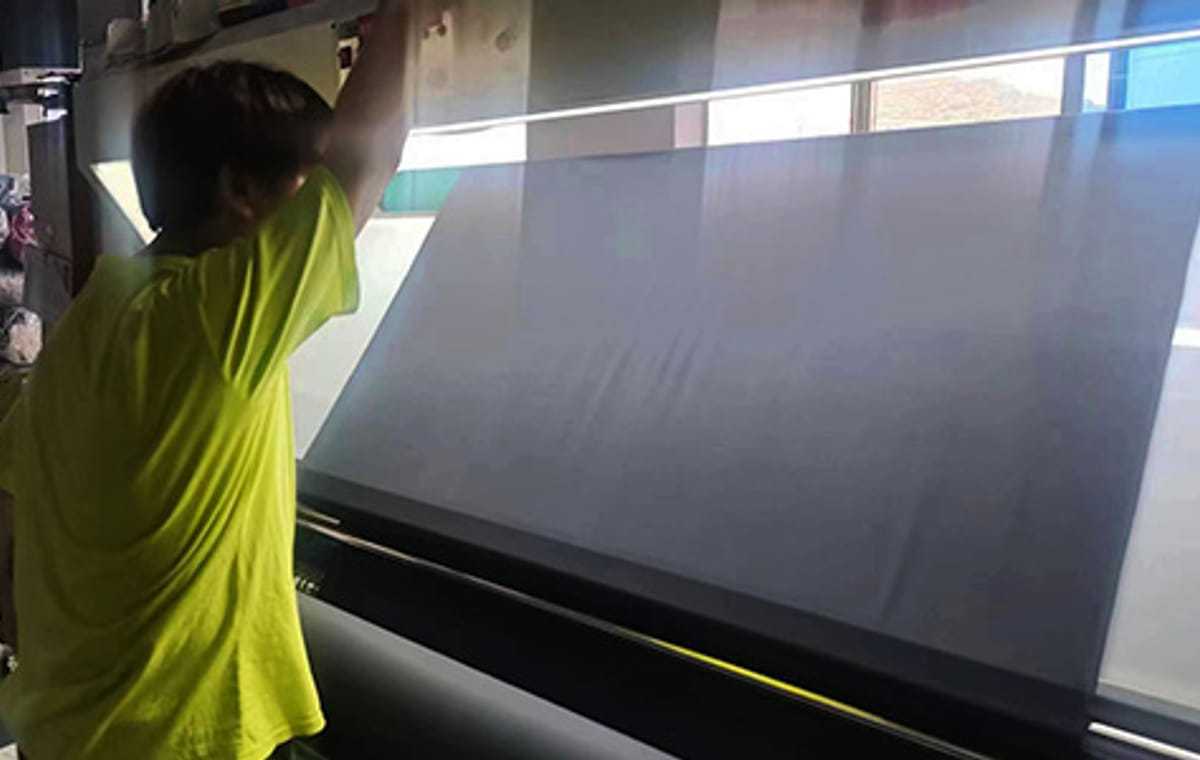
A sample is not simply a miniature bulk garment. Development may involve specification review, pattern work, material sourcing, cutting, sewing, finishing, measurements, comments and another revision. These tasks occur before the factory can repeat a stable process at bulk speed.
Separate necessary development from optional duplication. A fit sample may answer construction and measurement questions, while a pre-production sample should represent the approved bulk specification. Extra color samples, sales samples or photo samples can serve a business purpose, but their quantities and timing should be planned rather than assumed to be free.
If development costs total $600, the allocation is $6.00 across 100 sellable units, $3.00 across 200 units and $1.50 across 400 units. These figures illustrate the calculation only; they are not Ohsure prices or universal market rates. If a fee is credited after bulk production, allocate only the non-credited amount and document the credit condition.
Fabric price is only the starting input
Usable fabric cost depends on price, width, weight, marker efficiency, size mix, shrinkage, defects and cutting loss. Two fabrics with the same price per meter can produce different garment costs if their usable widths or consumption differ.
Minimum commitment can exceed consumption
Custom dyeing or special material production may require a fabric lot larger than the order consumes. Treat the paid balance separately: identify ownership, usable quantity, storage period and likely future use rather than assuming it has full value.
Fabric Cost Calculation
Excess-material allocation = unrecoverable paid balance ÷ expected sellable units.
For a reliable quote, ask whether consumption is based on an approved pattern and marker or on an early estimate. Confirm whether the quoted fabric price includes dyeing, finishing, testing, transport to the garment factory and expected supplier tolerance. For a deeper route comparison, review in-stock versus custom-dyed fabric.
How Branding Changes Price
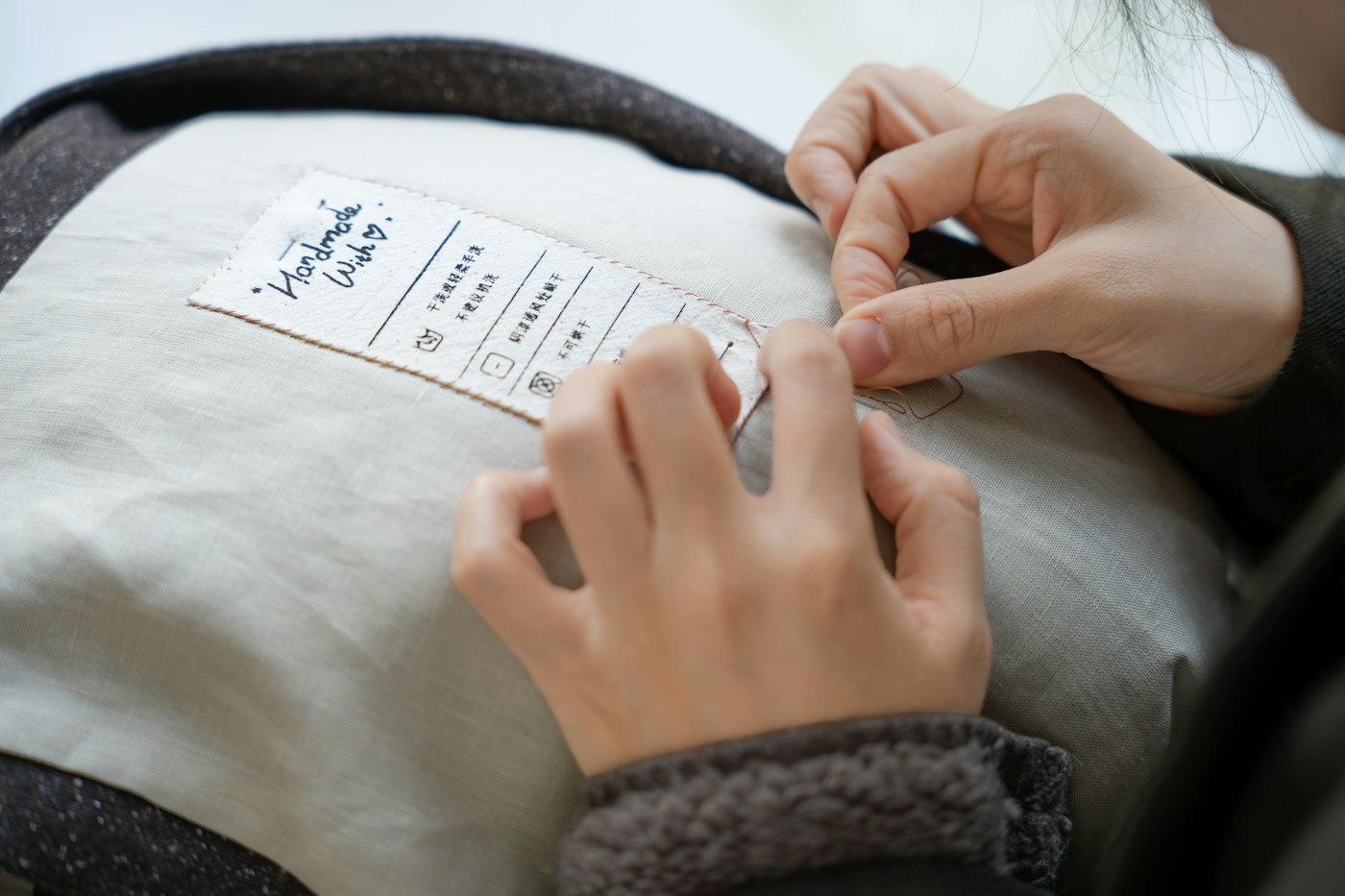
Branding is not one interchangeable line item. Screen printing, heat transfer, embroidery, silicone badges, woven labels and reflective applications use different equipment, setup work, materials, labor and quality controls. Price can change with artwork size, color count, stitch count, placement, fabric compatibility and order quantity.
Separate the setup or development fee from the per-piece application cost. Also identify component minimums. A label supplier may produce more units than the garment order requires, which creates leftover inventory. Record who owns it, where it is stored, how long it remains usable and whether the artwork may change before the next order.
- Approve the production-ready artwork and exact dimensions.
- Identify every placement by garment panel and distance from a stable reference point.
- Confirm the process, colors, finish and fabric compatibility.
- Approve a physical strike-off or branded sample when relevant.
- Define acceptable appearance, adhesion, stretch and wash-performance checks.
- Freeze care, fiber-content, country-of-origin and size-label information required for the target market.
Illustrative Unit-Cost Bridge
The table below shows how the same fixed development amount changes when order quantity changes. All values are hypothetical planning inputs, exclude tax and duty, and are not supplier quotations.
| Planning input | 100 units | 200 units | 400 units |
|---|---|---|---|
| Bulk garment including consumed fabric | $13.20 | $12.40 | $11.90 |
| Branding and packaging per piece | $1.60 | $1.45 | $1.35 |
| One-time development total | $600 | $600 | $600 |
| Allocated development per piece | $6.00 | $3.00 | $1.50 |
| Illustrative factory-side planning total | $20.80 | $16.85 | $14.75 |
This comparison still does not equal landed cost. Add sample courier, inspection, freight, insurance, duty, brokerage, payment charges, rejected-unit allowance and delivery to the final warehouse. See the separate guide to budgeting a 100-piece custom activewear order.
Questions to Send With Every Quote Request
- What is one-time? List pattern, sample, logo setup, testing and other development charges.
- What repeats per piece? Separate fabric, cut-and-sew, logo application, labels and packaging.
- What has its own MOQ? Record garment, fabric, dye lot, logo, label, hangtag and packaging minimums.
- What is credited? State the credit amount, qualifying bulk order and expiry condition.
- What remains after production? Record ownership and storage terms for excess fabric and trims.
- What delivery term applies? Name the Incoterm or exact handover point and excluded charges.
- What quantity is the divisor? Allocate costs across accepted sellable units, not merely ordered units.
Quantity structure also matters. Review whether the MOQ is counted per style, color or size and how low-MOQ benefits and hidden costs affect the first production run.
Frequently Asked Questions
Should sample cost be included in retail margin calculations?
Include the non-recoverable portion in the first-order cost model. For ongoing reorders, keep development separate unless new revisions create additional cost. This makes first-launch profitability and repeat-order margin visible.
Does a higher fabric price always create a higher garment cost?
Not always. Usable width, consumption, cutting efficiency, loss, finishing and minimum commitment also matter. Compare cost per acceptable garment, not the material rate alone.
Why can adding a logo increase MOQ?
The logo process or component supplier may have its own setup and production minimum. The garment factory's sewing MOQ and the logo supplier's MOQ should be shown separately.
Can leftover labels or fabric reduce the next order price?
Possibly, if the balance is owned by the buyer, correctly identified, safely stored, still compliant and suitable for the reorder. Confirm the remaining usable quantity before pricing the next run.
Why does unit cost rise after changing the size mix?
Larger sizes can change fabric consumption, marker efficiency, packaging or operation time. Ask whether the original quote assumed a particular size ratio and when consumption will be recalculated.
What is the best number for comparing suppliers?
Use a cost per accepted sellable unit at the same delivery point, built from the same specification and quantity. Keep refundable deposits and reusable inventory visible instead of hiding them inside the unit price.
Final Buying Rule
Do not negotiate only the headline unit price. Ask for the cost structure, minimums, assumptions, credits, ownership of unused materials and delivery boundary. A transparent $15 quote can be safer than an incomplete $13 quote when the latter excludes development, branding, excess fabric and logistics.