How to Choose the Best High Waisted Yoga Leggings Manufacturer for Your Activewear Brand
- Share
- Issue Time
- May 13,2026
Summary
Learn how to choose the best high waisted yoga leggings manufacturer for your activewear brand. Compare fabrics, MOQ, quality control, OEM process, lead times, and private label services for premium yoga leggings production.
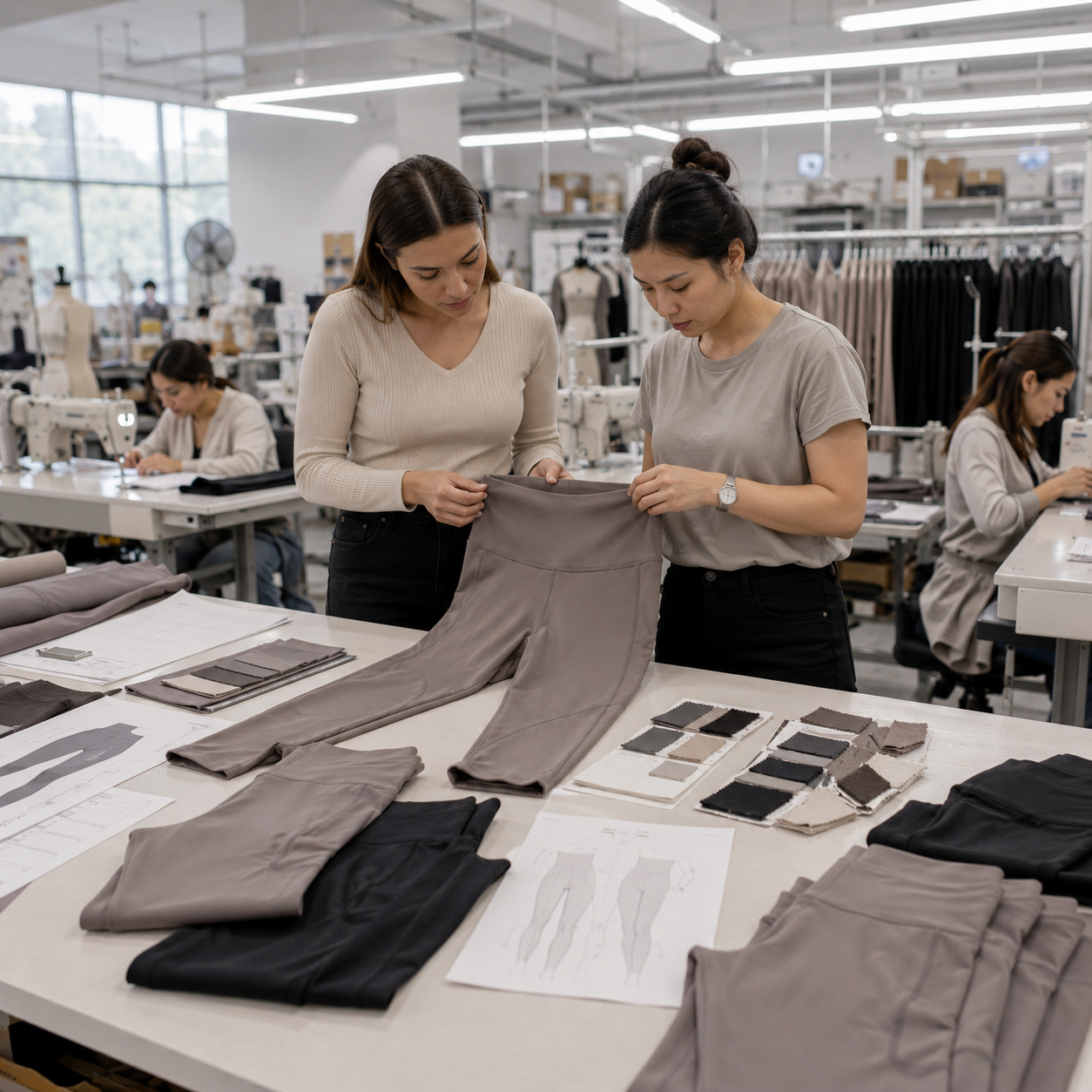
High waisted yoga leggings are a core product category for activewear brands because consumers expect sculpting support, squat-proof coverage, soft fabric handfeel, and reliable stretch recovery.
Choosing the right High Waisted Yoga Leggings Manufacturer helps brands reduce production risks, improve product consistency, and build long-term customer trust.
What Should Brands Know Before Choosing a High Waisted Yoga Leggings Manufacturer?
Brands should know that high waisted yoga leggings require specialized activewear manufacturing experience, not general garment production capability. The manufacturer must understand compression fit, waistband structure, stretch fabric recovery, squat-proof testing, and sample-to-bulk consistency.
A reliable Custom Activewear Manufacturer should support fabric sourcing, pattern development, sampling, private label branding, bulk production, and quality inspection.
Key Takeaways
- High waisted yoga leggings need professional pattern engineering and fabric control.
- Nylon-spandex and polyamide-elastane blends are common premium fabric choices.
- Squat-proof performance depends on GSM, knitting density, stretch recovery, and color opacity.
- Professional sampling usually takes 7–10 days.
- Bulk production commonly takes 25–35 days after sample approval.
- Low MOQ production from 100 pcs per color and style is suitable for growing brands.
- Quality control should include fabric inspection, measurement checking, stitching inspection, and final packing review.
What Makes High Waisted Yoga Leggings Different From Standard Leggings?
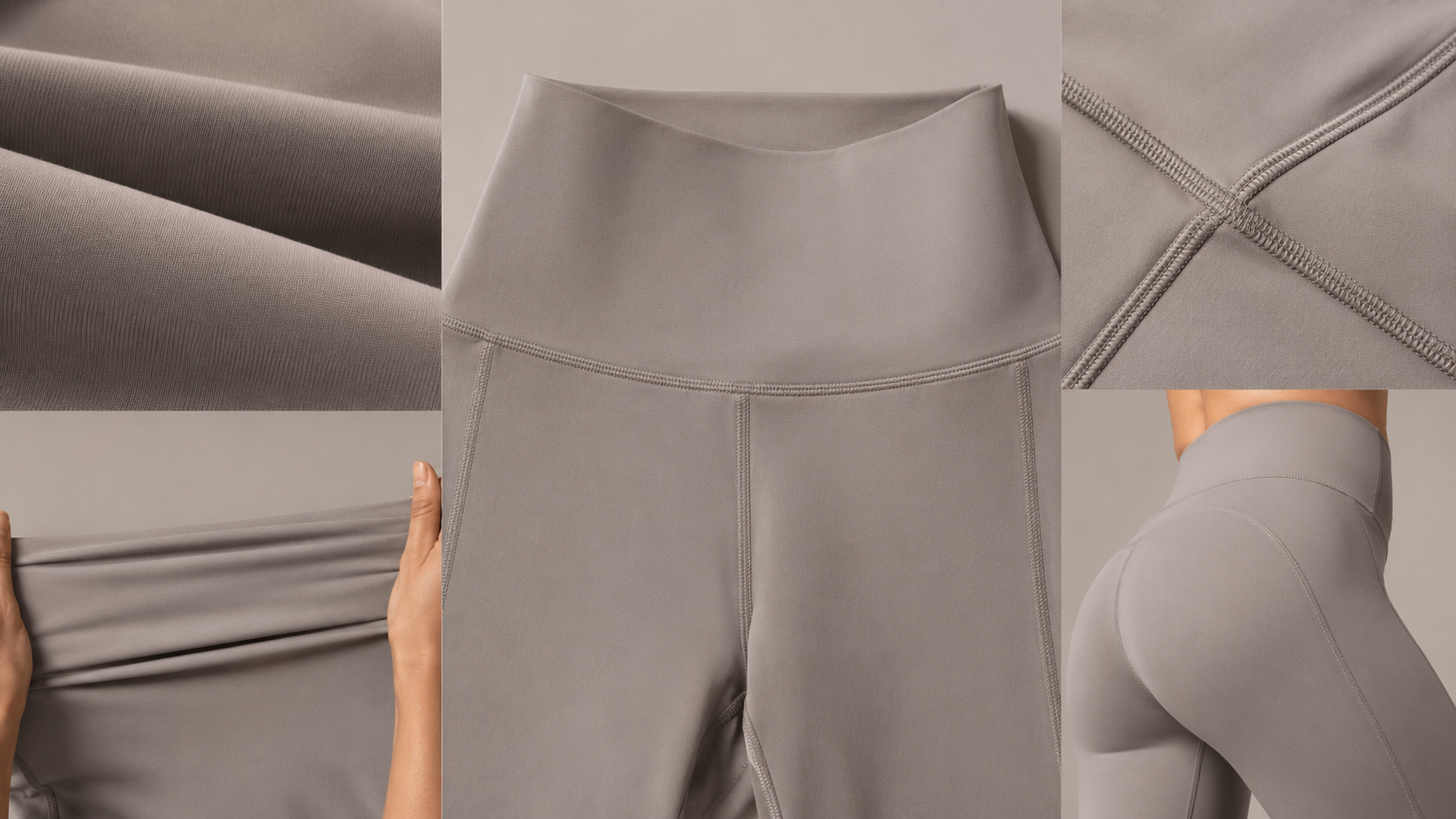
High waisted yoga leggings use an extended waistband structure to provide core support, shaping, and better movement stability during yoga, gym training, Pilates, and daily athleisure wear.
| Feature | Purpose | Manufacturing Requirement |
|---|---|---|
| High-rise waistband | Supports waist and core area | Requires accurate waistband tension and elastic recovery |
| 4-way stretch fabric | Allows movement in multiple directions | Requires stable spandex or elastane content |
| Squat-proof opacity | Prevents transparency during stretching | Requires correct GSM and dense knitting |
| Flatlock stitching | Reduces friction and improves durability | Requires activewear sewing equipment |
| Gusset crotch | Improves flexibility and comfort | Requires accurate pattern construction |
Why Is Choosing the Right High Waisted Yoga Leggings Manufacturer Important?
The manufacturer directly affects fabric performance, fit accuracy, delivery reliability, product reviews, and repeat purchase rates. A poor supplier can create problems such as waistband rolling, transparent fabric, size inconsistency, weak seams, and delayed launches.
Common Problems
- Bulk production does not match the approved sample.
- Waistband loses elasticity after washing.
- Fabric becomes see-through during squats.
- Stitching breaks during high-stretch movement.
- Production timeline is delayed without clear communication.
Professional Factory Solutions
- Pre-production sample approval before bulk production.
- Fabric shrinkage and stretch recovery testing.
- Multi-stage quality control system.
- Dedicated merchandiser communication.
- Clear sampling and bulk production timeline.
How Can Brands Evaluate a High Waisted Yoga Leggings Manufacturer?
Brands can evaluate a high waisted yoga leggings manufacturer by checking specialization, fabric sourcing capability, sample quality, MOQ flexibility, production capacity, quality control standards, and communication efficiency.
| Evaluation Area | What to Check | Why It Matters |
|---|---|---|
| Product specialization | Activewear, leggings, yoga wear, sports bras | Specialized factories understand stretch garment requirements |
| Fabric sourcing | Nylon-spandex, polyamide-elastane, brushed fabric | Fabric affects comfort, opacity, and durability |
| Sampling ability | 7–10 day sampling capability | Fast sampling helps brands launch products sooner |
| MOQ flexibility | 100 pcs per color and style | Low MOQ reduces startup inventory pressure |
| QC system | Fabric, production, final inspection | Quality control reduces customer complaints |
What Fabrics Work Best for High Waisted Yoga Leggings?
The best fabrics for high waisted yoga leggings combine softness, compression, opacity, moisture-wicking performance, and stretch recovery. Premium leggings often use nylon-spandex or polyamide-elastane blends because these materials provide a smooth handfeel and reliable elasticity.
Brands can review more material options through the Fabric Guide and Fabric Selection pages.
| Fabric Type | Advantages | Best For |
|---|---|---|
| Nylon-Spandex | Soft, smooth, strong recovery | Premium yoga leggings |
| Polyamide-Elastane | Durable, flexible, luxury handfeel | High-end activewear collections |
| Polyester-Spandex | Cost-effective and durable | Entry-level fitness leggings |
| Brushed Fabric | Buttery-soft peach-skin texture | Athleisure and lifestyle leggings |
| Compression Interlock | Sculpting and supportive | Gym and training leggings |
Recommended Fabric Specifications
- GSM range: 220–320 GSM
- Stretch type: 4-way stretch
- Opacity: squat-proof testing required
- Recovery: high elasticity retention
- Finish: moisture-wicking and quick-dry treatment
- Pilling resistance: Grade 3–4 minimum recommended
How Does the OEM Yoga Leggings Manufacturing Process Work?
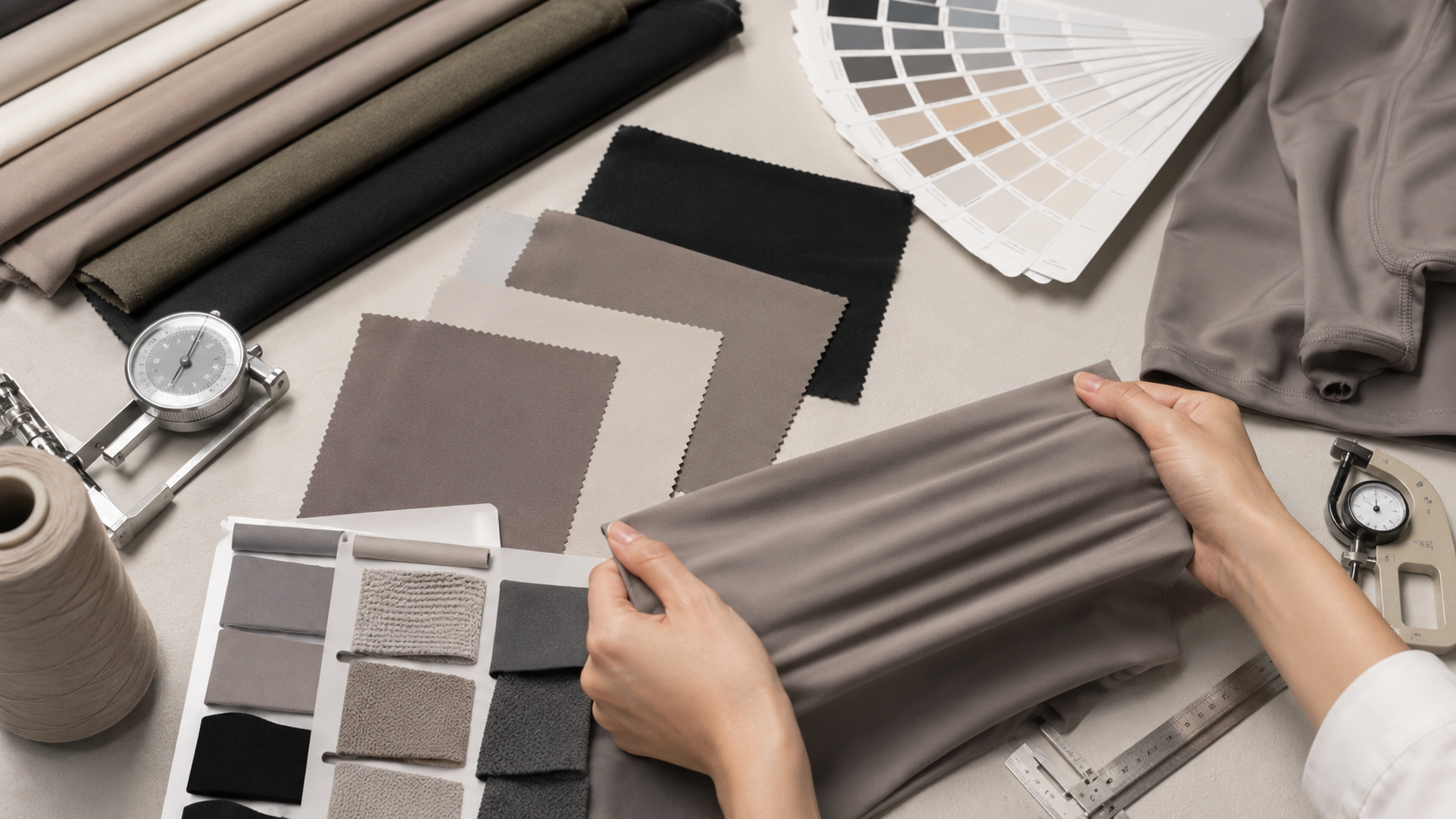
The OEM yoga leggings manufacturing process starts with tech pack review and ends with bulk production inspection. A structured process helps brands control fabric quality, fit accuracy, logo placement, packaging, and delivery time.
- Tech Pack Review: The brand provides design sketches, measurement charts, fabric requirements, logo placement, color references, and trim details.
- Fabric and Material Sourcing: The manufacturer sources performance fabrics, waistband materials, labels, hang tags, and packaging.
- Pattern Making: Pattern makers adjust waistband height, compression fit, gusset shape, and size grading for US/EU markets.
- Sample Development: The factory creates a sample for fit, stitching, fabric, and logo approval. Typical sample time is 7–10 days.
- Pre-Production Approval: The brand confirms the final sample, measurement chart, color, logo, and packaging before bulk production.
- Bulk Production: The factory completes cutting, sewing, logo application, trimming, inspection, and packing. Typical bulk production time is 25–35 days.
- Final Quality Inspection: The QC team checks measurements, stitching, fabric defects, color consistency, packaging, and order quantity.
For a deeper look at production systems, visit the Manufacturing page.
What Quality Control Standards Should a Yoga Leggings Manufacturer Have?
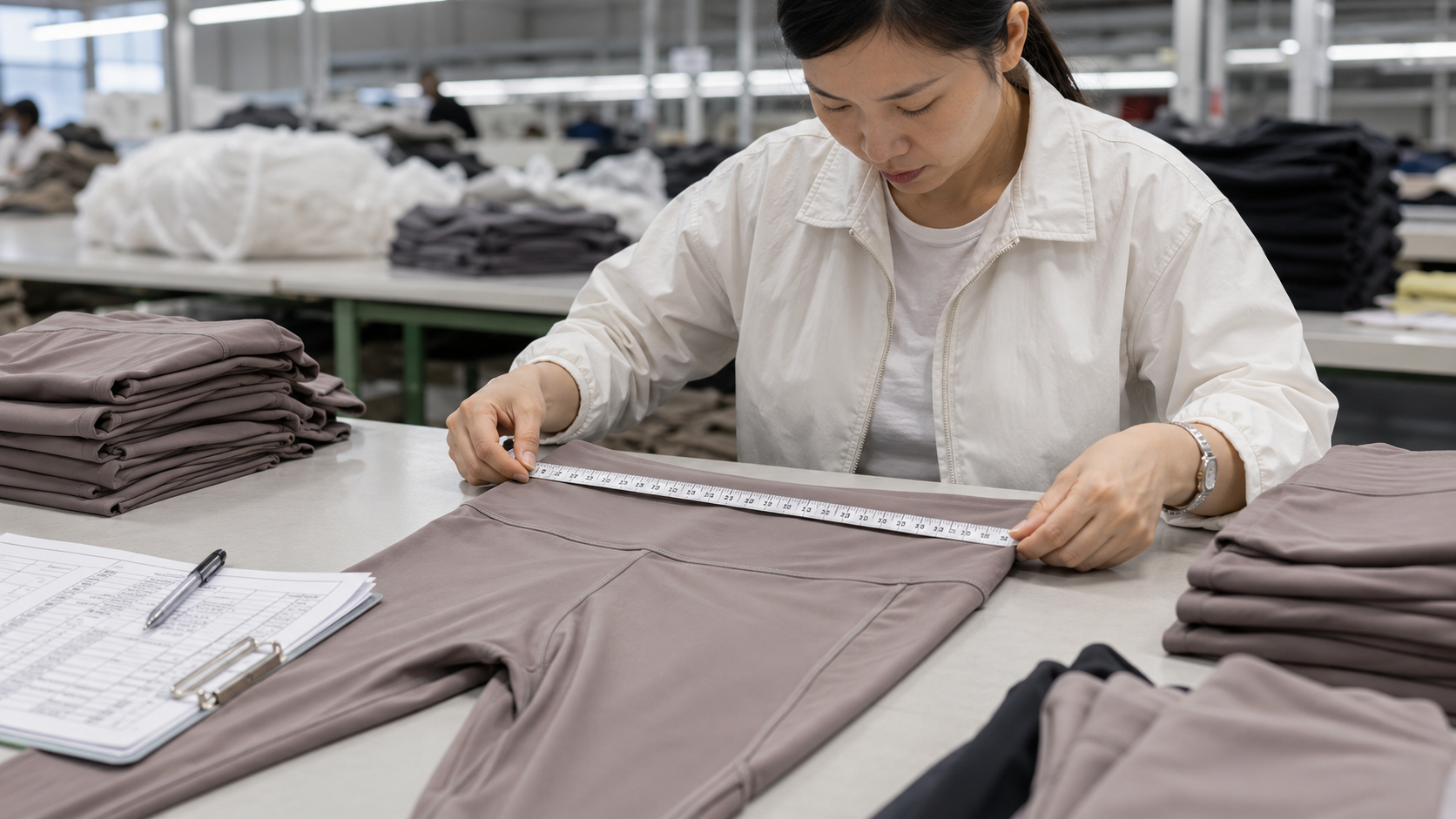
A yoga leggings manufacturer should have fabric inspection, in-line production inspection, measurement checking, stitching inspection, and final packing inspection. Stretch garments need stricter QC than standard casual clothing because fabric tension and seam strength affect real wearing performance.
| QC Stage | Inspection Focus | Reason |
|---|---|---|
| Fabric Inspection | GSM, defects, color consistency, stretch | Prevents fabric-related quality issues |
| Cutting Inspection | Panel size and cutting accuracy | Controls garment measurement consistency |
| Sewing Inspection | Stitch density, seam strength, alignment | Improves durability during movement |
| Final Inspection | Measurement, appearance, packaging | Reduces defective products before shipment |
Professional activewear suppliers should maintain a documented Quality Control process for both samples and bulk orders.
Why Do Many Activewear Brands Choose China Yoga Leggings Manufacturers?
Many activewear brands choose China yoga leggings manufacturers because China has a complete textile supply chain, experienced activewear labor, flexible OEM production, competitive pricing, and strong fabric sourcing capability.
| Factor | China Manufacturer | USA / Europe Manufacturer |
|---|---|---|
| Production Cost | More competitive | Usually higher |
| Fabric Variety | Extensive activewear fabric supply | More limited sourcing options |
| MOQ Flexibility | Low MOQ options available | Often higher cost at low quantity |
| Scalability | Strong for small and large orders | More limited capacity |
| Supply Chain Speed | Fast material sourcing and production coordination | Slower for complex sourcing |
A strong Supply Chain helps brands manage fabrics, trims, packaging, production scheduling, and global shipping more efficiently.
What Private Label Services Should a High Waisted Yoga Leggings Manufacturer Offer?
A high waisted yoga leggings manufacturer should offer private label services such as custom logos, woven labels, heat transfer labels, hang tags, packaging bags, product boxes, and branded color development.
Logo Options
- Silicone heat transfer
- Reflective print
- Screen printing
- 3D rubber logo
Branding Materials
- Woven labels
- Care labels
- Hang tags
- Size labels
Packaging Options
- Custom poly bags
- Premium boxes
- Sticker labels
- Barcode packaging
Brands can explore custom branding through the Private Label service page.
What MOQ and Lead Times Are Normal for High Waisted Yoga Leggings?
Normal MOQ for custom high waisted yoga leggings starts from around 100 pieces per color and style, depending on fabric, color, logo method, and packaging complexity. Sampling usually takes 7–10 days, and bulk production usually takes 25–35 days after approval.
| Production Stage | Typical Timeline | Notes |
|---|---|---|
| Fabric sourcing | 5–10 days | Depends on fabric availability and custom color needs |
| Sample development | 7–10 days | Depends on design complexity |
| Bulk production | 25–35 days | Starts after sample and material approval |
| Final inspection | 1–3 days | Includes measurement, stitching, and packing checks |
How Can Brands Avoid Problems With Yoga Leggings Manufacturers?
Brands can avoid manufacturing problems by preparing a complete tech pack, approving fabrics before sampling, confirming size charts, checking pre-production samples, and requiring final inspection before shipment.
Best Practices
- Prepare detailed tech packs.
- Approve fabric before bulk cutting.
- Confirm Pantone colors.
- Check pre-production samples.
- Request measurement tolerance standards.
- Confirm packaging requirements in writing.
Red Flags
- Extremely low pricing without explanation.
- No activewear production experience.
- No QC documentation.
- Slow or unclear communication.
- No sample approval process.
- Unrealistic lead time promises.
What Other Activewear Categories Can a Leggings Manufacturer Support?
A strong leggings manufacturer can often support additional activewear categories, helping brands build complete collections from one supply chain partner.
What Questions Should Brands Ask Before Placing an Order?
Brands should ask clear technical, production, and quality questions before placing an order because early clarification prevents sampling errors and bulk production disputes.
- What fabric do you recommend for squat-proof high waisted yoga leggings?
- What GSM range is suitable for my target market?
- Can you provide 4-way stretch nylon-spandex fabric?
- What is your MOQ per color and style?
- How long does sample development take?
- How do you control waistband rolling?
- What logo techniques work best on leggings?
- Do you offer private label packaging?
- What quality control steps do you perform before shipment?
- Can you support future products such as sports bras, tank tops, and track pants?
FAQ: What Do Brands Commonly Ask About High Waisted Yoga Leggings Manufacturing?
What is the best fabric for high waisted yoga leggings?
Nylon-spandex and polyamide-elastane blends are common premium choices because these fabrics provide softness, stretch recovery, durability, and smooth handfeel.
What MOQ do yoga leggings manufacturers usually require?
Many activewear manufacturers offer MOQ starting from 100 pieces per color and style, although custom-dyed fabrics and seamless leggings may require higher quantities.
How long does custom yoga leggings production take?
Sample development usually takes 7–10 days, while bulk production usually takes 25–35 days after sample approval and material confirmation.
What makes leggings squat-proof?
Squat-proof leggings depend on proper GSM, dense fabric structure, high-quality yarn, strong stretch recovery, and correct color opacity testing.
Should startups choose OEM or ODM manufacturing?
Startups should choose OEM manufacturing when they want custom designs, brand differentiation, and stronger product control. ODM manufacturing is better when brands want faster development based on existing styles.
Can one manufacturer produce a full activewear collection?
Yes. A professional activewear manufacturer can usually produce leggings, sports bras, tank tops, hoodies, track pants, tennis wear, and gym wear for a complete collection.
Need a Reliable High Waisted Yoga Leggings Manufacturer?
Ohsurewear supports custom activewear development, private label production, fabric sourcing, sampling, bulk manufacturing, and quality control for growing activewear brands.
Visit Ohsurewear