How to Choose the Right Gym Wear Sets Manufacturer for Your Brand
- Share
- Issue Time
- Jun 12,2026
Summary
Learn how to choose the right gym wear sets manufacturer for your brand. Compare quality control, fabrics, MOQ, private label services, production capabilities, and supplier reliability before placing your next activewear order.
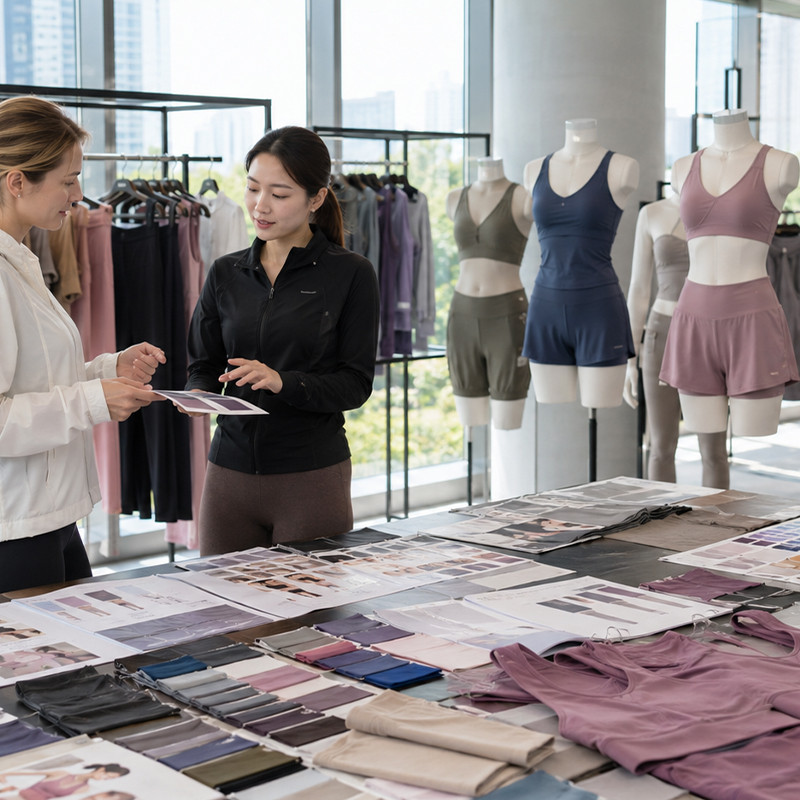
Choosing the right gym wear sets manufacturer is one of the most important decisions for any activewear brand. The manufacturer you select will directly affect product quality, customer satisfaction, production timelines, and your long-term brand reputation. Whether you are launching a startup fitness label or scaling an established activewear business, understanding how to evaluate manufacturing partners can help you avoid costly mistakes and build a stronger supply chain.
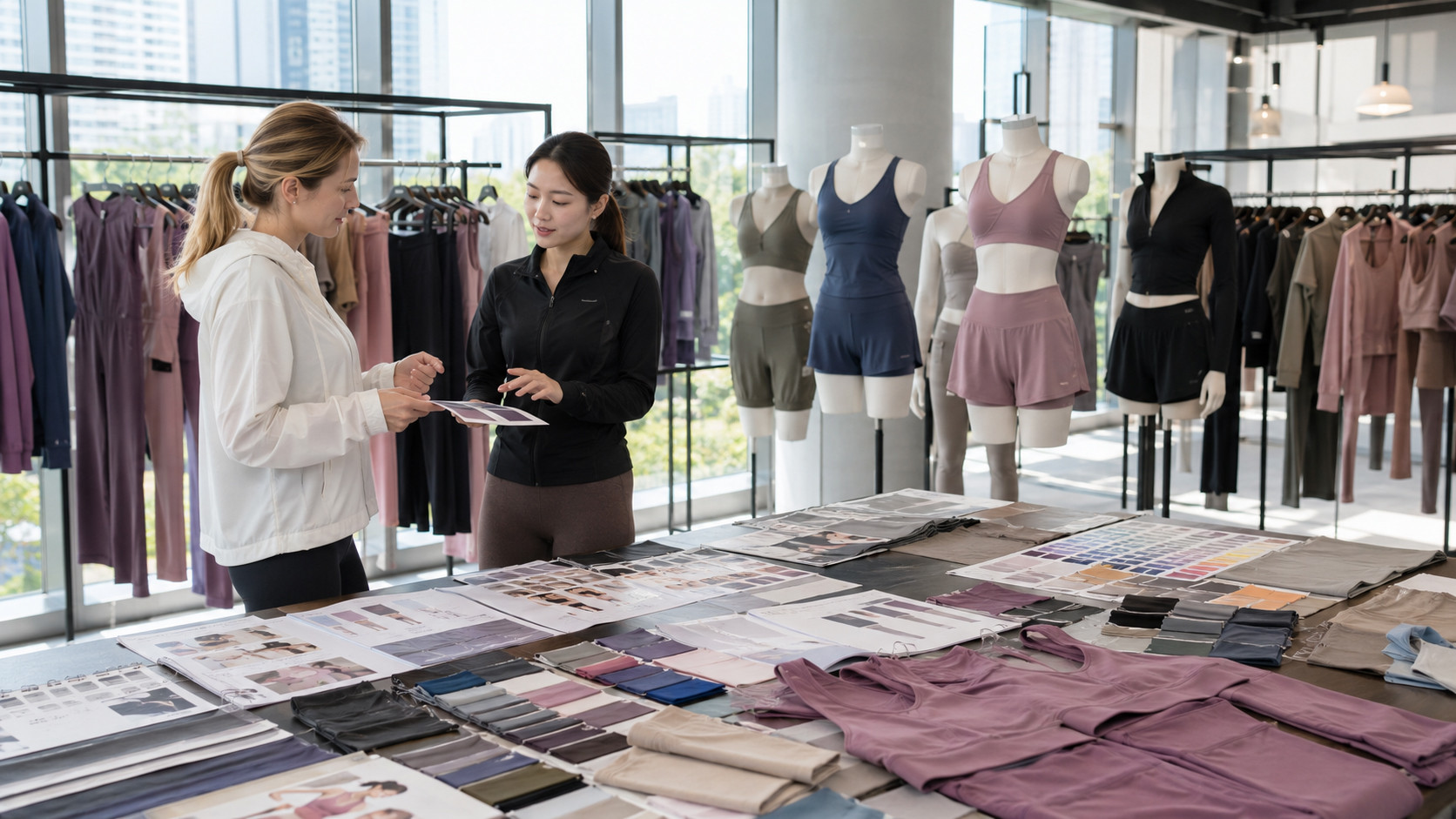
Why Is Choosing the Right Gym Wear Sets Manufacturer So Important?
A gym wear manufacturer is more than a supplier. They become a long-term production partner responsible for transforming your ideas into market-ready products.
Poor manufacturing decisions often lead to inconsistent product quality, delayed production schedules, fabric performance issues, sizing inconsistencies, customer complaints, and unnecessary returns.
On the other hand, an experienced custom activewear manufacturer can help improve product development efficiency, optimize production costs, and maintain consistent quality standards as your brand grows.
According to Google’s helpful content guidance, content and business decisions should focus on real user value, trust, and usefulness. The same principle applies when selecting a manufacturing partner.
What Experience Should a Gym Wear Sets Manufacturer Have?
Not all apparel factories specialize in activewear production. Gym wear requires technical expertise in stretch fabric construction, moisture-wicking materials, compression garments, flatlock stitching, and performance testing.
Before working with a supplier, ask whether they have experience producing leggings, sports bras, yoga sets, training tops, and matching gym wear collections for private label brands.
A manufacturer specializing in custom gym wear manufacturing will usually understand activewear-specific requirements much better than a general clothing factory.
How Can You Evaluate Product Quality?
Quality should always be verified through samples rather than promises. A reliable manufacturer should be willing to provide development samples, measurement details, fabric references, and clear production standards before bulk production starts.
Fabric Performance
Check stretch recovery, opacity, moisture management, hand feel, and durability after washing. For leggings, squat-proof performance and recovery are especially important.
Brands developing leggings should review the supplier’s expertise in custom leggings manufacturing and fabric performance control.
Construction Quality
Inspect stitch density, seam alignment, flatlock seam consistency, thread quality, and reinforcement points. Poor stitching can reduce comfort and shorten product lifespan.
Fit Consistency
A reliable manufacturer should provide accurate grading, size specifications, and consistent measurements across production batches.
Industry organizations such as ASTM International provide textile testing and quality standards that many professional apparel manufacturers use as reference.
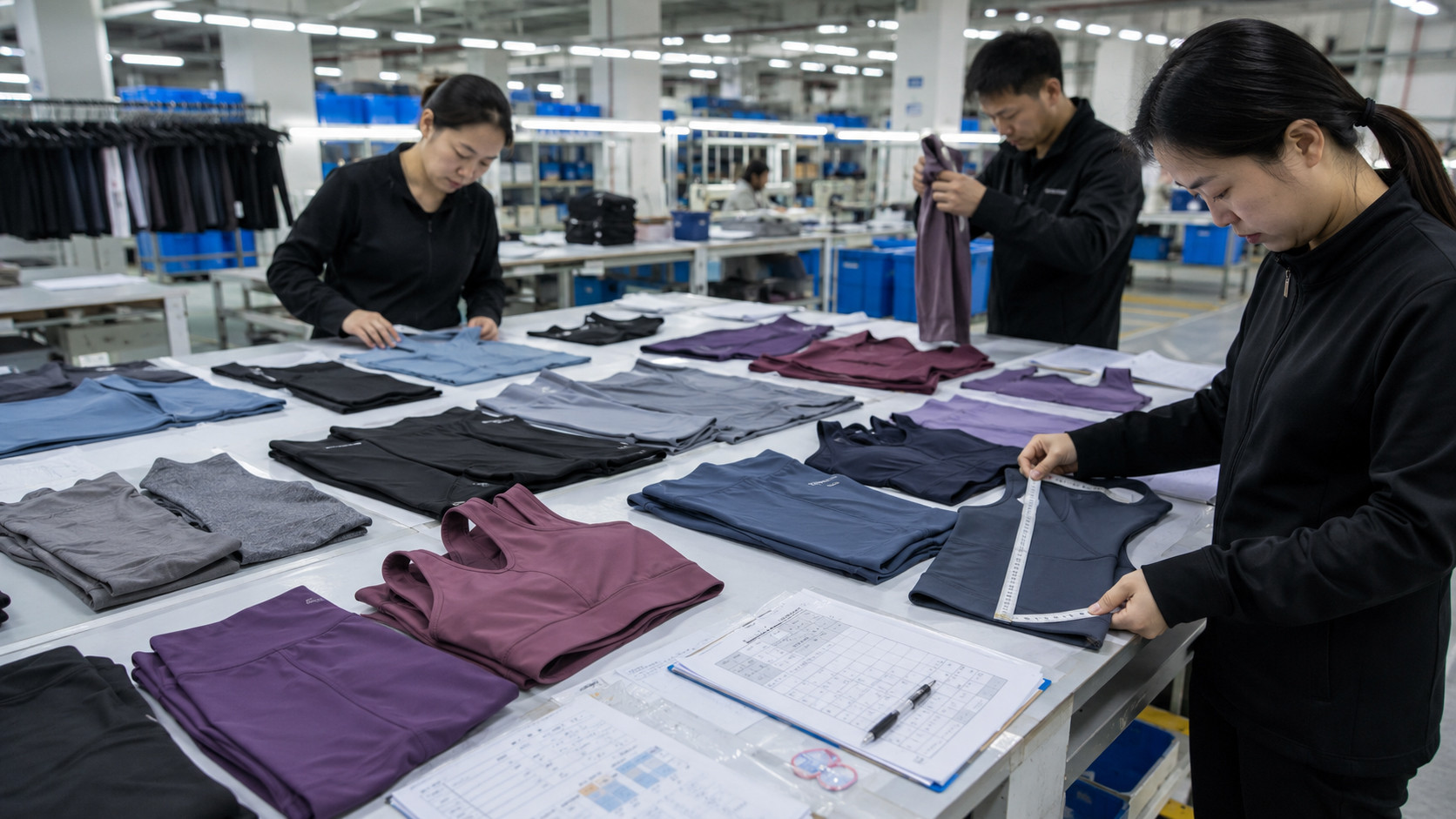
What Fabrics Should a Gym Wear Sets Manufacturer Offer?
Fabric selection is one of the biggest factors affecting customer satisfaction. A qualified manufacturer should offer different performance fabric options based on your target market, price range, and product positioning.
| Fabric Type | Main Benefits | Common Products |
|---|---|---|
| Nylon Spandex | Soft hand feel, premium stretch, strong recovery | Leggings, sports bras, yoga sets |
| Polyester Spandex | Durable, moisture-wicking, cost-effective | Training tops, gym sets, sportswear |
| Recycled Polyester | Sustainable material option for eco-focused brands | Activewear collections, workout sets |
| Ribbed Fabric | Textured appearance, fashion-forward look | Yoga sets, lifestyle activewear |
| Bamboo Blend | Soft touch, breathable, comfortable for casual wear | Lifestyle activewear, light training apparel |
You can compare material options through a professional activewear fabric guide and review how factories manage the fabric selection process.
For sustainability-related textile information, Textile Exchange is a recognized industry source for preferred fibers and material standards.
Does the Manufacturer Support Private Label Services?
Many fitness brands require more than garment production. A complete manufacturing partner should support branding, packaging, and product presentation.
Custom Branding
Options may include woven labels, heat transfer labels, printed neck labels, hang tags, and custom packaging.
Logo Application
Common techniques include silicone heat transfers, screen printing, reflective logos, embroidery, and rubber patches.
Packaging Customization
Look for suppliers that support custom poly bags, brand inserts, custom boxes, barcode labeling, and retail packaging.
Collection Presentation
A strong manufacturer should help your products look consistent, professional, and ready for e-commerce or retail sales.
A professional private label activewear manufacturer can simplify branding and improve product presentation.
How Important Are MOQ Requirements?
MOQ directly affects startup costs, inventory planning, and product testing. Different manufacturers offer different MOQ structures, so it is important to understand whether MOQ is calculated by style, color, size, or fabric type.
| Brand Stage | Recommended MOQ Strategy | Main Goal |
|---|---|---|
| Startup Brand | Low MOQ with limited colors | Test market demand |
| Growing Brand | Medium MOQ with stable bestsellers | Improve cost efficiency |
| Established Brand | Higher MOQ with planned production | Scale collections and reduce unit cost |
Before committing, ask about MOQ per color, MOQ per style, size ratio flexibility, and sample development requirements.
What Production Capabilities Should You Verify?
Many activewear brands eventually expand beyond basic leggings and sports bras. Your manufacturer should support future product development without forcing you to change suppliers frequently.
Useful product capabilities may include custom sports bras, custom yoga wear, women’s sportswear, men’s sportswear, custom tank tops, custom sports hoodies, and custom track pants.
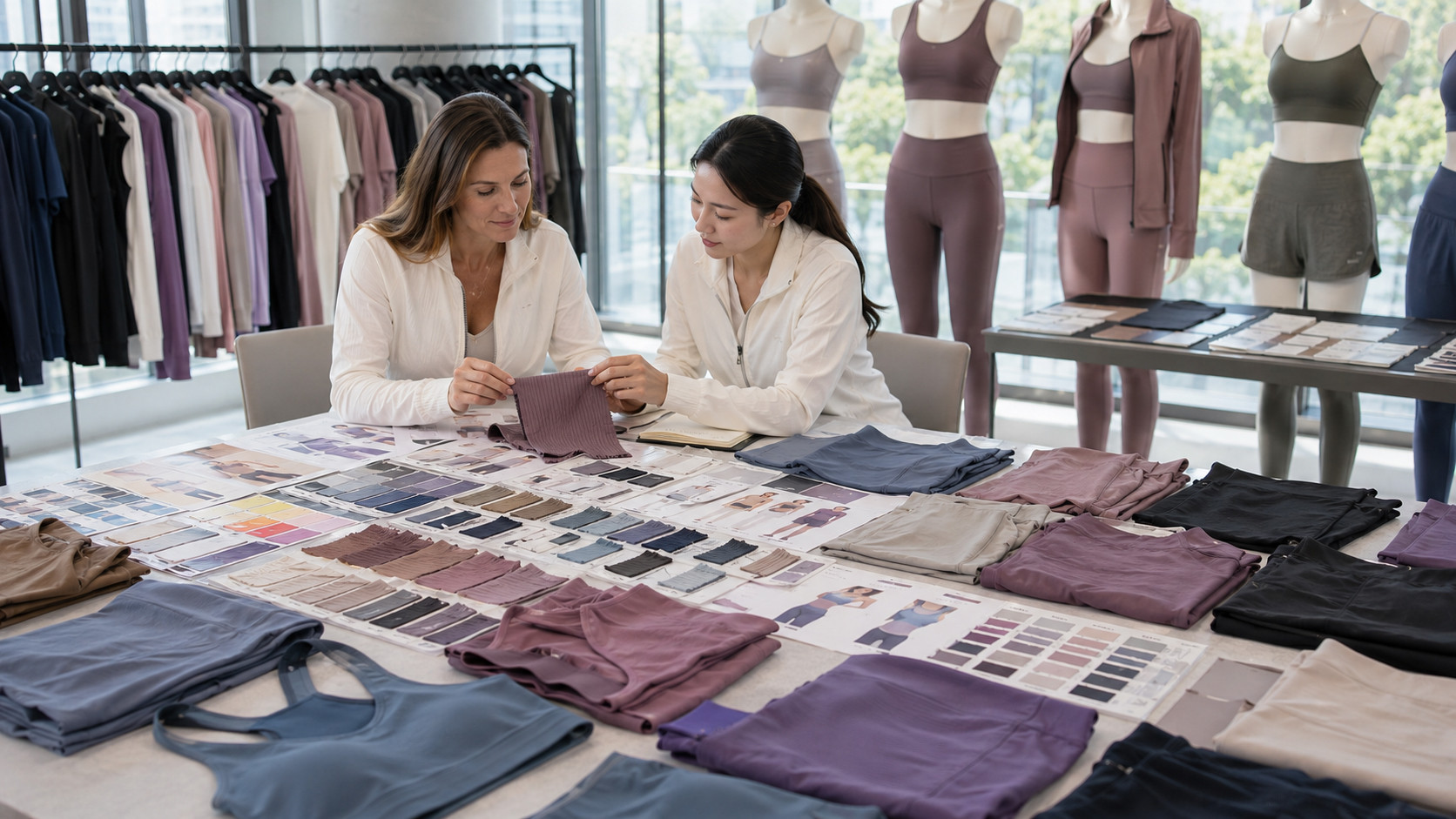
How Can You Evaluate the Manufacturer's Quality Control System?
Quality control should be documented, repeatable, and transparent. A manufacturer should not only say they check quality, but also explain when, how, and what they inspect.
Incoming Material Inspection
This step verifies fabric quality, color consistency, fabric weight, trims, and stretch performance before production begins.
In-Line Production Inspection
During production, the factory should monitor stitch quality, measurements, logo placement, sewing defects, and production consistency.
Final Inspection
Final inspection should check finished measurements, packaging accuracy, product appearance, carton labeling, and order completeness before shipment.
A reliable factory should have a dedicated quality control process and be willing to explain inspection procedures clearly.
For recognized quality management practices, many manufacturers refer to ISO 9001 quality management standards.
Why Is Supply Chain Stability Important?
Many brands focus only on garment quality and overlook supply chain reliability. However, fabric delays, trim shortages, poor production planning, and shipping problems can all affect your launch schedule.
A strong manufacturer should have stable fabric suppliers, backup sourcing channels, production planning systems, and shipping coordination capabilities.
Understanding the manufacturer’s supply chain management process helps reduce production risks and improve delivery reliability.
What Questions Should You Ask Before Choosing a Manufacturer?
- What is your activewear production experience?
- What are your MOQ requirements?
- Can you provide sample references?
- What fabrics do you recommend for gym wear sets?
- How do you manage quality control?
- What is your sample lead time?
- What is your bulk production lead time?
- What branding options are available?
- How do you handle production delays?
- Can you support future product expansion?
How Do You Know You've Found the Right Gym Wear Sets Manufacturer?
The best gym wear sets manufacturer is not necessarily the cheapest supplier. The right partner should offer proven activewear experience, consistent product quality, reliable communication, strong quality control systems, flexible development support, scalable production capacity, and transparent pricing.
Brands that invest time in evaluating manufacturing partners usually experience fewer production issues, stronger customer satisfaction, and more sustainable growth.
If you are looking for a manufacturing partner that supports activewear development, private label production, quality control, and scalable manufacturing, exploring a professional activewear manufacturing service can be an excellent starting point for your brand’s next stage of growth.
Ready to Start Your Gym Wear Sets Collection?
Work with an experienced activewear manufacturer to develop leggings, sports bras, yoga sets, gym tops, hoodies, and complete private label fitness apparel collections.
Start Your Project Today```