Inside the Ohsure Activewear Factory: Production Lines, Equipment and Team
- Share
- Issue Time
- Jul 31,2026
Summary
A buyer-focused guide to activewear factory, covering specifications, sampling, MOQ, quality control, lead time, supplier evidence and practical sourcing decisions.
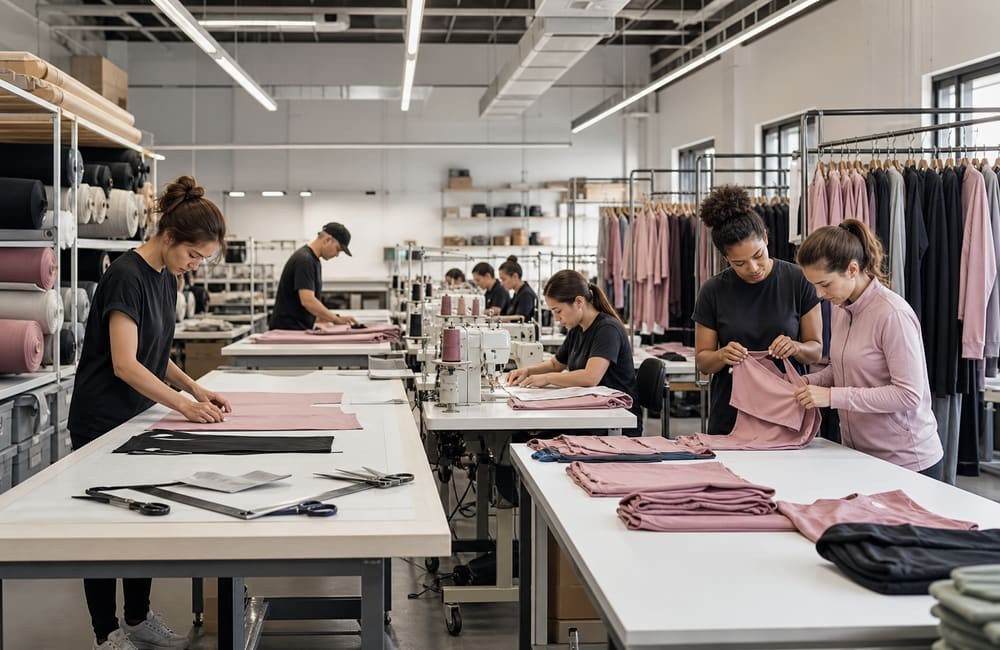
Ohsure publicly describes a Dongguan activewear operation that connects product development, fabric sourcing, pattern work, cutting, sewing, branding, inspection and packing. Its website also lists production-area, team and monthly-output figures. Buyers should treat these as supplier statements and verify the exact site, equipment, staffing, subcontracting and usable capacity for their own product before ordering.
What Ohsure Publicly Says About Its Factory
Ohsure’s current public pages identify the business as an activewear manufacturer in Dongguan, Guangdong, China. The homepage presents three factory indicators: “2,000” for production area, “30” for a professional activewear service team and “200,000” for monthly production. The page does not fully define the unit, period assumptions, product mix or utilization behind every displayed number, so a buyer should request a dated capacity statement before relying on them.
Published location
Dongguan, Guangdong, China. Confirm the legal entity and exact operating address against the contract and payment documents.
Published factory indicators
Production area 2,000; professional team 30; monthly production 200,000. Ask for units, scope and calculation method.
Published service scope
OEM, ODM and private-label activewear, including fabric, development, sampling, branding, production and quality control.
Public-source basis reviewed July 31, 2026: Ohsure homepage, About Us and Custom Activewear Manufacturer.
How an Activewear Production Line Should Flow
An activewear line is not just a row of sewing machines. The commercial workflow begins when the buyer’s specification becomes a controlled product file and ends when packed goods are reconciled to the approved sample and purchase order.
- Requirement review: confirm style code, target use, size range, fabric, construction, branding and tests.
- Material preparation: approve fabric, trims, color and lot controls before cutting.
- Pattern and sample: convert measurements into patterns, sew a sample and record revisions.
- Pre-production control: seal the approved sample, bill of materials, measurements and workmanship standard.
- Cutting and bundling: inspect fabric, control shade and direction, cut accurately and preserve bundle identity.
- Sewing and assembly: match machine, needle, thread and seam construction to the stretch fabric.
- Branding and finishing: apply logos, labels and finishing under approved settings.
- Inspection and packing: check measurements, appearance, construction, labeling, quantity and carton details.
Equipment Buyers Should Expect to See
Ohsure’s public pages refer to automated cutting and sewing systems, fabric testing and finishing equipment; another company page mentions sewing and sublimation-printing machines. Those descriptions are useful starting points, but equipment relevance depends on the product.
For stretch activewear, buyers should ask to see the actual machines intended for their order and a sample seam made in the selected fabric. A machine list without make, model, quantity, condition, operator skill and available schedule does not establish capacity.
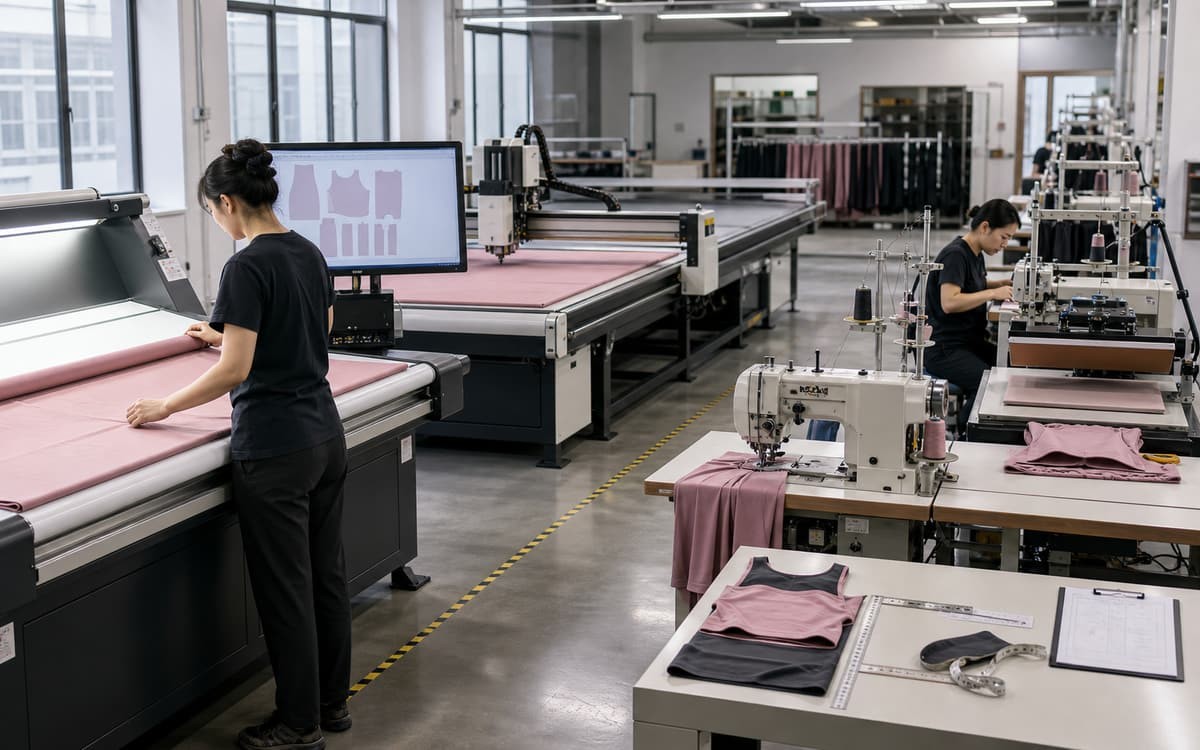
Activewear Equipment Verification Table
| Process | Equipment or control to verify | Evidence to request | Why it matters |
|---|---|---|---|
| Fabric inspection | Inspection table or machine, scale, width and shade controls | Dated incoming-fabric record for the selected lot | Prevents visible defects and lot variation from reaching cutting |
| Pattern and marker | Pattern software, plotter or documented manual system | Approved pattern version and marker reference | Controls fit, size grading and material use |
| Cutting | Automated or manual cutting appropriate to fabric and order size | Cut plan, bundle ticket and first-piece verification | Controls shape, direction, shade and panel matching |
| Stretch sewing | Overlock, coverstitch, flatlock or other specified machines | Seam sample, stitch specification and operator check | Reduces seam breakage, puckering and poor recovery |
| Branding | Heat transfer, sublimation, screen print or embroidery as applicable | Approved artwork, settings and wash-test result | Controls placement, color and durability |
| Measurement and QC | Calibrated tapes, scales and relevant test tools | Inspection report linked to style and lot | Connects quality claims to measurable acceptance criteria |
Who Should Be on the Factory Team
Ohsure’s About Us page describes business, R&D and production-team development, while its custom manufacturing page refers to designers, pattern makers and production managers. A buyer should map named people to responsibilities rather than rely on a single “professional team” count.
Merchandiser or account lead
Controls requirements, quotation assumptions, approvals and timeline communication.
Developer and pattern maker
Translates the brief into fabric, construction, measurements, patterns and sample revisions.
Production manager
Plans materials, line loading, work instructions, subcontracting and corrective action.
Line technicians
Set up cutting, sewing and branding processes for the approved fabric and construction.
Quality team
Checks incoming materials, in-line work, finished garments and packing against defined criteria.
Commercial approver
Resolves changes to cost, MOQ, delivery terms and contract scope before they reach production.
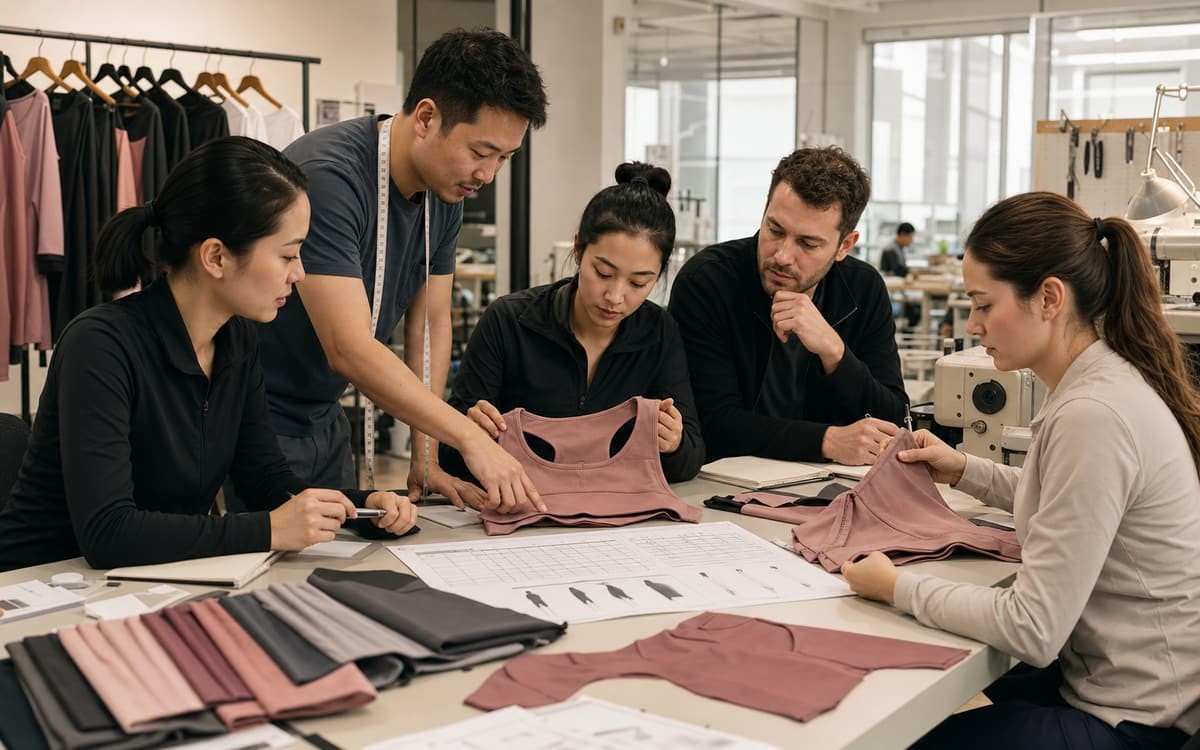
How Team Handoffs Prevent Production Errors
Most bulk failures occur at handoffs: an old pattern is cut, a changed logo file reaches only one department, a sample comment is not converted into a measurement revision, or a fabric substitution is approved informally. Use one style code, one revision log and one named approver.
Ohsure’s Published Quality-Control Stages
Ohsure’s Quality Control page describes a professional QC team and four broad stages: raw-material control, cutting or printing inspection, semi-finished sampling inspection and finished-product testing. It references checks such as fabric color difference, weight, pilling, colorfastness and shrinkage, followed by sewing, appearance and measurement review.
These published stages indicate a process framework, not a guarantee for every order. Before bulk production, specify which checks apply, the test method, sample size, tolerance, reporting format and decision authority.
Capacity: What the Published Numbers Do Not Explain
A monthly output figure cannot be applied equally to leggings, high-support sports bras, seamless knitwear, jackets and maternity products. Usable capacity depends on standard allowed minutes, style complexity, line efficiency, changeovers, rework, material availability, staffing, working days and other confirmed orders.
A practical capacity check
Available minutes = operators × paid production minutes × working days.
Planned units = available minutes × demonstrated efficiency ÷ standard minutes per garment.
Ask Ohsure to calculate this for the exact style and required delivery window. The result should identify the production site, planned line, number of operators, shift pattern, start date, subcontracted operations and capacity reserved for the order.
What Can Be In-House and What May Be Subcontracted?
Apparel factories commonly coordinate specialist processes such as dyeing, printing, embroidery, bonding, washing, laboratory testing or packaging. Subcontracting is not automatically a problem; undisclosed or uncontrolled subcontracting is.
- List every external process in the quotation and purchase order.
- Identify the responsible supplier and physical site when confidentiality allows.
- Confirm who approves materials and process settings.
- Define how incoming work is checked after it returns.
- Keep lot traceability through cutting, branding, sewing and packing.
- Require buyer approval before changing a declared production site or critical subcontractor.
Factory Evidence a Buyer Should Request
| Claim | Useful evidence | Warning sign |
|---|---|---|
| Operating factory | Current registration, exact address, live walkthrough and optional independent audit | Only prerecorded marketing footage or inconsistent company names |
| Relevant equipment | Live view of required machines, quantity, operator and sample output | Generic equipment list with no connection to the style |
| Available capacity | Style-specific line plan, standard minutes, staffing and production calendar | Annual or monthly headline number without assumptions |
| Qualified team | Named project roles, responsibility matrix and approval path | One salesperson answers every technical question without records |
| Quality process | Product-specific inspection plan, completed reports and corrective-action records | Only a general claim of “100% quality” |
| Supply-chain control | Declared outsourced processes and incoming verification | Production location changes after deposit without approval |
When Ohsure May or May Not Fit a Project
Potential fit to investigate
- Custom cut-and-sew activewear using OEM, ODM or private-label support
- Projects that need fabric, pattern, sample, branding and bulk coordination
- Brands prepared to approve specifications and samples before bulk production
- Orders compatible with the verified equipment, skills and available schedule
Needs additional proof or another supplier
- Products requiring equipment, certification or regulated testing not evidenced for the site
- Delivery dates unsupported by a style-specific capacity plan
- Programs that prohibit subcontracting when specialist processes are external
- Buyers unwilling to define tolerances, approvals and change control
Frequently Asked Questions
Does Ohsure publish factory size and capacity figures?
Yes. Its homepage currently displays 2,000 for production area, 30 for the professional activewear service team and 200,000 for monthly production. Buyers should request the units, definitions, product mix and date behind those figures.
What activewear equipment does Ohsure say it uses?
Public pages refer to automated cutting and sewing systems, fabric testing and finishing equipment, plus advanced sewing and sublimation-printing machines. Confirm the exact machines needed for your product through a live walkthrough and sample trial.
Is all production performed in-house?
The public pages describe an integrated workflow, but they do not prove that every process for every order is in-house. Ask for a process map that identifies dyeing, printing, embroidery, testing or other external operations.
How can I verify the Ohsure team assigned to my order?
Request a responsibility matrix naming the merchandiser, developer, pattern maker, production manager and quality contact, with clear approval and escalation duties.
What is the best way to verify factory capacity?
Use a style-specific calculation based on standard minutes, operators, demonstrated efficiency, working days, line allocation and other confirmed orders—not a general annual or monthly headline.
Are the images in this article real Ohsure factory photographs?
No. The three images are original illustrative visuals created for this article and are labeled accordingly. Buyers should request current Ohsure site photos, a live video walkthrough or an independent audit.
Bottom Line for Buyers
Ohsure’s public information presents a plausible activewear-manufacturing workflow, named equipment categories, team functions and multi-stage quality controls. The responsible conclusion is not that every claim is independently proven; it is that each claim can be converted into a specific verification request.
Before paying a deposit, match the legal entity, facility, equipment, people, sample, capacity plan, quality documents and subcontractors to one controlled product file. Review About Us and the Quality Control process, then request order-specific evidence through Contact Us.