ODM vs Private Label: Which Is Better for a Startup Activewear Brand?
- Share
- Issue Time
- Sep 2,2026
Summary
Compare ODM and private-label activewear for startups by differentiation, workload, cash, timing, minimums, ownership and risk. Includes matched cost models, a break-even formula, process paths and a decision scorecard.

ODM vs private label activewear · Startup decision guide · Evidence checked September 2, 2026
Direct answer: Private label is usually better for a startup activewear brand that has not yet proved demand, because it starts with a supplier-developed garment and can reduce original development work. ODM is usually better when the startup has validated a specific customer problem and needs the supplier to help create a differentiated fit, material, construction or feature set. The safest choice is not the manufacturing label itself; it is the written scope, total cash exposure, approval workload, ownership terms and evidence required before bulk production.
A startup should choose the least complex route that can deliver its real customer promise. If brand, community, styling and distribution create most of the value, private label can be enough. If the promise depends on a distinctive product experience that an existing base style cannot deliver, ODM may justify more time, cash and decision-making.
ODM vs Private Label at a Glance
| Decision factor | ODM activewear | Private-label activewear | Startup implication |
|---|---|---|---|
| Starting point | A product concept, customer problem, mood board or performance brief. | An existing or pre-developed supplier style. | Private label normally removes more blank-page work. |
| Supplier role | Design and technical development plus manufacturing, as contracted. | Base-product supply plus agreed branding and limited options. | ODM requires a clearer development scope. |
| Product differentiation | Potentially higher when new features are developed and protected. | Usually based on assortment, color, branding, packaging and customer experience. | Choose only the differentiation customers will value. |
| Startup workload | Commercial brief, repeated sample decisions, testing and specification control. | Base-style selection, fit approval, branding, labels and packaging. | Founder time is part of project cost. |
| Development time | Usually longer because the product evolves through decisions and revisions. | Usually shorter when the exact base garment and inputs are available. | Neither route guarantees a launch date. |
| Upfront cash | May include design, pattern, development samples, tests and custom-material commitments. | May reduce development fees but still includes samples, components, freight and inventory. | Compare project cash, not only unit price. |
| Minimums | Can be driven by custom fabric, color, trim, pattern and production efficiency. | Can be driven by garments, colors, logos, labels and packaging. | Request every component minimum separately. |
| Ownership | New sketches, patterns and files may be buyer-owned, supplier-owned or licensed. | The supplier commonly retains its pre-existing base design. | Write ownership and reuse rights explicitly. |
| Reorder dependency | Depends on retained files, approved inputs, capacity and material availability. | Depends on continued availability of the supplier's base style and materials. | Archive codes, versions and substitution rules. |
| Best fit | A startup with a validated need, product budget and fast approval capability. | A startup testing audience, category, price, channel or assortment. | Match the route to the uncertainty being tested. |
What ODM Means for a Startup
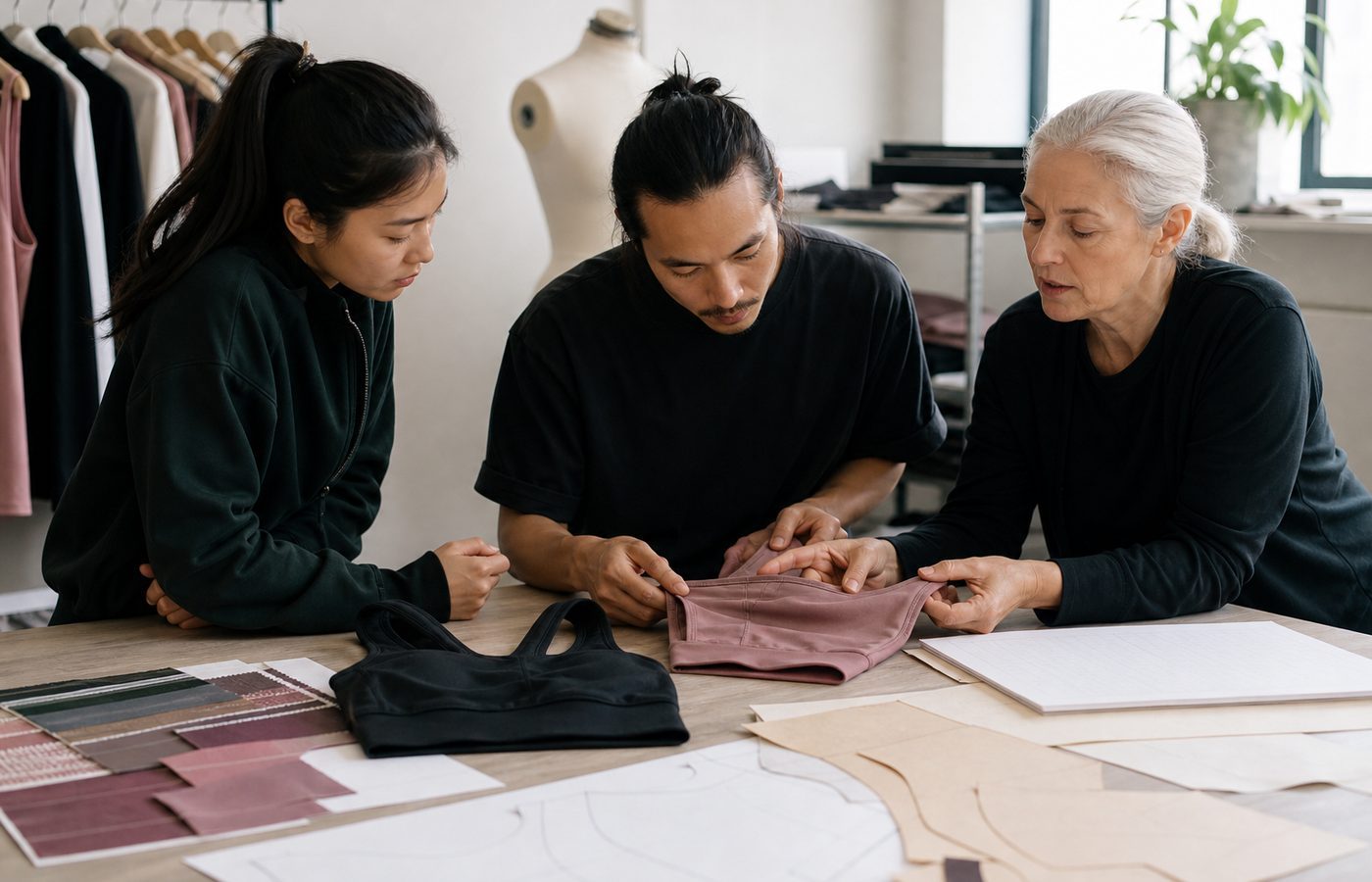
Original design manufacturing generally gives the supplier a larger role in converting a commercial idea into a manufacturable product. The startup may provide a target customer, activity, fit problem, desired look, target retail price and performance priorities. The supplier may propose silhouettes, fabrics, construction methods, patterns or sample solutions.
This does not transfer product responsibility to the supplier. The startup still decides what is acceptable, keeps versions organized and confirms labeling, testing and market requirements. It should also establish whether the proposed design is newly created, adapted from a supplier library or available to other buyers.
ODM is a stronger fit when:
- The customer problem cannot be solved by an existing base style.
- Fit, support, storage, mobility or material behavior is central to the offer.
- The team can make timely technical and commercial decisions.
- The budget can absorb development rounds and failed options.
- Ownership, reuse and future access to files can be contracted.
Private label is a stronger fit when:
- The startup is testing demand, channel, price or category.
- An available base product already meets the customer promise.
- Differentiation comes mainly from brand, styling, assortment or community.
- The team wants fewer technical decisions before launch.
- Cash preservation is more valuable than original product architecture.
What Private Label Means for a Startup
Private label generally begins with a supplier's existing or pre-developed garment. The startup selects the exact base style and adds agreed brand elements such as heat-transfer logos, labels, hangtags and packaging. Some programs also offer standard colors, fabrics or trims, but each change can create a new minimum, sample or lead-time dependency.
Private label is not automatically ready-to-ship stock. The garment may still be made after order, and branded components may have minimums larger than the garment order. Ask whether the quote covers stocked blanks, made-to-order base styles or a customized production run.
Start With the Uncertainty You Need to Reduce
Demand uncertainty
Will customers buy this category, price and positioning? Private label often tests this with less original development.
Product uncertainty
Which fit, fabric or feature solves the customer's problem? ODM can explore this when a base style is insufficient.
Channel uncertainty
Can the startup acquire and serve customers profitably? A simpler product route preserves attention for distribution and operations.
A startup does not earn extra credit for choosing the more complex manufacturing model. Complexity is useful only when it protects a feature customers recognize, improves the economics of repeat sales or creates defensible knowledge the brand can retain.
How the Two Startup Processes Differ
ODM development path
- 1Write the product brief.
Define customer, activity, problem, must-have performance, target price, sizes, quantity and launch window.
- 2Contract the development scope.
List design outputs, pattern work, sample rounds, tests, exclusions, fees and ownership.
- 3Develop and measure samples.
Record each revision against measurements, wear feedback, materials and construction decisions.
- 4Freeze the production package.
Release one dated specification covering garment, artwork, labels, packaging and acceptance criteria.
- 5Approve and inspect bulk.
Use approved references and a written sampling or inspection plan.
Private-label launch path
- 1Write the commercial brief.
Define customer, category, price, sizes, quantity, colors, sales channel and launch window.
- 2Select the exact base style.
Record style code, revision, material, measurements, color and availability status.
- 3Map brand components.
Specify logos, labels, hangtags, packaging, barcodes, files, positions and colors.
- 4Approve fit and branding.
Test the actual garment and logo method before releasing bulk.
- 5Inspect and archive.
Verify the received order and keep codes, approved files and deviations for reorders.
Illustrative 600-Unit Startup Cost Comparison
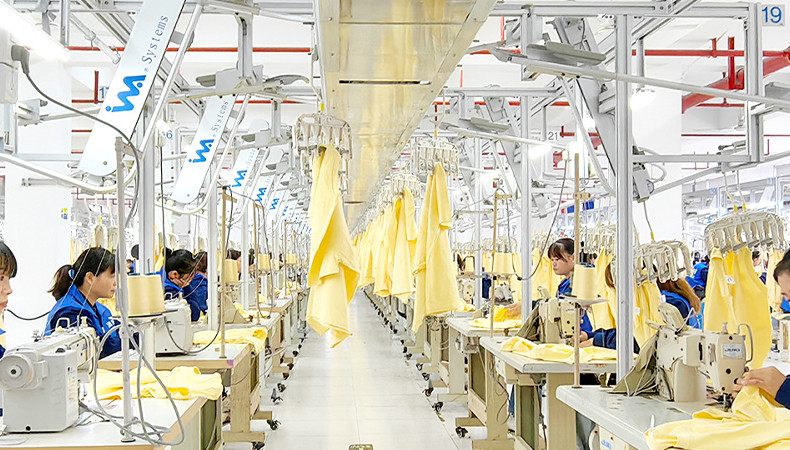
This matched example is a replaceable planning model, not an Ohsurewear quotation. It compares one two-style, two-color capsule totaling 600 units under two hypothetical scopes.
| Cost item | ODM example | Private-label example |
|---|---|---|
| Garments | 600 × $12.40 = $7,440 | 600 × $11.00 = $6,600 |
| Branding and packaging | 600 × $1.20 = $720 | 600 × $1.20 = $720 |
| Design and pattern development | $950 | $0 in this example |
| Samples and revisions | 6 × $75 = $450 | 4 × $55 = $220 |
| Technique, label and packaging setup | $0 included elsewhere in this example | $180 |
| Material or performance tests | $480 | $0 beyond supplied records in this example |
| Inspection and inbound freight | $1,050 | $900 |
| Project cash cost | $11,090 | $8,620 |
| Planning cost per ordered unit | $18.48 | $14.37 |
The ODM scope uses $2,470 more cash in this example. That difference is not automatically waste or value. It is an investment only if the resulting product difference improves customer response, price realization, repeat purchase, returns, durability or brand defensibility enough to recover the added cost.
Test the Incremental ODM Break-Even
Suppose the ODM product is expected to create $6 more contribution per sellable unit than the private-label alternative after discounts, but before fixed overhead. The simplified recovery volume is:
If the startup cannot explain why the differentiated product should produce that incremental contribution—or cannot reasonably sell the recovery volume—the ODM scope is commercially weak. Replace every figure with current quotes, realistic sell-through, discount, return, fulfillment and marketing assumptions.
Model Cash by Milestone, Not Only by Total
Discovery cash
Supplier search, reference samples, customer interviews and technical feasibility.
Development cash
Design, patterns, samples, courier charges, tests and branding trials.
Commitment cash
Deposits, materials, labels, packaging and production reservations.
Release cash
Balance payment, inspection, freight, duties, insurance and inbound handling.
Recovery cash
Content, marketing, fulfillment, returns, markdowns and slow inventory.
A route with a similar total can still be safer if payments occur after meaningful approval gates. Ask which charges are refundable, creditable to bulk, reusable on reorders or lost when development stops.
Startup Decision Scorecard
Score each statement from 0 to 2: 0 = no, 1 = partly, 2 = yes. This is an original planning tool, not a supplier acceptance rule.
- We have evidence of a product problem that existing base styles do not solve.
- Customers can recognize and value the proposed fit, material or feature difference.
- We can write a clear commercial brief and make sample decisions quickly.
- We can fund development without consuming essential launch and operating cash.
- We have realistic quantities for custom material and component minimums.
- We can define tests, measurements and approval criteria for the new features.
- Ownership, reuse, exclusivity and access to files can be agreed in writing.
- Our margin model can recover added development cost under conservative sell-through.
13–16 points: ODM may be justified.
8–12 points: Narrow the ODM scope or compare a modified private-label base.
0–7 points: Private label is usually the safer first test.

Worked Example: A Startup Building a Studio-to-Street Capsule
A new brand wants leggings and a light support top for yoga, walking and daily wear. Its audience follows the founder's training content, but the brand has no sales history. The first concept emphasizes muted colors, inclusive imagery and coordinated sets rather than a patented construction or tested performance system.
For the first launch, the team selects a private-label legging and top that pass its fit, opacity, recovery and wash checks. It limits the capsule to two styles and two colors, applies restrained logos and keeps packaging simple. The purpose is to test size demand, set conversion, acceptable price, acquisition cost, returns and repeat interest.
After two small selling cycles, customer feedback consistently identifies waistband roll and phone storage as barriers to repeat purchase. The team now has a specific product problem, observed size demand and a clearer contribution model. It prepares an ODM brief for a revised waistband and pocket system, contracts the development outputs and compares the incremental cash with the expected commercial gain.
The sequence is the strategic point: private label tests whether a market exists; ODM is introduced only after evidence identifies where original development may create value.
Quality, Labeling and Compliance Do Not Disappear
Neither route eliminates the startup's responsibility to sell a product suitable for its destination market. For the United States, most textile products require disclosures covering fiber content, country of origin and the identity of the manufacturer or another responsible business; apparel also needs care instructions supported by a reasonable basis. Other markets have different requirements, so the selling entity should obtain market-specific advice.
Quality acceptance also needs a written plan. A finished sample is not the same as a bulk inspection standard. Define measurement tolerances, appearance and workmanship defects, functional checks, test records, sample selection and the response when results fail. If an AQL-indexed sampling plan is used, identify the exact standard edition, inspection level, lot size and acceptance criteria rather than writing “AQL inspection” without parameters.
Questions to Ask Before Choosing a Supplier Route
| Topic | Question | Evidence to request |
|---|---|---|
| Starting point | Is the proposed product new, modified from your library or a standard base style? | Style code, revision and scope statement |
| Development | Which design, pattern, grading, sourcing and sample tasks are included? | Deliverable list and revision allowance |
| Minimums | What minimum applies to garment, style, color, fabric, trim, logo, label and packaging? | Component-level MOQ table |
| Cost | Which fees are fixed, per unit, refundable, creditable or reusable? | Itemized quotation and payment schedule |
| Timing | What starts each clock, and what happens after a failed sample or test? | Milestone plan with dependencies |
| Ownership | Who owns and may reuse sketches, patterns, grading, files, artwork and modifications? | Ownership and license clauses |
| Quality | Which approved references, tolerances, tests and defect rules control bulk acceptance? | Quality plan and signed approvals |
| Reorders | How long will the style, materials, files and pricing remain available? | Material codes, file handover and substitution process |
Frequently Asked Questions
Is ODM always more expensive than private label?
No. ODM often adds development work, but total cost depends on product, quantity, materials, sample rounds, testing, branding, freight, duties and defects. Compare complete, matched scopes.
Is private label always faster?
No. It can reduce original development, but the selected base style may still require material booking, production, logo trials, labels, packaging and shipment. Confirm current availability and dependencies.
Can a startup begin with private label and move to ODM later?
Yes. That sequence can use early sales and feedback to identify which product differences deserve development. Keep customer data, approved references and financial assumptions organized.
Does ODM mean the startup owns the design?
Not automatically. Ownership of sketches, patterns, graded files, modifications and tooling depends on the contract, pre-existing supplier rights and applicable law.
Can private-label activewear still feel distinctive?
Yes, through focused assortment, color, styling, branding, packaging, content and service. It usually offers less control over underlying fit and construction than a genuinely developed product.
Which route has the lower startup risk?
Private label often lowers development risk, while ODM may lower strategic risk when a proven customer need requires a differentiated product. Both retain inventory, quality, compliance and demand risk.
Choose the Smallest Scope That Proves the Next Important Assumption
For most unvalidated startup activewear brands, private label is the practical first route because it can test demand without funding original product architecture. ODM becomes more compelling when evidence shows that a specific fit, material or functional difference matters and the startup can manage the extra approvals, cash and rights.
Use Ohsurewear's product catalog to research possible product directions and the industry blog to compare manufacturing models. Project-specific availability, scope, MOQ, prices, samples, timing, ownership, testing and delivery terms should be confirmed in a current written quotation.