What Does GRS Certification Mean for Activewear Brands?
- Share
- publisher
- Ohsurewear
- Issue Time
- Nov 5,2026
Summary
Learn what GRS means for activewear: scope and transaction certificates, recycled-content thresholds, buyer checks, costs and the Materials Matter transition.
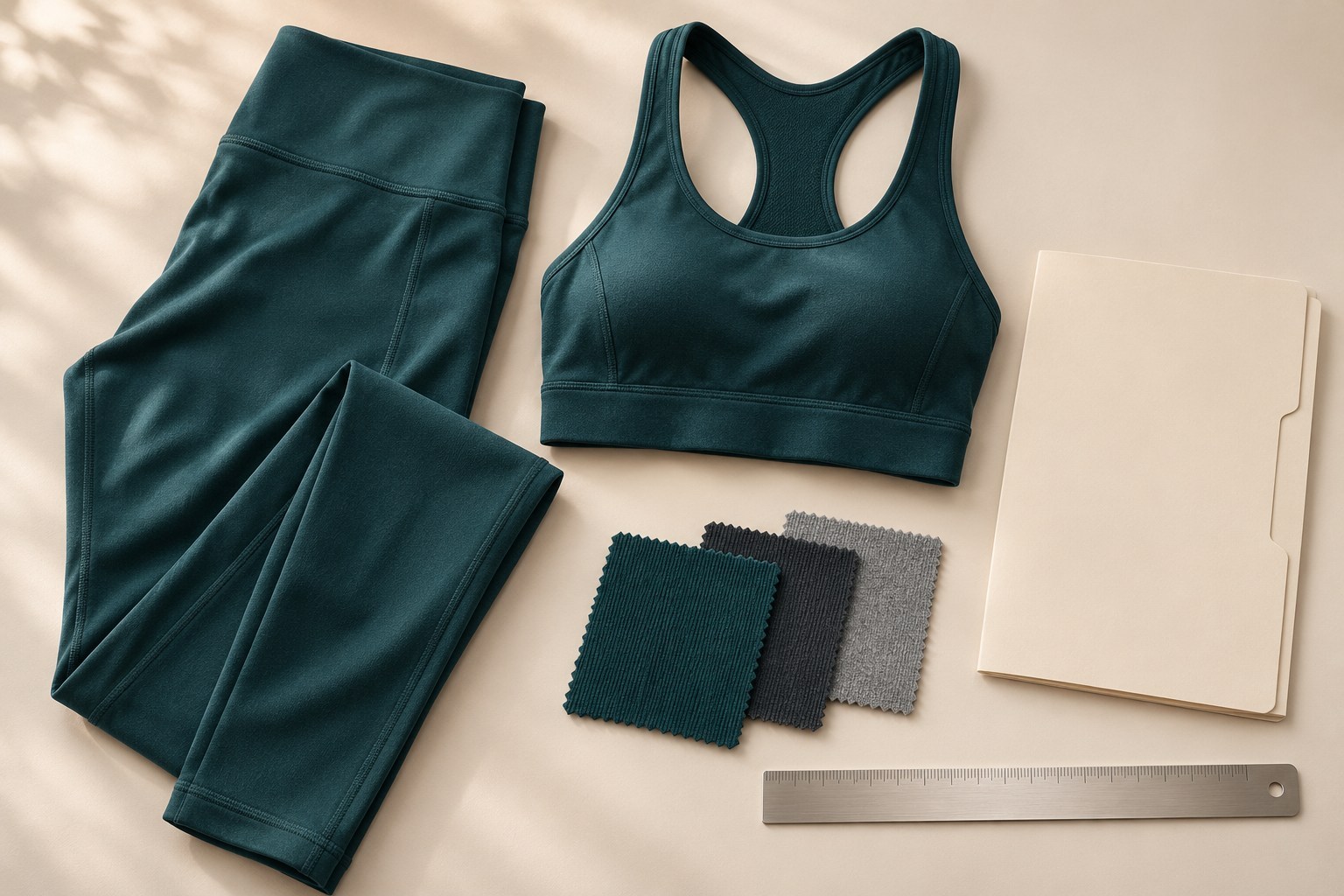
A buyer’s guide to recycled-content evidence, supplier checks and claims that can survive a document review.
GRS certification verifies recycled content and its chain of custody, with additional requirements for social, environmental and chemical practices in processing. For activewear brands, it means checking supplier scope, shipment evidence and claim eligibility before marketing a product. It does not automatically prove garment performance, complete recyclability or a quantified reduction in environmental impact.

What is GRS certification?
The Global Recycled Standard (GRS) is a voluntary standard administered by Textile Exchange. It combines verification of recycled inputs with chain-of-custody controls and requirements covering processing conditions. Independent certification bodies audit organizations against the applicable rules. See the official GRS 5.0 standard.
For a leggings or sports-bra collection, the practical question is whether the selected material, production route and finished shipment have the required evidence. The phrase “our mill is certified” leaves the garment assembly, trading and shipment documentation unresolved.
What GRS does not establish
GRS does not certify squat opacity, stretch recovery, seam strength or drying speed. It also does not make a blended garment recyclable in a buyer’s local collection system. A claim such as “uses 40% less water” needs a separate, relevant comparison and methodology; a certificate alone cannot supply that number. Product quality and legal compliance remain separate responsibilities.
Keep two approval tracks: one for material traceability and claims, and another for fit, durability and performance. A well-documented material can still produce an unsuitable garment if its weight, structure or construction is wrong for the intended activity.
Scope certificates, transaction certificates and test reports compared
| Evidence | Main purpose | Buyer action | Limit |
|---|---|---|---|
| Scope certificate (SC) | Defines an organization’s certified scope. | Check identity, validity, sites, products and processes. | Does not identify every shipment as certified. |
| Transaction certificate (TC) | Connects certification to specified traded goods. | Reconcile seller, buyer, product and quantity with the order records. | Does not replace fit or performance testing. |
| Composition report | Reports tested fiber composition. | Match the sample reference and test scope to the chosen fabric. | Fiber identity alone does not trace recycled origin. |
| Garment performance report | Measures selected properties under stated conditions. | Agree methods, wash conditions and acceptance criteria. | Does not replace certification or shipment records. |
Textile Exchange explains the distinction through its chain-of-custody system: an SC concerns organizational eligibility, while a TC concerns specific certified products. A mill’s SC should therefore start the review, rather than end it.
GRS versus RCS
The Recycled Claim Standard (RCS) also addresses recycled content and chain of custody. GRS adds processing requirements concerning social, environmental and chemical practices. Select the route that fits the sourcing brief and planned communication; do not substitute one standard’s name or logo for another. Textile Exchange provides an official RCS and GRS comparison.
Why buyers see both 20% and 50%
Under Textile Exchange’s published GRS guidance, the standard can serve as a business-to-business tool for products with at least 20% recycled content; consumer-facing GRS labeling requires at least 50%. These thresholds serve different purposes. Reaching a percentage does not replace chain-of-custody requirements, brand eligibility or artwork approval.
A blend example for a sourcing discussion
A hypothetical main fabric specified as 80% recycled polyester and 20% elastane is not “100% recycled.” Even if the recycled portion is documented, the brand must confirm how the applicable claim rules treat the final product or component, including trims and other materials. Fabric composition is an input to the claim review, not automatic permission to print a logo.
Confirm the applicable policy for the standard, product, claim type and launch date. In particular, do not carry the GRS thresholds across to the new Materials Matter system without checking its separate rules.
Seven steps to source GRS activewear
Define the claim before selecting fabric
Record the target market, garment category, intended recycled percentage and exact proposed wording. Decide whether the project needs internal sourcing evidence, a product statement or a consumer label. This prevents a fabric decision from silently becoming a marketing promise.
Map who handles and sells the goods
Identify the material supplier, dyeing or finishing route, sewing site, subcontractors and invoicing seller. Ask the certification body which entities and activities must be covered for the proposed chain. If the seller and factory have different legal names, resolve that difference before committing.
Authenticate the supplier’s scope
Request the complete SC, including relevant appendices. Check the certificate number, TE-ID where shown, issuer, validity, products and processes against Textile Exchange’s certified-company directory. Resolve discrepancies with the issuing certification body through independently obtained contact details.
Approve the fabric and sample separately
Specify composition, construction, weight, color, stretch direction and intended use. Review fit and movement on the sample, then agree wash, colorfastness, pilling, recovery and opacity checks appropriate to the garment. Do not treat approval of the hand feel as approval of the evidence.
Write the documentation responsibilities into the order
List the exact material reference, certification requirement, approved production route and document owner. Agree who applies for the TC, what records support it and when it should be supplied. Define how substitutions, split shipments and changes of processing site will be reviewed.
Reconcile shipment evidence
Match the TC to invoices, packing details and the relevant styles or lots. Use Textile Exchange’s certificate-authentication guidance and follow its current transaction-checking route. An authentic certificate still needs to correspond to your goods.
Release claims through a separate approval gate
Confirm the brand’s certification obligations, permitted language and artwork approval before printing hangtags or publishing product copy. Textile Exchange states that a buyer can order certified goods and receive a TC without being certified, while brand certification completes the chain of custody. Check the requirements for the intended communication in its brand and retailer guidance.
These are recommended buyer controls, not a representation of Ohsure’s verified internal certification procedure. Textile Exchange’s certification overview describes applying for a TC following shipment; agree the documentation schedule before the order rather than expecting a final shipment certificate during sampling.
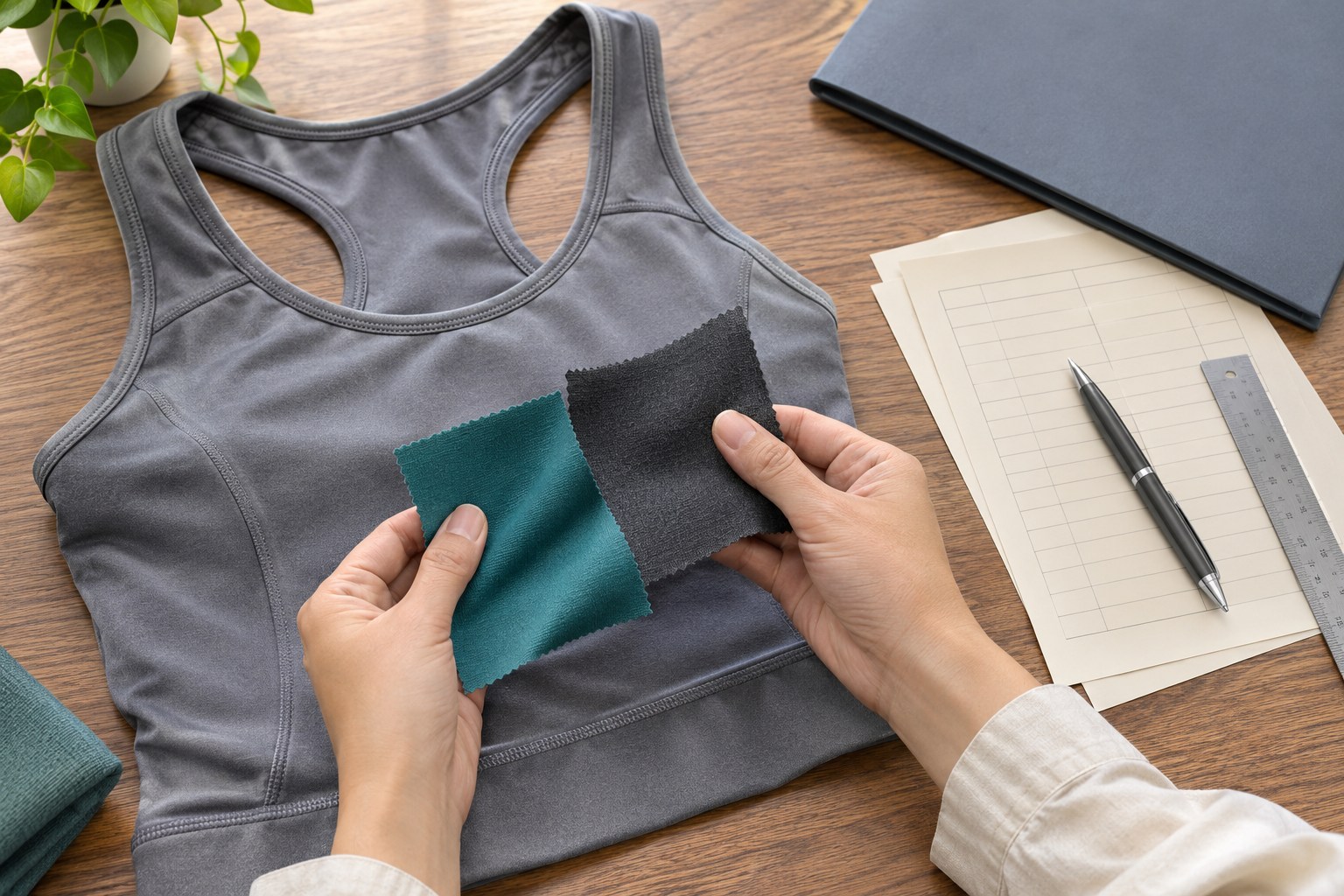
An order-level evidence checklist
Use the following as a working register for each SKU or material route. Give every unresolved field an owner and a decision date. “Certificate received” is too broad to show what has actually been checked.
| Record | Capture | Resolve before |
|---|---|---|
| Supplier identity | Legal seller, factory/site, TE-ID, issuer and SC reference. | Supplier approval. |
| Scope and validity | Standard/version, dates, product and process coverage, verification date. | Purchase commitment; review again if timing or route changes. |
| Material specification | Fabric code, fiber percentages, weight, color/lot and approved sample reference. | Bulk material release. |
| Transaction evidence | TC reference, order/invoice links, seller/buyer, goods and quantities. | Closing the shipment evidence file and releasing the supported claim. |
| Claim approval | Claim text, artwork version, relevant approval record and approving party. | Printing or publishing the claim. |
| Exceptions | Unmatched quantity, substituted fabric or changed site; owner and resolution. | Acceptance of the affected evidence or claim. |
For example, if the fabric code on the purchase order differs from the code in the supporting evidence, obtain a documented reconciliation. A similar color, the same sales contact or a familiar product photo is not a reliable link between records.
Cost, MOQ and time factors
There is no universal “GRS surcharge” per garment. Ask for a quote that separates material, development, branding, testing, documentation and delivery assumptions. Certification-body fees and garment prices are different cost categories; establish which party bears each one.
| Factor | What may affect the project | Question to ask |
|---|---|---|
| Fabric availability | Stock versus custom knitting/dyeing; color and material minimums. | Is the specified documented material available for this order size? |
| Development | Pattern work, sample revisions, wash review and logo trials. | Which sample stages and tests are included? |
| Certification administration | Entity coverage, audits where needed, record preparation and TC processing. | Who pays, who applies and what documents must be ready? |
| Claim approval | Eligibility checks, artwork review and reprinting if copy changes. | What approval must precede label production? |
| Delivery | Production capacity, split shipments, freight and evidence reconciliation. | What starts each deadline, and which documents follow shipment? |
Ohsure’s published MOQ starts at 100 pieces per style per color, with mixed sizes available. Final order requirements are subject to project confirmation. This does not mean 100 pieces can be divided freely across unrelated styles and colors, or that any certified fabric can be sourced at that volume.
Sample timing is confirmed after reviewing the design, materials and customization requirements. Bulk-production timing is confirmed according to the approved specifications, material availability and production schedule. Add a distinct documentation milestone to the commercial timeline; do not assume the sewing completion date also closes every certificate task.
Common mistakes that weaken a recycled-content claim
- Accepting a logo screenshot. Request verifiable certificate information and the relevant scope.
- Using a fabric mill’s SC as finished-garment proof. Review the remaining production and selling route and obtain shipment evidence.
- Calling an 80/20 blend entirely recycled. Identify which fiber is recycled and distinguish the main fabric from the final product claim.
- Assuming GRS proves performance. Keep fit, opacity, recovery and durability acceptance criteria in the technical pack.
- Substituting material after sample approval. Reassess evidence and performance before approving the change.
- Printing claims before eligibility is settled. Approve the exact wording and artwork before labels are ordered.
- Treating a prior order as evidence for a reorder. Recheck the current route, dates, lots and transaction documents.
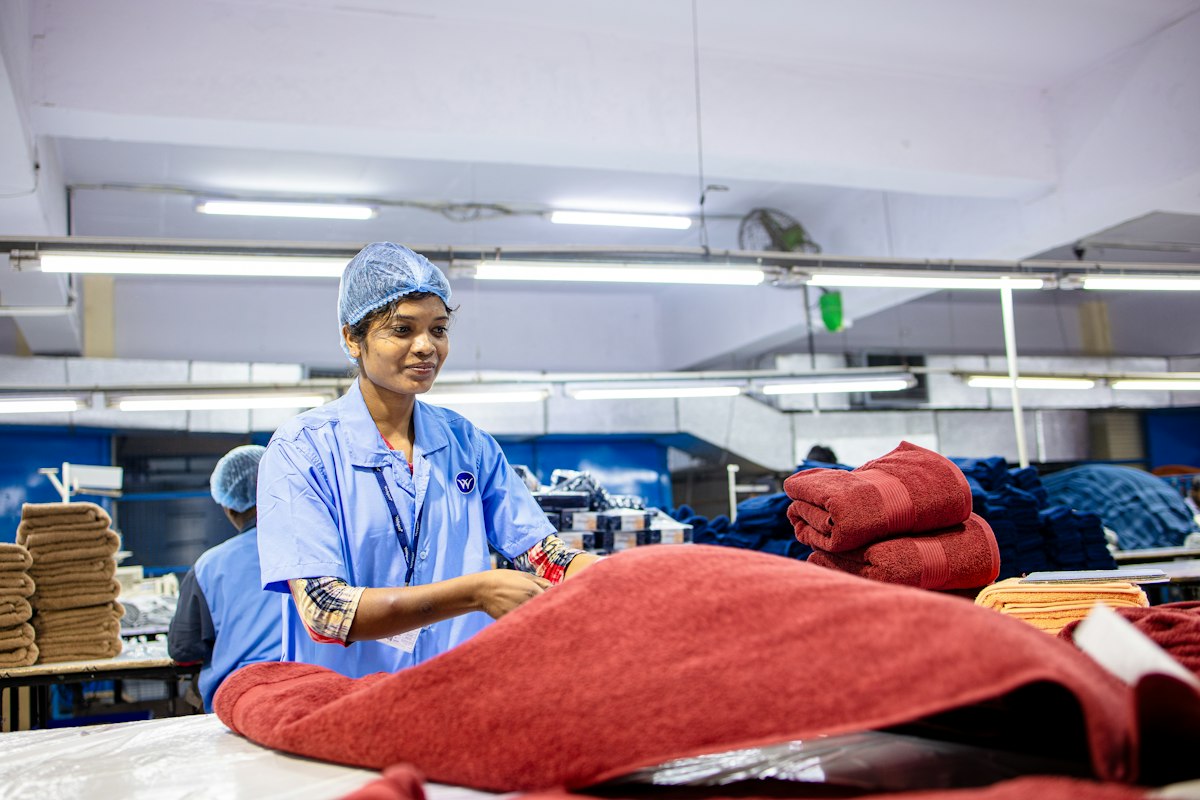
The manufacturing perspective: turn the claim into a workable brief
Ohsure is a Dongguan-based activewear manufacturer offering OEM, ODM and private-label services. Its published services include material discussion, sample development, garment production and branding. Its quality-control page describes raw-material, printing-process, semi-finished and finished-garment checks.
The useful manufacturing lesson is to connect commercial and technical decisions early. A buyer requesting recycled leggings should provide the target composition and evidence requirements alongside size specifications, waistband construction, pocket placement and artwork. Changing a fabric to improve compression may also change the available sourcing route or the documentation needed.
The source materials for this article do not establish Ohsure’s current GRS certification, certified scope or ability to issue a TC for a particular order. A recycled-fabric listing is not a certificate. Request current documentation and project-specific confirmation before treating any Ohsure order as GRS-certified.
2026 update: GRS 5.0 and Materials Matter
Two developments affect upcoming sourcing plans. Textile Exchange published GRS 5.0 in July 2026, with mandatory implementation from December 31, 2026. This update strengthens reclaimed-material records; it should not be confused with the broader standards transition.
Separately, the Materials Matter transition becomes effective on December 31, 2026. Eligible Tier 4 organizations may use the new standard during 2027; Tier 4 audits must use it from December 31, 2027. Textile Exchange’s published timeline requires claims and labels to transition by June 30, 2029.
For a collection that will be produced or sold across these dates, ask the certification body which audit, chain-of-custody and claims rules apply to each party. Record that decision in the sourcing file and recheck it before artwork release. Avoid describing every existing GRS certificate as automatically invalid on the new standard’s effective date.
Frequently asked questions
Does GRS mean activewear is 100% recycled?
No. Check the documented composition and applicable claim scope. A blend may contain both recycled and non-recycled fibers; the percentage in the main fabric is not automatically the percentage for the entire garment.
Is a supplier’s scope certificate enough?
No. Verify its coverage and obtain transaction evidence tied to the supplied goods. A valid SC does not turn every product sold by its holder into a certified product.
Can my brand buy certified goods before becoming certified?
Textile Exchange allows a buyer to order certified products and receive a TC without being certified. Product communication is a separate decision: check brand certification and claim-approval requirements before using the standard’s name or logo in marketing.
Can recycled polyester and elastane be used together?
They can be specified as a blend, subject to material availability and garment requirements. Confirm which portion is recycled, whether the route supports the intended certification claim, and whether the finished sample meets recovery and durability criteria.
Does GRS guarantee squat-proof leggings?
No. Opacity depends on the selected fabric, color, fit and degree of stretch. Evaluate the approved garment under agreed conditions rather than inferring performance from certification.
How do I check a certificate?
Use Textile Exchange’s certified-company directory for SC information and its certificate-authentication guidance for TCs. Match the returned details to your document and order. Refer unresolved inconsistencies to the issuing certification body.
Can Ohsure supply a GRS-certified order?
That needs project-specific confirmation. Request the current relevant SC, production-route coverage and proposed transaction-document arrangement. The facts used for this guide do not establish Ohsure’s current GRS status.
Should I use GRS or Materials Matter wording for a 2027 launch?
Confirm the applicable route and claims policy with the certification body before artwork approval. The transition is phased, so the launch year alone does not decide which wording a particular product can use.
Prepare a brief that can be quoted and verified
Send the garment type, technical pack or reference sample, size range, quantity per style/color, target composition, fabric weight, target market, planned claim text and required delivery date. Add a separate request for certification-scope review, shipment documentation and claim approval responsibilities.
With those inputs, discuss the proposed material and manufacturing route through Ohsure’s custom activewear service. Settle evidence requirements before committing to recycled-content claims on the finished collection.